
The Important Role of Navigation in Ensuring Safe, Efficient, and Successful Aviation Operations
Navigation is an important part of aviation, ensuring each flight's safety and effectiveness. Proper navigation for pilots involves exact coordination, airspace understanding, and an ability to adapt to the quickly changing conditions. Accurate navigational tools support pilots to avoid dangers like bad weather, limited space, and geological challenges. Also supporting time management and fuel efficiency. Modern navigation combines pilot training with modern technologies like GPS, navigation systems, and air traffic control coordination. From flight to landing, tasks are carried out with the support of a set of tools and experience. The key components and the impact of navigation will be explored in this blog post.
Key Component of Navigation
Flight Planning
Flight planning is the first step of navigation, where pilots consider a number of important factors to remain safe throughout the journey. They calculate the necessity of fuel, go through airspace restrictions, analyze the weather, and select the best possible route. With the help of maps, flight planning software, and charts for navigation in order to find out the best route. They think about the environment, air traffic, and the supply of navigational tools like GPS points and VOR stations while planning. By planning, they can reduce risks, avoid delays, and follow the rules.
Fuel Management:
Fuel management allows pilots to use fuel effectively during flight. By using the data related to the aircraft's position, speed, and height. Aviation experts analyze this data to make sure that pilots have sufficient fuel for the journey and to face unexpected challenges. Proper fuel management is important to avoid fuel shortages that can result in engine failure.
Position Determination
Pilots use several devices and navigational tools to find the exact location of the aircraft. They use tools like GPS, VOR stations, and DME. That supports finding the aircraft and track its movements. Helping pilots avoid threats and make changes when required. It is important to know the exact position to stay safe.
Air Traffic Management and Communication with ATC
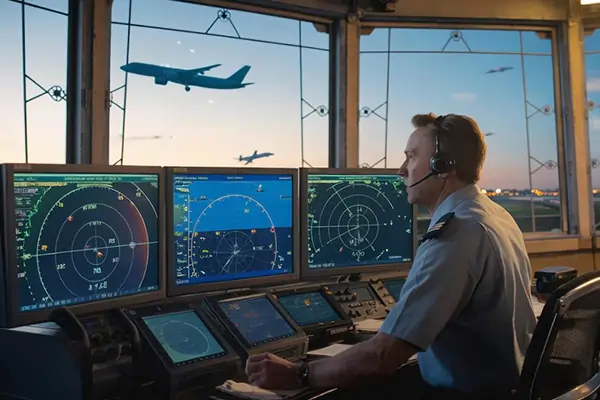
Navigational tools are used by air traffic control (ATC) to coordinate and control aircraft movement, helping to reduce delays and traffic jams. Better ATC results in more effective use of airspace and more environmentally friendly aircraft paths. Safe flying in controlled airspace also relies heavily on pilots and ATC having clear communication. Pilots often share their location, request authorization to change their course, and receive information about other aircraft in the area. Pilots follow aviation rules while maintaining a safe distance from other aircraft by following ATC orders. Accurate guidance and effective ATC communication work together to ensure safe, calm, and effective skies on every trip.
Impact of Navigation
To fly safely and effectively, careful planning and accurate navigation are important. Through this, pilots can avoid common challenges like bad weather, delays, and fuel shortages. Pilots can also be prepared to face the challenges and improve their communication with air traffic control (ATC) by proper planning before flight. Allowing pilots to follow directions and provide updates. Following ATC directions is also important to avoid collisions by maintaining distance between aircraft. A modern tool like the Traffic Collision Avoidance System (TCAS) alerts pilots when other planes are too close.
Pilots are alerted by the Terrain Awareness and Warning Systems (TAWS) about nearby ground dangers, especially in complicated areas. Weather radar and satellite navigation support pilots in avoiding challenging situations like heavy storms and icing, making flights safer and more comfortable. During times of emergencies, accurate navigation tools support pilots find the closest airport for a safe landing. Training and certification make sure pilots are prepared to use these tools and face the challenges. Flight planning and navigation support a safe journey from flight to landing.
Conclusion
The safety of every flight is directly impacted by navigation, an important part of aviation. Accurate navigation allows pilots to fly with confidence and make better choices in every challenging situation, from flight planning to managing difficulties. Allowing them to choose the ways to save time and fuel while avoiding challenges like bad weather, dangerous terrain, and crowded airspace. It also supports pilots in maintaining enough distance from other aircraft, following rules, and communicating with ATC, providing an extra layer of security. From flight to landing, safe flight is made sure by modern technologies like GPS, TCAS, TAWS, and weather radar. Navigation is an important part in assuring flight safety. Navigation will continue to play an important role in the safe and effective arrival of pilots at their destinations as the aviation sector grows.














.webp)

.webp)




.webp)

