
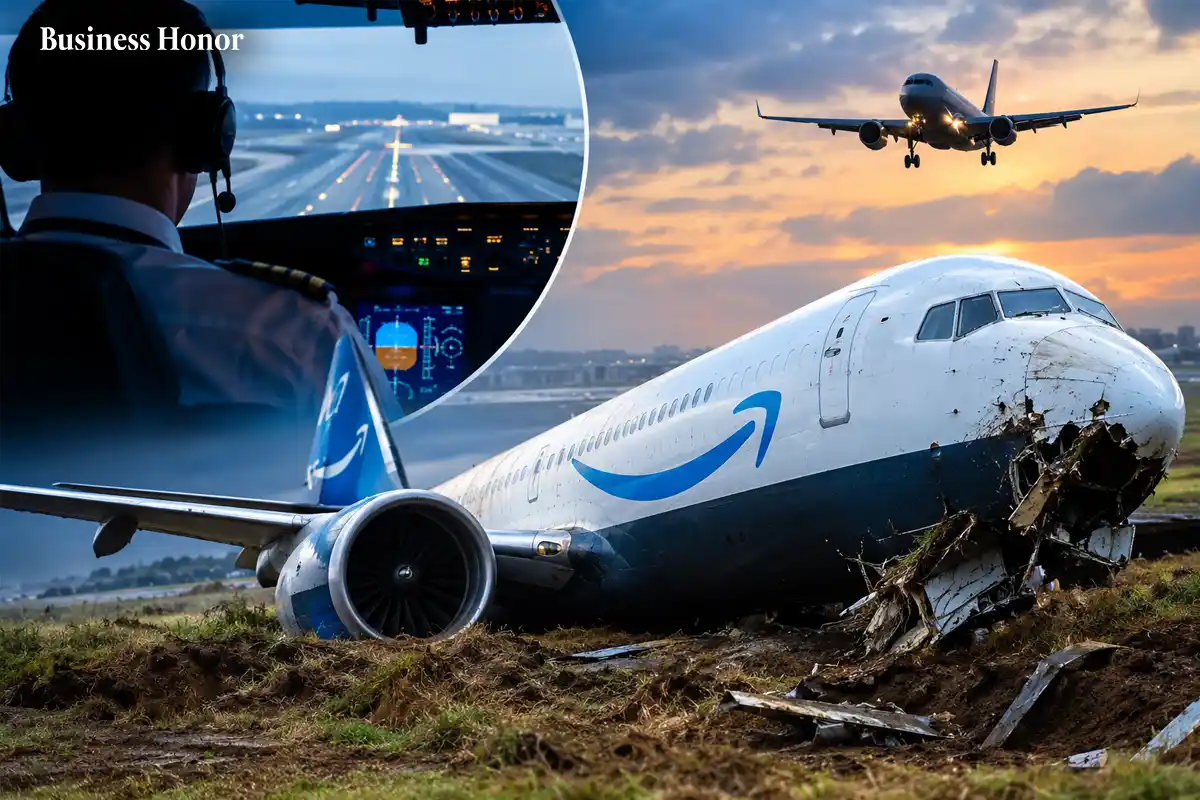
The Amazon Jet Crash in Miami has raised fresh questions after investigators found the pilots appeared to delay a go-around before the cargo jet ran off the runway, killing five.
|
The Amazon Jet Crash at Miami International Airport is drawing fresh scrutiny after the National Transportation Safety Board revealed that the cargo jet’s pilots appeared to briefly attempt a go-around after the aircraft had already touched down.
The timeline, released by investigators Tuesday, shows a sequence of landing decisions that may have cost the crew critical seconds and hundreds of feet of runway before the Runway Crash turned deadly.
At about 30 seconds before the flight data recorder stopped, the Amazon Cargo Jet touched down on its nose and right main landing gear while traveling nearly 182 miles per hour. The left main gear reached the runway four seconds later.
The pilots applied the brakes seven seconds after the initial touchdown.
But why did the aircraft appear to shift from landing back toward a go-around?
Four seconds after all landing gear was on the runway, the pilots released the brakes and increased thrust to levels consistent with go-around power, according to NTSB crash investigator Chihoon Shin. The aircraft was still moving at about 138 miles per hour.
Eleven seconds before the recorder stopped, the pilots reduced the throttles and reapplied the brakes. They did not deploy the aircraft’s speed brakes or thrust reversers, investigators said.
Aviation experts described the sequence as unusual. Steven Arroyo, a retired United Airlines pilot, said crews generally need to commit to either landing or going around rather than attempting both after touchdown.
The aircraft eventually left the runway, struck two vehicles and crossed a public road. Five people were killed.
Could those lost seconds have changed the outcome?
Investigators have not determined how much runway remained when the pilots released the brakes. Based on the speeds disclosed, however, the aircraft could have traveled roughly 800 feet during the four-second interval.
The NTSB Investigation is now expected to focus on the cockpit decisions, aircraft performance and conditions surrounding the landing. Investigators are also expected to examine the cockpit voice recorder and interview the pilots.
Was this a pilot decision, a mechanical problem, or a combination of factors?
That question remains unanswered. The available evidence points to a troubled landing sequence, but investigators have not established the cause of the crash.
The Miami Airport disaster therefore raises a difficult aviation safety question: when a landing begins to go wrong, how quickly can a crew recognize the danger and commit to the safest alternative?
Business Honor examines The Plane Crash Investigation may ultimately determine whether the fatal outcome stemmed from human judgment, aircraft performance or multiple factors converging within seconds.
FAQs
What happened in the Amazon Jet Crash?
An Amazon Cargo Jet overran a runway at Miami International Airport, struck two vehicles and killed five people.
What is the NTSB Investigation examining?
The investigation is examining the landing sequence, cockpit decisions, aircraft performance and other factors surrounding the crash.
Did the Amazon pilots attempt a go-around?
NTSB data indicates the pilots increased thrust after touchdown in a sequence consistent with a delayed go-around decision.
Where did the Amazon Plane crash occur?
The crash occurred at Miami International Airport after the cargo jet ran off the runway and crossed a public road.
Could the delayed decision have affected the outcome?
Investigators have not determined that yet, although the aircraft traveled substantial distance during the delay.





































.webp)

.webp)



.webp)



Comments
0 Comments