
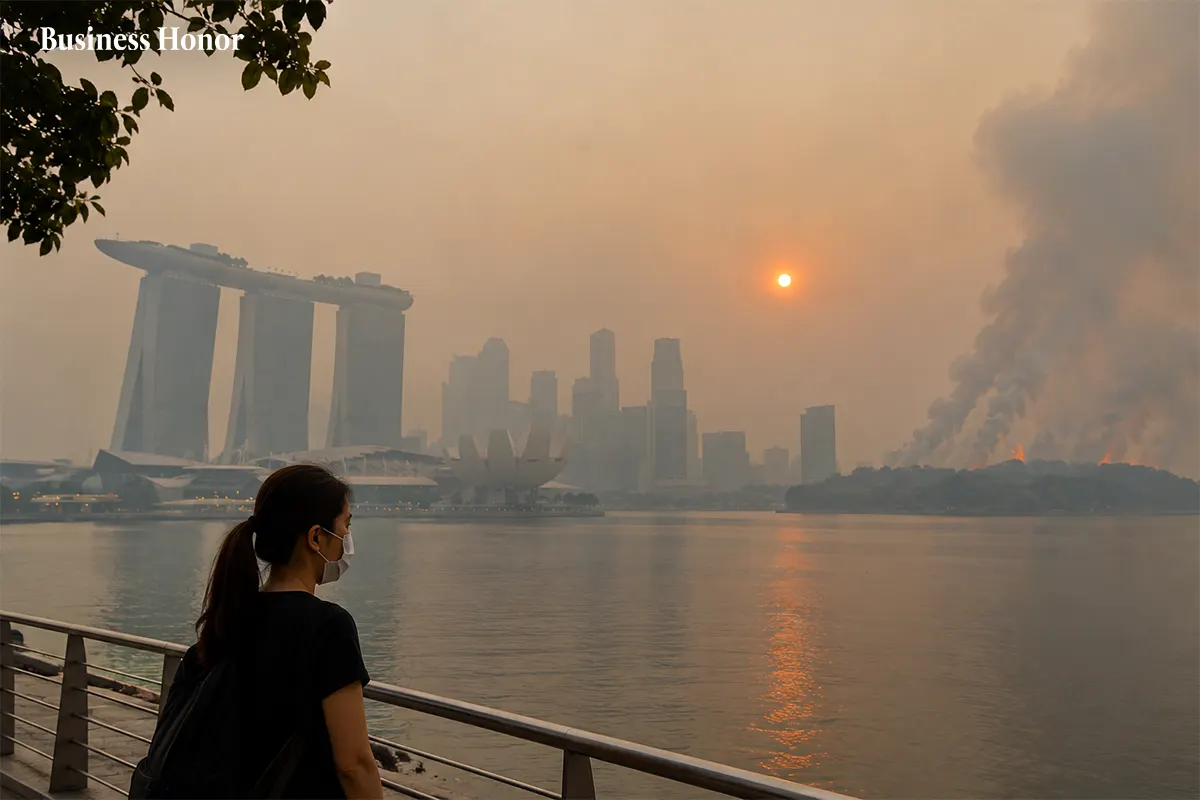
Singapore’s toxic haze hits a yearly high as Indonesian wildfires worsen air pollution, raising health fears across South East Asia.
|
Singapore is facing another bout of toxic haze as smoke from Indonesian wildfires pushes pollution levels higher. On October 14, 2026, hourly PM2.5 readings in western Singapore reached 284, the highest level recorded in the country this year.
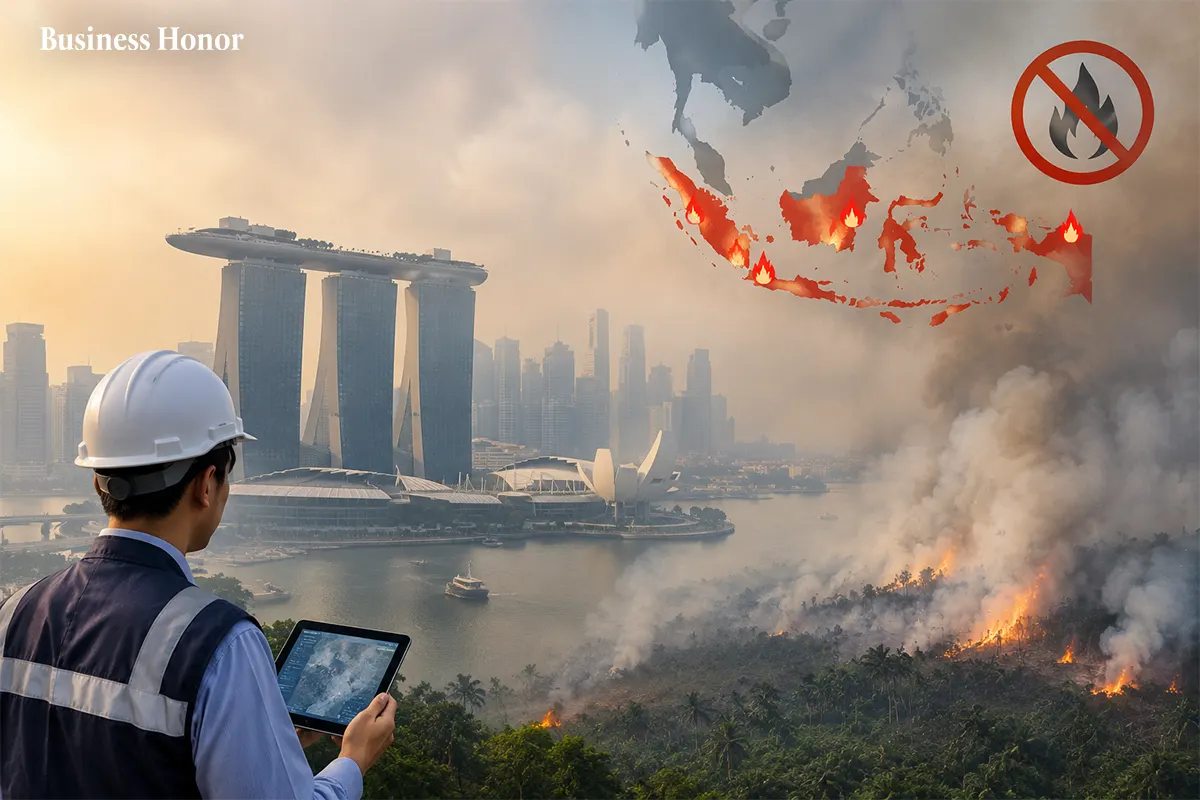
The smoke has also affected other parts of South East Asia. Fires in Indonesia have worsened air quality across the region, raising concerns about the health risks of breathing polluted air.
How can Singapore keep its air clean when the smoke comes from another country?
According to CNA, Singapore’s 24-hour Pollutant Standards Index (PSI) reached unhealthy levels across all five regions. Hotspots in parts of Kalimantan and southern Sumatra have added to concerns as dry weather makes it harder to control the fires.
The haze is also affecting countries beyond Singapore. Reuters reported that East Timor has suspended in-person classes for three days because of poor air quality. The move shows how smoke from Indonesian fires can quickly spread to nearby countries and disrupt daily life.
PM2.5 is especially harmful because these tiny particles can National Environment Agencydeep into the lungs. Children and older people face greater risks. The same is true for people with heart or lung problems.
“We are mobilising all our resources and capabilities,” said Honi Havana, an official at Indonesia’s Coordinating Ministry for Political and Security Affairs, as the country steps up its response to the fires.
Singapore’s National Environment Agency has advised people to avoid prolonged or strenuous outdoor activity while air quality remains poor. Those more sensitive to haze should limit their time outdoors and take extra care until conditions improve.
But how much can health warnings achieve if the fires continue?
The problem has troubled South East Asia for years. Countries affected by the haze can issue warnings and protect residents where possible, but they cannot put out fires burning across their borders. Indonesia faces pressure to control the fires and prevent another prolonged period of pollution.
Indonesian President Prabowo Subianto has called the wildfire response an urgent government priority as haze spreads across the region. “This is a top priority for us. We must resolve it immediately,”
Why does the region keep facing the same problem each time the dry season arrives?
The answer lies partly in the difficulty of preventing fires and holding those responsible to account. Regional discussions have taken place before, yet recurring haze shows how much work remains.
Business Honor observes that Singapore’s latest haze episode is more than a temporary air-quality problem. It highlights the cost of weak fire prevention and the limits of action by individual countries. Until governments work together to stop fires at their source, residents across South East Asia may continue to face polluted air whenever conditions turn dry.
FAQs
Why is Singapore experiencing toxic haze?
Smoke from wildfires in Indonesia is affecting Singapore’s air quality.
What caused the high PM2.5 reading in Singapore?
Smoke from Indonesian fires contributed to the rise in fine-particle pollution.
How does toxic haze affect health?
Fine particles can enter deep into the lungs and pose risks, especially for people with existing heart or lung conditions.
What should people do during Singapore’s haze?
Residents should follow official air-quality advice and reduce strenuous outdoor activity when pollution levels are high.
Why is haze a recurring problem in South East Asia?
Fires in Indonesia can send smoke across national borders. Preventing fires and improving regional cooperation remain major challenges.






































.webp)



.webp)



Comments
0 Comments