
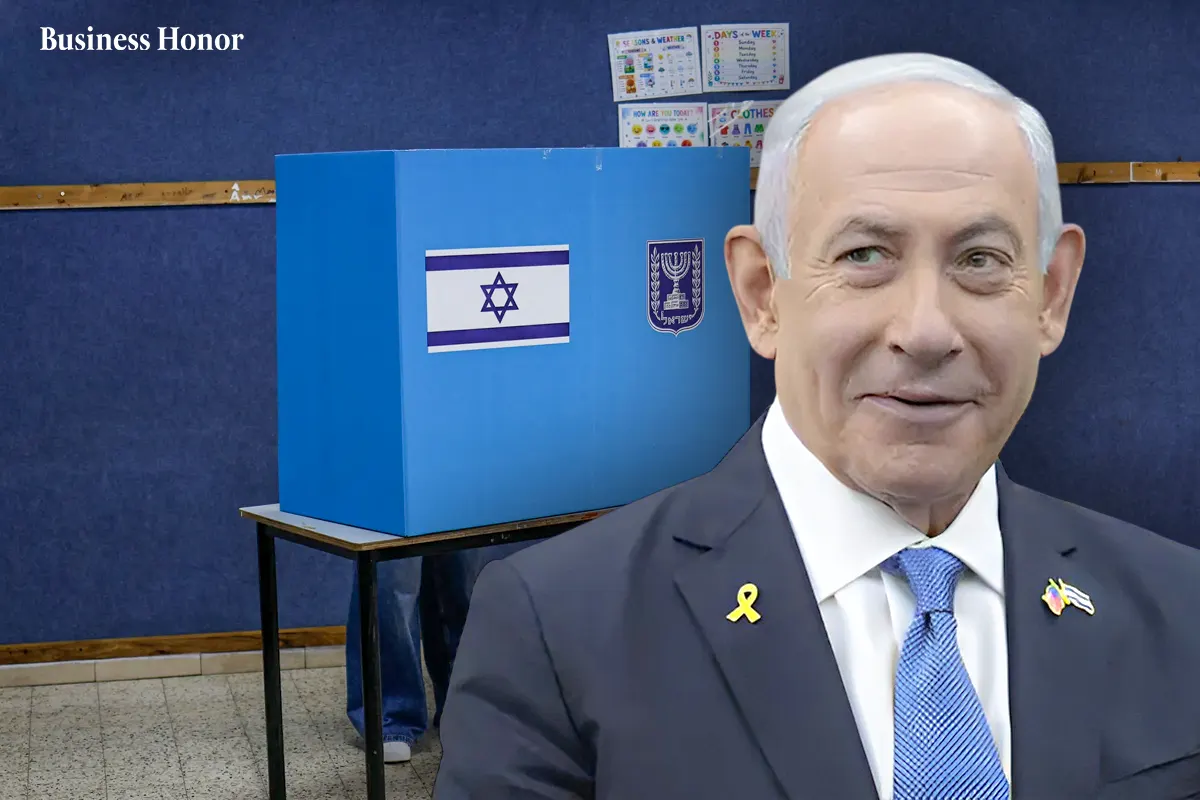
Israel election results leave Netanyahu and opposition leader Gadi Eisenkot competing for power as neither bloc secures a clear parliamentary majority.
|
The Israel election has produced an uncertain political outcome, with Prime Minister Benjamin Netanyahu and opposition leader Gadi Eisenkot facing a difficult battle to secure power. Early exit polls indicated a near-deadlock between their blocs, leaving neither side with the 61 seats needed for a majority in the 120-member Knesset.
According to The Guardian, initial projections placed both camps at around 51 seats each. However, the picture shifted as vote counting progressed, highlighting how quickly the political balance could change. Final results remain crucial to determining who can form the next government.
If neither side has a majority, who really won the election?
Voter turnout reached 77.7%, the highest in more than two decades, according to Reuters. The strong participation reflects the stakes surrounding Netanyahu’s leadership, national security and the consequences of years of regional conflict.
Netanyahu called for a “strong, right-wing national government,”
Eisenkot, meanwhile, argued that voters had rejected Netanyahu’s continued leadership and urged him to retire from politics. Their competing statements reveal a deeper disagreement over what the election result actually means, Reuters reported.
Is the largest party enough to claim a political mandate?
Not necessarily. Israel’s parliamentary system requires parties to negotiate alliances to reach a governing majority. Even if Likud emerges as the largest individual party, Netanyahu still needs sufficient coalition partners to remain in office.
Eisenkot offered a sharply different interpretation of the result, he said, “Netanyahu is a caretaker prime minister, without a mandate or the people's trust.”
The results could also increase the influence of Arab-led parties. The Guardian reported that these parties could secure a stronger parliamentary presence, potentially making their support decisive in coalition negotiations. However, Netanyahu has opposed forming a government dependent on their backing.
Could coalition negotiations matter more than election night itself?
The immediate challenge is converting votes into a workable government. If neither camp can assemble enough support, Israel could face prolonged negotiations or another election.
Business Honor observes that the Israel election exposes a contradiction in democratic politics: strong voter participation does not guarantee a clear governing mandate. The final results will determine the parliamentary balance, but the real political verdict may emerge only when coalition negotiations reveal who can command lasting support.
FAQs
What do the Israel election results indicate?
Early projections showed a close contest between Netanyahu’s bloc and the opposition, with neither clearly securing a parliamentary majority.
Who is challenging Benjamin Netanyahu?
Gadi Eisenkot, leader of the opposition grouping, is seeking to form a government after the election.
When will the final Israel election results be confirmed?
Vote counting is ongoing, and the final outcome depends on the completion of the official count.
Why are 61 seats important in Israel?
A party or coalition needs at least 61 seats in the 120-member Knesset to command a parliamentary majority.
Could Arab-led parties influence the next Israeli government?
Yes. Their parliamentary representation could make them important to coalition negotiations, depending on the final seat distribution and other parties’ willingness to cooperate.










































.webp)



.webp)



Comments
0 Comments