
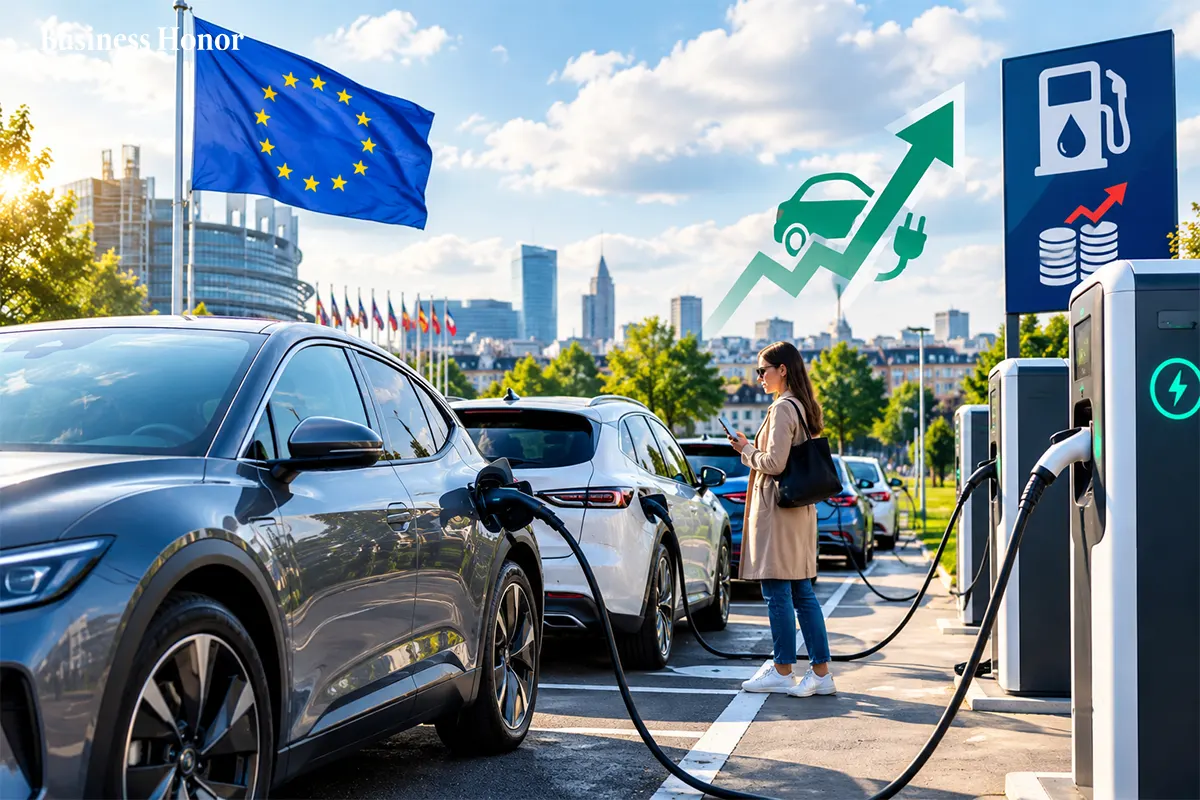
Europe EV sales climbed 70.3% in September as high oil prices, government subsidies and cheaper models drew more buyers towards battery-electric vehicles.
|
Europe EV sales climbed sharply in September, with battery-electric vehicle (BEV) registrations rising 70.3% year on year across 17 key European markets. High oil prices, government subsidies and more affordable electric cars helped drive the increase,
The figures point to a clear change in buyer behaviour. Fully electric cars recorded 300,202 registrations in September, accounting for 32.6% of the market across the countries covered. That puts electric vehicles close to one in every three new cars registered in these markets.
Are drivers choosing electric cars for the environment, or because petrol and diesel cost too much?
Fuel costs are increasingly important when making purchasing decisions. In the case of higher fuel costs to fill up a petrol or diesel car, electric cars may become more appealing, particularly those whose owners are able to recharge their cars at home. Government backing and the availability of more affordable models have further contributed to increasing interest in electric car market.
France and Germany recorded strong results. France reached a BEV market share of 41.7%, with 65,243 registrations, while Germany recorded 88,724 registrations and a 34.6% share. Across Europe, 1.98 million battery-electric vehicles had been registered by the end of September, up 38.1% from the same period in 2025, according to Reuters.
Can this growth last if fuel prices fall or subsidies shrink?
The picture is not the same everywhere. Norway led the listed markets with a 98.8% electric share, followed by Denmark at 88.8%. Italy, Poland and the Czech Republic remained far behind, showing that the shift depends heavily on local conditions.
“Demand for a range of electrified vehicles remained strong, driven by market support measures and a broader model offering.” said European Automobile Manufacturers' Association
Policy is adding another layer of uncertainty. France and Germany have agreed to seek softer proposed EU car emissions rules. That raises questions about how governments can support carmakers while keeping the move towards cleaner transport on track.
Is Europe’s electric-car growth strong enough to stand without government support?
Business Honor observes that rising Europe EV sales show real demand, but one strong month does not guarantee lasting change. Higher costs for gasoline might lead to more individuals choosing BEVs, but affordability, availability of chargers and policy considerations will influence the future. The test will lie in the sustainability of the choice in different market circumstances.
FAQs
Why did Europe EV sales rise in September?
Higher oil prices, government subsidies and more affordable electric models helped lift battery-electric vehicle registrations.
How much did Europe EV sales increase?
BEV registrations rose 70.3% year on year in September across 17 key European markets.
What market share did battery-electric vehicles reach?
BEVs accounted for 32.6% of registrations in the 17 markets covered during September.
Which European countries recorded strong BEV sales?
France and Germany recorded strong results, while Norway led the listed markets by electric-car share.
Can Europe EV sales continue growing?
Growth will depend on vehicle prices, charging access, fuel costs, government support and future emissions rules.










































.webp)



.webp)



Comments
0 Comments