
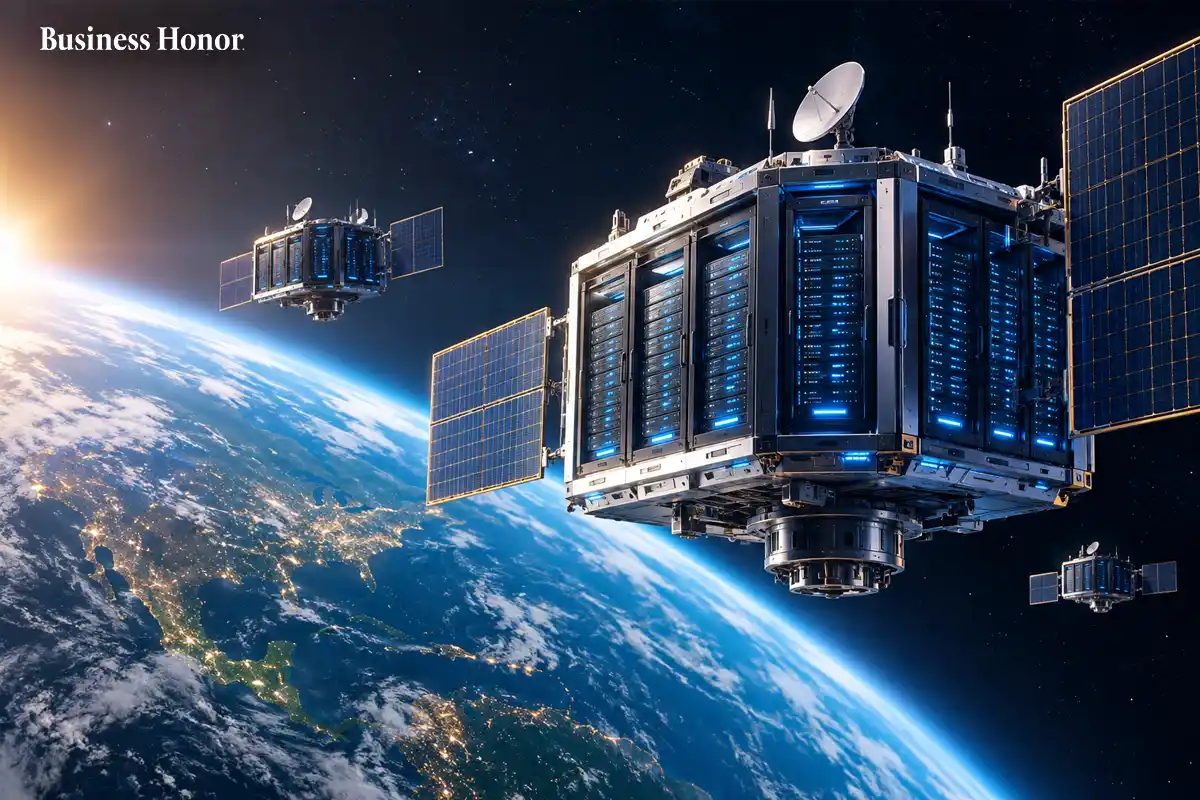
Space Data Centers could help meet rising AI demand, but cooling, power, data links and fast-changing chips could keep large projects grounded until the 2030s.
|
Space Data Centers could become the next big move in the race to support AI. Elon Musk is aiming for a launch in late 2027. But experts say building these systems at real scale could take much longer.
Evelyn Chow of Neuberger expects the bigger shift to happen in the 2030s. Her view is simple: the industry needs many more satellites and better connections between space and Earth before orbital computing can become practical.
Blaine Curcio of Orbital Gateway Consulting agrees. Yet he also points to SpaceX's history. The company has repeatedly moved faster than many industry experts expected.
Could SpaceX pull off another surprise?
The first problem is cooling.
Earth-based AI Data Centers can use liquid cooling to handle the huge amount of heat produced by powerful chips. Space is different. There is no air around an orbital facility to carry heat away. The hardware must also cope with radiation.
Then there is the problem of aging technology.
GPUs are improving at a rapid pace. A system that is considered cutting-edge when launched could look old only a few years later. That creates a tough financial question for companies spending heavily on equipment that cannot easily be replaced.
Why put expensive chips in orbit if they could become outdated so quickly?
Data transfer is another major obstacle. Orbital Data Centers would still need to move large amounts of information between space and Earth. Transcelestial is working on laser-based communication to tackle that problem.
Rohit Jha, its CEO and co-founder, says the hardware means little if it cannot communicate effectively with AI systems on Earth.
Power is the fourth challenge.
Jha estimates that Data Centers in Space could need another five to seven years to reach hyperscale. At that point, the power required could be so high that nuclear energy may be necessary.
Is building in space really easier than building more data centers on Earth?
That question could decide whether the idea takes off. Space Data Centers may offer a new way to handle rising computing demand. But cooling, power, connectivity and chip lifecycles remain serious barriers.
Musk's 2027 target gives the industry a clear date to watch. Business Honor asks what comes after the launch? Can a few satellites prove the concept, and can Space Data Centers grow into a large, profitable network?










































.webp)

.webp)



.webp)



Comments
0 Comments