
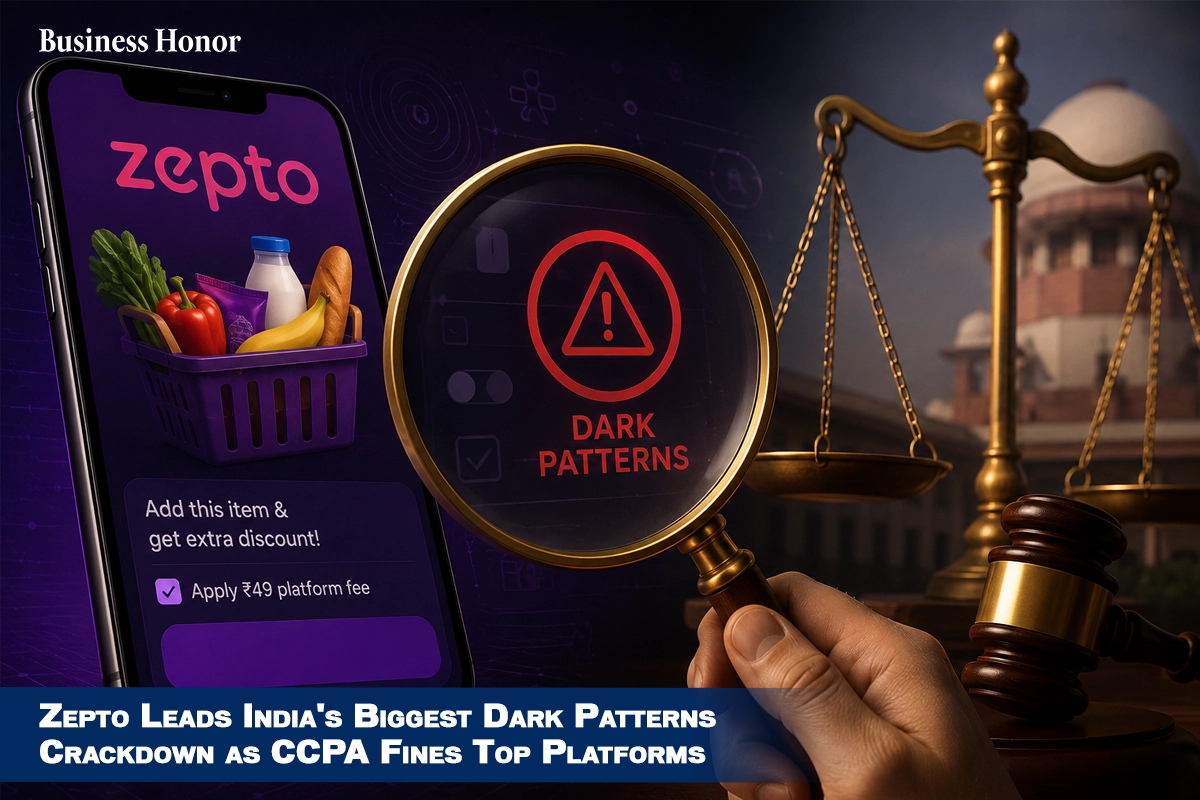
Zepto is at the center of India's biggest crackdown on dark patterns after the CCPA fined multiple platforms, including BookMyShow and IndiGo, over deceptive online practices.
|
India's battle against deceptive online practices has entered a new phase, and Zepto is at the center of it.
The Central Consumer Protection Authority (CCPA) has fined nine major digital platforms nearly Rs 20 lakh for using dark patterns design tricks that can quietly influence users into spending more than they intended. The list includes familiar names such as BookMyShow, IndiGo, Physics Wallah, FirstCry, PharmEasy, McAfee, SpiceJet, and Anuj Jindal.
For millions of consumers, the experience is all too familiar. A product looks affordable until the final payment screen tells a different story. Suddenly, handling fees appear. Memberships are added. Donations are already selected. What started as a simple purchase becomes a more expensive checkout.
According to the regulator, Zepto was fined Rs 7 lakh after it found handling charges and membership fees being added during checkout. The CCPA classified these practices as drip pricing and basket sneaking, saying customers were not shown the full cost upfront. The company has since removed the practices flagged by the regulator.
BookMyShow was directed to remove its pre-selected Re 1 contribution to the BookASmile charity initiative because customers had to manually opt out. IndiGo, meanwhile, changed an in-app message that read, "No I will take risk," after the regulator ruled it unfairly pressured customers into buying add-on services.
The crackdown also reached Physics Wallah, where pre-selected donations and requests for personal information before accessing free courses attracted penalties. Other companies were pulled up for misleading countdown timers, subscription traps, hidden fees, and renewal prompts that made opting out unnecessarily difficult.
India's Dark Pattern Guidelines, 2023 identify 13 deceptive interface practices, including false urgency, confirm shaming, drip pricing. The latest enforcement shows regulators are no longer treating these tactics as harmless design choices.
Companies argue these features improve customer engagement and increase conversions. Consumer advocates counter that convenience should never come at the cost of transparency. When every extra click or pre-selected option influences spending, the line between persuasive design and consumer manipulation becomes increasingly blurred.
India's digital economy is entering a new era where transparency may matter as much as innovation. As regulators tighten oversight. Business Honor asks will platforms finally put consumer trust first or simply find smarter ways to influence every click?























.webp)

.webp)




.webp)



Comments
0 Comments