
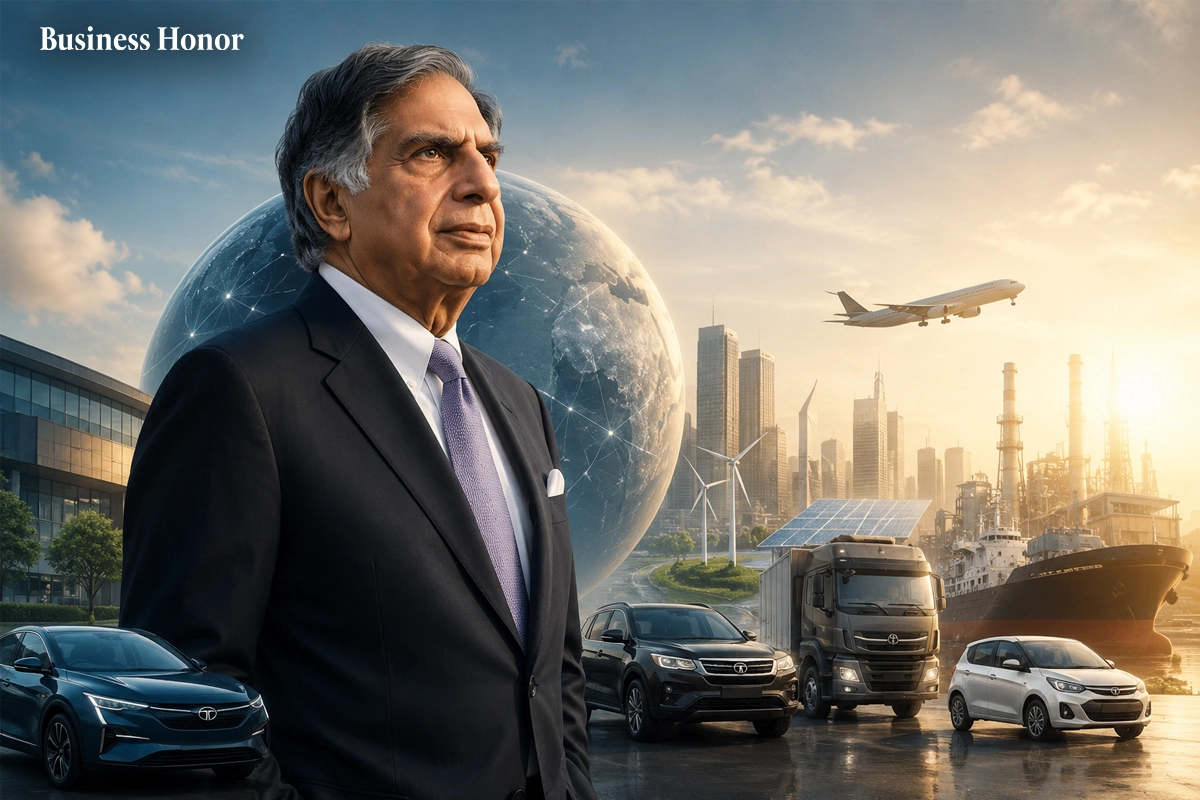
Into a Global Business Powerhouse
The Ratan Tata success story is an inspiring study in straightforward leadership and personal integrity. When he stepped into the role of Chairman at Tata Sons in 1991, India was opening its doors to global trade. At the time, the group operated like a loose collection of separate businesses, with senior executives running individual companies with little central direction. Over the next twenty-one years, he brought these scattered operations together under one unified strategy. Enterprise revenues multiplied over forty times and net profits grew fiftyfold, making Tata a trusted name across six continents.
Early Life and the Start of Ratan Tata's Business Journey
Ratan Tata was born on December 28, 1937, into one of India’s most known industrial families. Despite his background, he learned early on that real respect comes from practical experience rather than a family name.
He graduated from Cornell University in 1962 with a degree in Architecture and Structural Engineering. After turning down a job offer from IBM in the United States, he returned home to join the family business. His Ratan Tata business journey started in Jamshedpur on the shop floor of Tata Steel. He spent years shovel-handling raw materials and working near hot blast furnaces. That time on the factory floor gave him a grounded understanding of daily operations and deep empathy for blue-collar workers.
His first major test as a manager came in the 1970s at Nelco, the National Radio & Electronics Company. The firm was struggling financially when he took charge. By updating product lines and restructuring sales channels, he brought the business back to profitability. That early success proved he could repair difficult operations long before taking over the main parent company.
How does a leader respect deep historical roots while making the hard decisions needed to compete globally?
Restructuring an Empire: The Modernization Strategy
When J.R.D. Tata passed the leadership mantle to him in 1991, several subsidiary heads managed their companies with total independence. Ratan Tata responded with a clean, sensible Ratan Tata business strategy focused on three steps:
Setting age limits: He introduced a mandatory retirement age for board directors. This simple change gently phased out older management styles and opened doors for younger executives.
Streamlining the business: He sold off non-core operations like cosmetics and pharmaceuticals. He then redirected those funds into fast-growing sectors like software, automobiles, steel, and hotels.
Protecting the brand: He created the Tata Brand Equity scheme. Group companies paid a small fee to use the Tata name and agreed to stick to strict quality guidelines and high moral standards.
Global Acquisitions and Landmark Ratan Tata Achievements
Ratan Tata looked toward international markets long before most Indian business leaders did. He guided a series of bold foreign purchases that changed how overseas competitors viewed Indian companies. These key Ratan Tata achievements established a strong footprint across the globe:
Tetley Tea Acquisition
In 2000, Tata Tea bought UK-based Tetley for $431 million. It was the largest overseas takeover by an Indian company at that time, giving Tata a direct entry point into Western consumer markets.
TCS Public Listing
In 2004, Tata Consultancy Services listed its shares on the public market. It grew rapidly into one of India’s most valuable technology firms, showing the core strength of the group's software business.
Corus Steel Acquisition
In 2007, Tata Steel acquired Anglo-Dutch steel manufacturer Corus for $12 billion. This single move turned Tata into one of the largest steel producers in the world.
Jaguar Land Rover Takeover
In 2008, Tata Motors purchased Jaguar Land Rover from Ford for $2.3 billion. The team turned both luxury brands back to profitability within two years.
Launch of Tata Nano
In 2008, Ratan Tata fulfilled his personal goal to build a $2,500 passenger car, aiming to bring safer personal transport to everyday working families.
Can a business scale rapidly across borders without losing its original guiding principles?
The Core Pillars of Ratan Tata Leadership
The real strength behind Ratan Tata leadership came from mixing smart business decisions with personal ethics. He walked away from easy deals whenever they required compromising on moral values or giving in to unfair demands.
That character stood out clearly during times of crisis. During the 2008 terrorist attacks on the Taj Mahal Palace Hotel in Mumbai, he personally stayed on site to help guide support operations. He established the Taj Public Service Welfare Trust, making sure every affected worker, bystander, and family member received complete medical, financial, and educational support.
After retiring from his role as Chairman, he stayed active by mentoring young entrepreneurs. He began investing his own money into promising Indian startups, including Paytm, Snapdeal, Ola, and Urban Company.
Philanthropy and the Legacy of Trust
The corporate structure of the Tata Group is unusual compared to most multinational firms. Charitable trusts, including the Sir Dorabji Tata Trust and Sir Ratan Tata Trust, own 66 percent of the stock in Tata Sons.
Because of this arrangement, most of the profits generated by the group go straight back into public welfare projects. These funds pay for medical care at Tata Memorial Centre, advanced science research at the Indian Institute of Science, rural electrification, and clean water access across India.
"I don't believe in taking right decisions. I take decisions and then make them right." - Ratan Tata
What matters more in the long run: short-term stock returns or the lasting good a company leaves behind for everyday people?
Business Honor examines how Ratan Tata demonstrated that a traditional company can adapt to modern markets without throwing away its moral compass. By placing long-term trust ahead of quick quarterly profits, he built an enterprise strong enough to handle major economic shifts. His work abroad proved that companies from developing nations could purchase, fix, and run legacy Western brands successfully. His lasting legacy comes down to one clear lesson: large-scale corporate success and genuine human care can live comfortably under the exact same roof.

































.webp)
.webp)
.webp)



Comments
0 Comments