
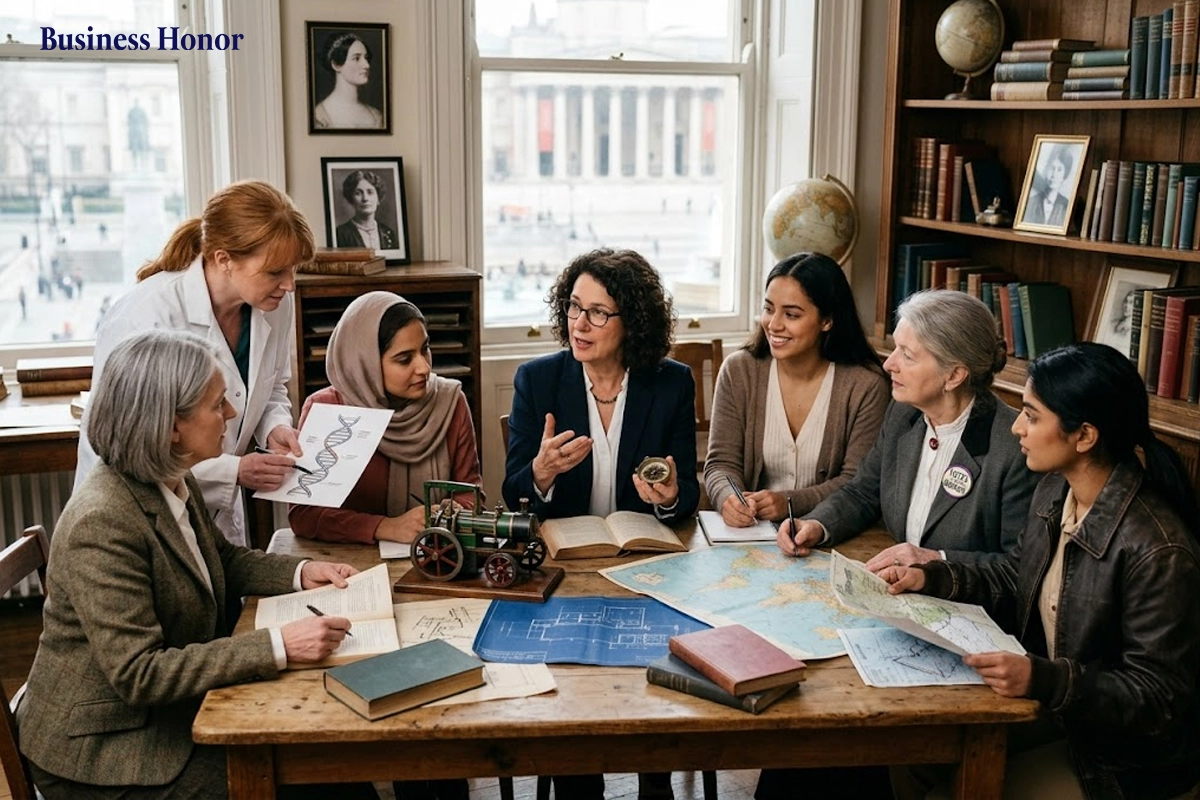
Inspiring UK women built the foundation of modern society, proving that lasting progress is forged through resolute leadership. Every barrier broken by a female leader redefined society for generations. Long before gender equality became a standard agenda item in corporate boardrooms or international summits, courageous women were actively dismantling entrenched systems. Their victories extended far beyond personal milestones; they established functional frameworks for democratic rights, public healthcare systems, modern computing, and global cultural influence.
How do the tough battles fought by earlier generations shape the way modern leaders handle power and overcome bias today?
To understand where global leadership is heading, we have to look back at the pioneers who laid the groundwork. The backbone of modern Britain from voting rights and public healthcare to code-breaking technology and world-class literature was forged by UK women who made history by refusing to accept old restrictions.
Social Reform, Healthcare, and Technological Foundations
Real change often starts in simple classrooms, field hospitals, or small study rooms, away from traditional halls of power. In eras when women were routinely denied higher education and public voices, a few brave minds created entirely new paths forward.
Florence Nightingale: Founder of Modern Nursing
She completely overhauled healthcare during the Crimean War by introducing clean habits, strict sanitary routines, and compassionate bedside care. Her practical methods transformed military medicine and laid down clear standards for professional nursing across the globe. Today, official records at NHS England trace modern hospital care right back to her early work.
Ada Lovelace: Pioneer of Computer Programming
Working alongside Charles Babbage on his mechanical computer, she wrote the world’s very first machine algorithm. Her sharp vision showed that mechanical engines could do far more than process numbers, laying early mathematical steps for modern software engineering.
Emmeline Pankhurst: Leader of the Women’s Suffrage Movement
She founded the Women’s Social and Political Union, leading a fiercely determined national campaign for women's voting rights. Her activism pushed equal voting rights into national law under the Representation of the People Act 1928.
Opening up voting rights and introducing scientific discipline did something far bigger than securing single victories. By demanding equal votes and contributing to computing logic, these remarkable British women proved that female intellect and public action could reshape the whole country.
Governance, Statecraft, and Public Administration
As Britain faced political shifts and post-war changes, female leaders stepped straight into executive power and constitutional roles, showing how calm focus can guide a country through chaotic times.
Queen Elizabeth II: Britain’s Longest-Reigning Monarch
Taking the throne in 1952, she served as constitutional head of state for seven decades. She provided steady continuity through massive national changes, global shifts, and modern political developments. Her official lifetime record is preserved on the Royal Family Official Website.
Margaret Thatcher: Britain’s First Woman Prime Minister
Taking office in 1979, she drove big economic shifts, opened up free markets, and asserted strong British influence on the world stage. Her decisive leadership style redefined political debate and proved women could direct top executive cabinets. Her parliamentary record remains archived at the UK Parliament Archive.
What does it take to run massive government offices during times when men held almost all authority?
The work of these political figures shows clear thinking and sharp focus. Managing global crises, thin budgets, and post-war rebuilding required straightforward action. They proved that women were fully ready to run state cabinets and maintain order during tough times.
Global Representation and Cultural Impact
Beyond passing laws and running state offices, cultural presence matters a great deal. It changes how a nation sees itself and how the rest of the world looks at it. Figures who step onto the global stage widen possibilities for everyone watching back home.
J. K. Rowling: Creator of Harry Potter
She wrote one of the most successful book series in history, capturing readers across every continent. Her storytelling revived reading among young people and built an immense global media presence, making her one of the most famous British women in publishing.
Dame Helen Mirren: Award-Winning British Actress
She built a standout acting career across theatre, television, and international cinema. Winning top film awards for her memorable acting roles, she earned deep respect for playing complex and bold characters throughout her long career.
Adele: Global Music Icon
Known for her record-breaking records, deep vocal strength, and honest songwriting, she became one of the most successful musical artists of her generation, earning international music awards verified by the Grammy Awards.
Can real change ever happen in old institutions if we never bring in fresh perspectives to question how things are done?
Winning international recognition across literature, acting, and music brought British talent onto the global stage, opening up new paths for storytellers everywhere.
Human Rights Advocacy and the Next Generation
As the world became more connected, female figures began using global media platforms to stand up for social justice, health campaigns, and equal opportunities.
Princess Diana: The People’s Princess & Global Humanitarian
She changed how the public viewed the royal family by bringing real warmth and direct focus to hard social causes, including HIV/AIDS awareness and landmine clearing campaigns under the Mine Ban Treaty.
Emma Watson: Actor and Women’s Rights Advocate
After finding global fame in movies, she stepped into international advocacy work as a UN Women Goodwill Ambassador. She launched a global effort for gender equality at UN Women headquarters, encouraging young people to stand up for equal rights.
The Modern Legacy: From Historical Precedent to Contemporary Power
The line running from Victorian reformers to modern diplomats shows an obvious pattern: each generation stands on the ground cleared by the people before them. The hard work of early pioneers made it normal for women to step into public life, making future wins expected rather than surprising.
Look around today and you see this history everywhere. From researchers making new scientific discoveries at the Royal Society to influential women in Britain leading major organizations, female voices are central to getting work done. However, the most important lesson from all these stories is simple: progress does not keep moving on its own; it takes ongoing effort to protect and build on it.
How will today’s leaders use their positions to clean up the remaining barriers for the people coming up next?
Business Honor asks the journey of these early figures gives us real inspiration, but it is also a reminder of our responsibilities. They showed us that true leadership is not about holding onto a fancy job title. It is about leaving behind real changes and opening doors for everyone coming behind you.





























.webp)

.webp)


.webp)



Comments
0 Comments