
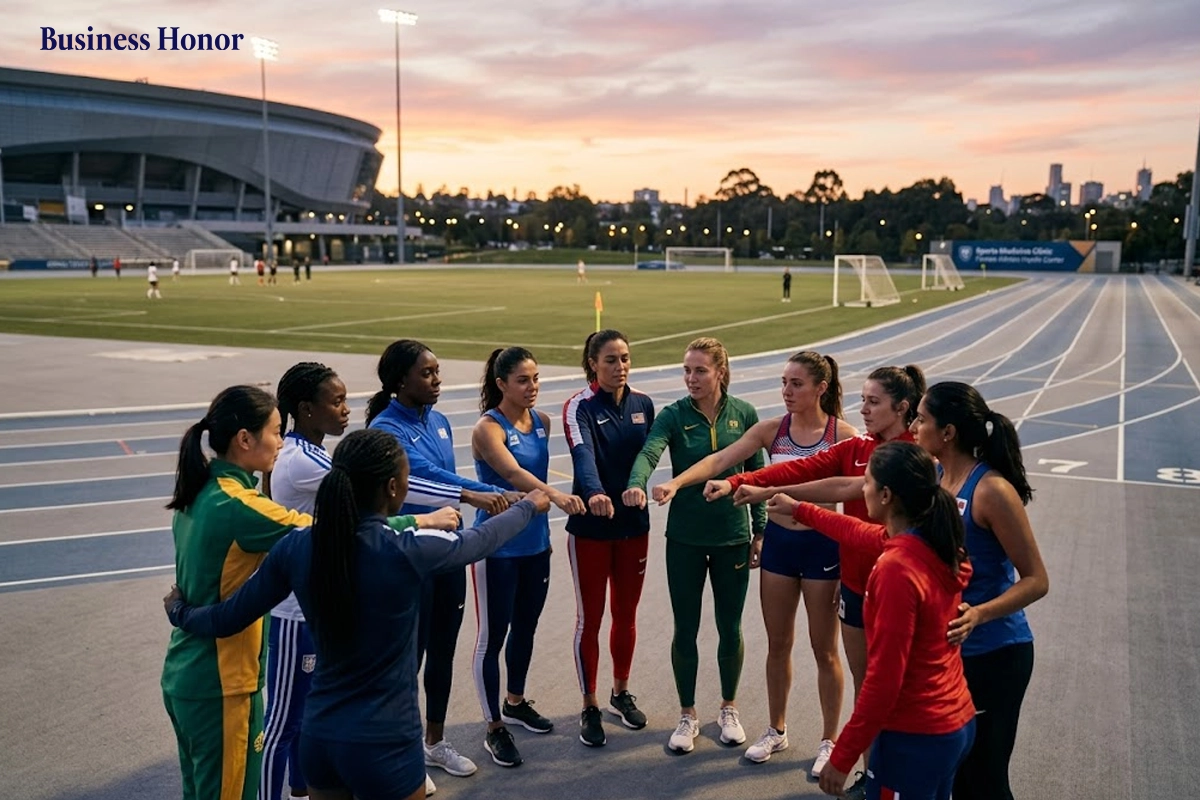
Global Alliance for Female Athletes expands to nine nations, targeting research gaps and health risks that continue to affect women in sport worldwide.
|
The Global Alliance for Female Athletes is expanding from four to nine nations, with Canada, France, Germany, Japan and Switzerland joining the international push to improve health and performance outcomes for women in sport. The expansion was announced by the Australian Institute of Sport on August 21.
GAFA was founded by Australia, the United States, the United Kingdom and New Zealand. Ireland and Belgium have also joined as supporting partners. The new members bring major sports organizations and research expertise into a wider network focused on evidence-based support for female athletes.
But why are women’s sports health gaps still so wide?
The answer is partly the research gap. GAFA aims to accelerate studies, share knowledge across borders and ensure female-focused findings reach athletes, coaches, clinicians and sports medicine professionals instead of remaining locked inside research institutions.
The alliance’s official resource platform, Global Alliance for Female Athletes, provides educational material and resources focused on female sport.
One major concern is injury prevention. The latest announcement highlights female-specific health issues including anterior cruciate ligament injuries. reports that studies indicate female athletes can be two to six times more likely to sustain ACL injuries than men.
That difference is more than a medical statistic. A serious ACL injury can mean months away from competition, disrupted development and long-term consequences for an athlete’s career.
GAFA’s expansion is designed to improve female athlete health research while helping coaches and medical teams turn evidence into practical action. The Canadian Paralympic Committee also confirmed the addition of Canadian, French, German, Japanese and Swiss partners, describing the expanded alliance as a step toward wider access to evidence-based resources.
The larger network gives GAFA more expertise and reach, but membership alone will not deliver better outcomes. The real test is whether collaboration produces measurable improvements in injury prevention, recovery, training and medical care.
Business Honor observes that the Global Alliance for Female Athletes is growing while women’s sport attracts greater attention and investment. The contradiction is clear: visibility is rising, but female-specific research still has ground to cover.
The next phase will determine whether GAFA becomes simply a bigger international network or a practical force capable of changing how female athlete performance and women in sports health are understood and supported.






























.webp)

.webp)




.webp)



Comments
0 Comments