
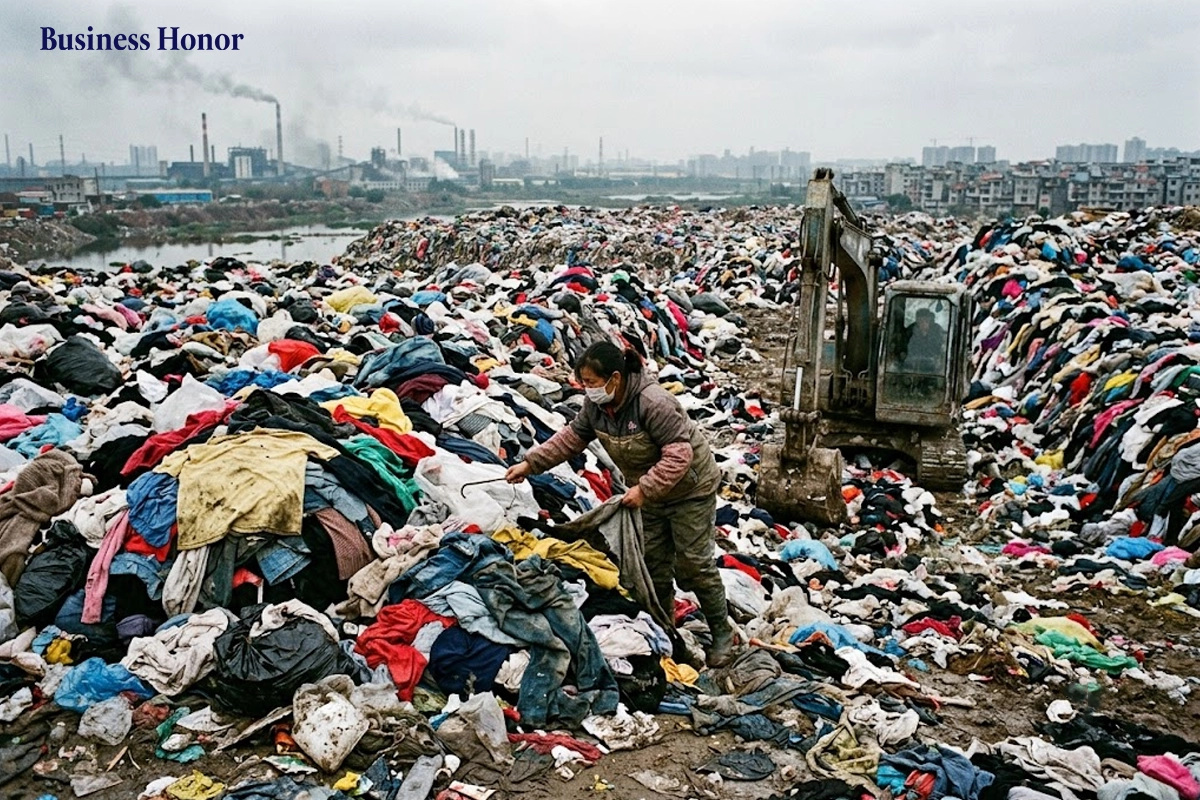
The fashion industry destroying the World is a stark reality driven by the global appetite for high-turnover apparel, accelerating an ecological crisis through intensive fossil fuel extraction, untreated chemical discharges, and severe municipal waste burdens. Beneath rapid production cycles and shrinking price points lies a linear economic model that treats technical textiles as short-lived consumable assets.
While municipal landfill volumes remain a visible challenge, an invisible supply chain liability flows directly from commercial and domestic laundering into global watersheds: synthetic microplastics. Evaluating the full scope of fashion industry pollution requires analyzing how modern synthetic fibers impact natural ecosystems from textile manufacturing through end-of-life disposal.
Can global enterprise models sustain high-volume production without compromising primary ecological infrastructure?
Synthetic Textiles and the Proliferation of Microplastics in Clothing
The manufacturing pivot toward synthetic polymers over recent decades fundamentally altered global textile supply chains. Polyester, polyamide, acrylic, and elastane provide cost efficiencies, tensile strength, and material flexibility. However, these materials remain synthetic polymers derived from petrochemical feedstocks.
Synthetic fibers account for nearly 70 percent of total global textile production, led predominantly by virgin polyester. During routine laundering, mechanical friction and hydraulic agitation break off structural filaments, releasing microscopic fibers measuring less than 5 millimeters. These particles frequently bypass standard municipal wastewater treatment filters.
Environmental assessment data reveals the operational scale of this issue. Approximately 35 percent of primary microplastics in global marine environments originate directly from washing synthetic textiles. A single commercial laundering cycle can release hundreds of thousands of synthetic microfibers, resulting in hundreds of thousands of tonnes of persistent synthetic filaments entering marine environments each year.
How will corporate supply chains adapt as microplastic shedding becomes a regulated industrial liability?
Regulatory Pressures and Global Policy Interventions
To curb the fast fashion environmental impact, legislative bodies worldwide are enacting strict statutory frameworks aimed at enforcement, producer responsibility, and supply chain accountability.
Extended Producer Responsibility (EPR) Mandates
EU Waste Framework Directive: The European Parliament has advanced comprehensive revisions under the EU Waste Framework Directive to mandate Extended Producer Responsibility for textiles. This framework requires apparel brands to finance the collection, sorting, and recycling of textile waste based on eco-design criteria.
California Responsible Textile Recovery Act: In North America, the landmark California Senate Bill 707 (SB 707) establishes a mandatory statewide EPR system forcing apparel producers to finance used clothing collection, repair, and recycling programs.
Industrial Water Protection and Chemical Regulations
Regulatory oversight regarding chemical effluent has tightened significantly across major manufacturing zones:
Chemical Safety Standards: In Europe, the REACH Regulation restricts hazardous substances and heavy metals used in industrial fabric dyeing and finishing operations.
Effluent Control Acts: In the United States, industrial water discharges from textile processing facilities are regulated under the Clean Water Act, which establishes strict national standards for toxic effluent management.
Sustainable Product Design and Microplastic Shedding Standards
EU Ecodesign for Sustainable Products Regulation: Under the EU ESPR Framework, mandatory eco-design performance standards target product durability, recyclability, and minimum recycled content while introducing Digital Product Passports for total supply chain traceability.
France AGEC Law: France enacted provisions under its landmark Anti-Waste for a Circular Economy Law (AGEC), requiring all new commercial and domestic washing machines sold in the country to feature dedicated microfiber filtration devices.
Will compliance with these emerging statutory frameworks shift capital allocation toward clean chemical alternatives and natural fiber development?
The Structural Liability of Global Textile Waste
High-volume manufacturing paired with rapidly shifting design cycles has eroded garment utility, turning global textile waste into an urgent municipal risk.
Garment utilization rates have dropped significantly compared to historic benchmarks. Over 80 percent of global textile materials end up in municipal landfills or incineration facilities annually, while less than 1 percent of discarded textiles are processed back into closed-loop fiber applications.
Bulk shipments of post-consumer garments to developing economies frequently exceed local management capacity. Discarded synthetic items accumulate in informal disposal sites, creating fire hazards and emitting toxic air pollutants during low-temperature combustion events.
Bioaccumulation Risks Across Global Value Chains
Because synthetic microplastics resist natural degradation, they persist within marine and terrestrial ecosystems. As these particles drift through aquatic systems, their hydrophobic surfaces absorb ambient chemical pollutants, including persistent organic pollutants and agricultural chemical runoff.
Trophic transfer begins when marine microorganisms consume these particles. Lower-level organisms are consumed by commercial fish species, biomagnifying chemical concentrations up the food chain to human food markets. Biomedical research has detected synthetic microplastics in human blood, lung tissue, and cellular structures, elevating microplastic pollution from an ecological issue to a strategic public health concern.
What are the long-term legal and reputational risks for brands linked to microplastic bioaccumulation in human food supplies?
Strategic Protocols for Corporate and Consumer Decarbonization
Mitigating microplastics in clothing and broader supply chain risks requires aligned operational adjustments across governance models and consumer operations:
Procurement Shift Toward Bio-Based Fibers: Reallocate material sourcing toward certified organic cotton, industrial hemp, trace-verified linen, and responsibly managed wool inputs.
Infrastructure Retrofits for Microfiber Capture: Mandate high-efficiency microfiber filtration across commercial processing plants and encourage filter adoption in consumer wash infrastructure.
Optimized Laundering Protocols: Implement cold-water, high-capacity wash cycles to reduce mechanical friction and lower microfiber breakage per wash.
Closed-Loop Product Design: Extend garment lifespans through durable construction, repair services, formal take-back programs, and certified resale platforms.
Strategic Imperatives for Business Leaders
Business Honor notes that the fashion sector is reaching a turning point as strict regulations force brands to clean up their supply chains. Solving this problem requires operational clarity, real accountability to environmental standards, and direct investment in circular manufacturing. Corporate leaders who build circular design principles into their core strategy now will gain a decisive edge in compliance and market position.
FAQ
What makes the fashion industry destroying the World such a major environmental issue?
The fashion industry destroying the World by draining fossil fuels, spilling toxic dyes, cluttering landfills, and choking oceans with plastic microfibers.
How do synthetic garments generate microplastics in clothing during everyday use?
Washing synthetic apparel causes friction that snaps off loose filaments, allowing microplastics in clothing to flow past municipal filters.
What is the true scope of fast fashion environmental impact on global water supplies?
The fast fashion environmental impact consumes 93 billion cubic meters of clean water yearly while producing 20% of global industrial wastewater.
Why is managing discarded textile waste so challenging for modern cities?
Global textile waste consists of non-biodegradable synthetic blends, with under 1% ever recycled back into new clothing.
How does fashion industry pollution enter the human food supply?
Fashion industry pollution enters the human diet when marine organisms swallow shed microfibers that travel up the food chain into seafood.







































.webp)

.webp)



.webp)



Comments
0 Comments