
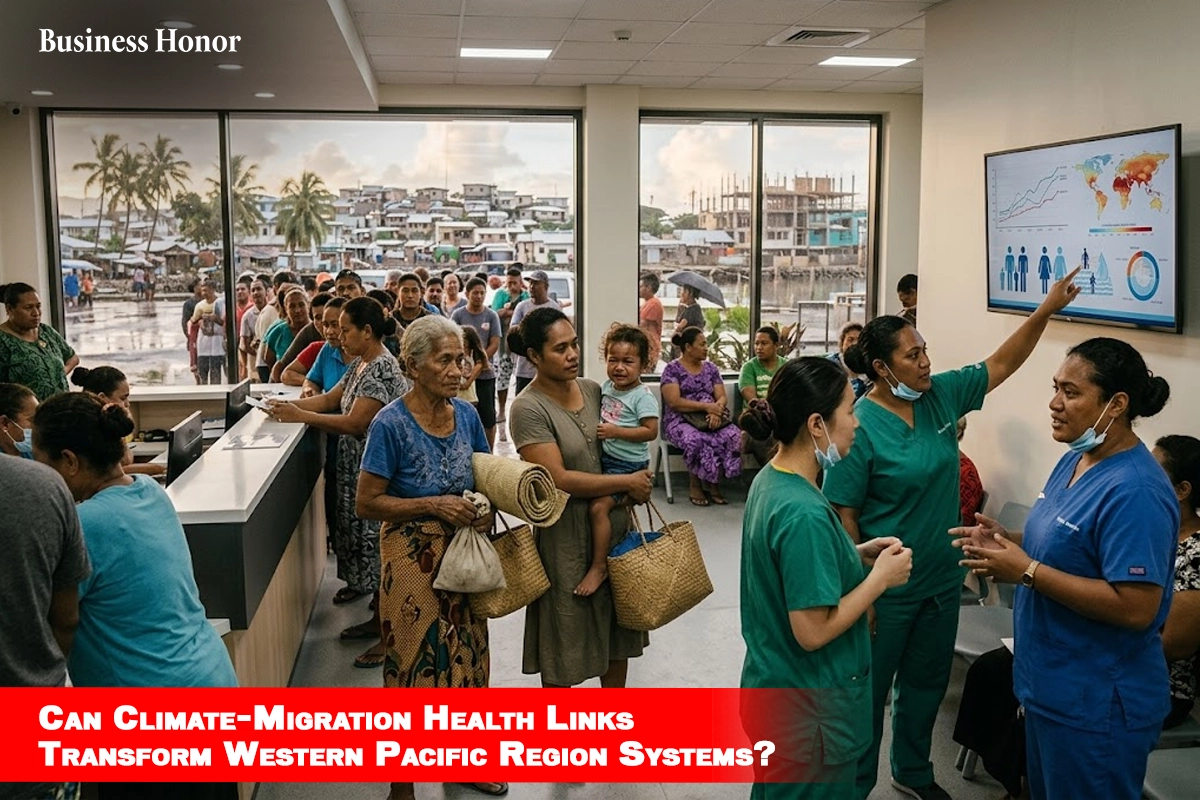
WHO's research agenda signals transformative shift toward integrated climate, migration and health responses across Western Pacific Region countries systematically.
|
World Health Organisation has launched a new and very ambitious research roadmap to deal with the complex problem of climate change, migration and health in Western Pacific Region. The initiative has emerged from the realization of the fact that all of these three elements are increasingly influencing health outcomes. The Regional Research Agenda on health, migration and displacement was created through a long consultative process involving 108 members of academia, government agencies, civil society & networks for youth migrants in different parts of Pacific and Asia.
|
"Migration, displacement and climate change are increasingly shaping health outcomes across the Western Pacific Region. Yet important evidence gaps continue to limit our ability to design effective and equitable responses," explained Dr Santino Severoni, Head of WHO Health and Migration, underscoring the urgency of the initiative. |
The research program specifies four key themes that need urgent action. These themes encompass creating inclusive universal health coverage and primary healthcare systems, making sure that migrants and displaced people have a say in health emergency planning and response, doing multisectoral research related to health, and exploring the relation between health outcomes, migration impact and climate change. Moreover, there are two crosscutting priorities: providing evidence about hardly examined migrant and displaced populations and establishing fair research partnerships that make it possible to turn research results into policies.
In the opinion of the members of the panel, in order to move forward with this agenda it is necessary to implement systemic changes in addition to traditional research methods. Setting up new governance frameworks, developing sustainable funding mechanisms, establishing migration-sensitive data systems and the necessity for close collaboration among researchers, policymakers and communities impacted were highlighted as key enablers of this objective. The panelists also pointed out to the importance of looking at the problem through the lens of health equity, which allowed establishing the connection between people’s health status and social, economic, environmental and legal factors influencing the health of vulnerable groups. The speakers stressed the need for a transition from documenting problems to finding, testing and scaling evidence-based solutions. The importance of implementation research and reliable ways to connect research and policy were also emphasized.
As part of advancing this agenda, WHO organized a series of sub-regional meetings aimed at creating appropriate roadmaps for the Pacific and Asia regions and enabling countries to adapt goals to their specific contexts. The key priority areas of work include strengthening research governance and leadership, developing migration-sensitive data systems and platforms for information-exchange, achieving flexibility
Business Honor is of the view that WHO's regional research agenda represents a strategic pivot toward evidence-informed health policymaking and climate-responsive systems integration.














.webp)






.webp)


Comments
0 Comments