
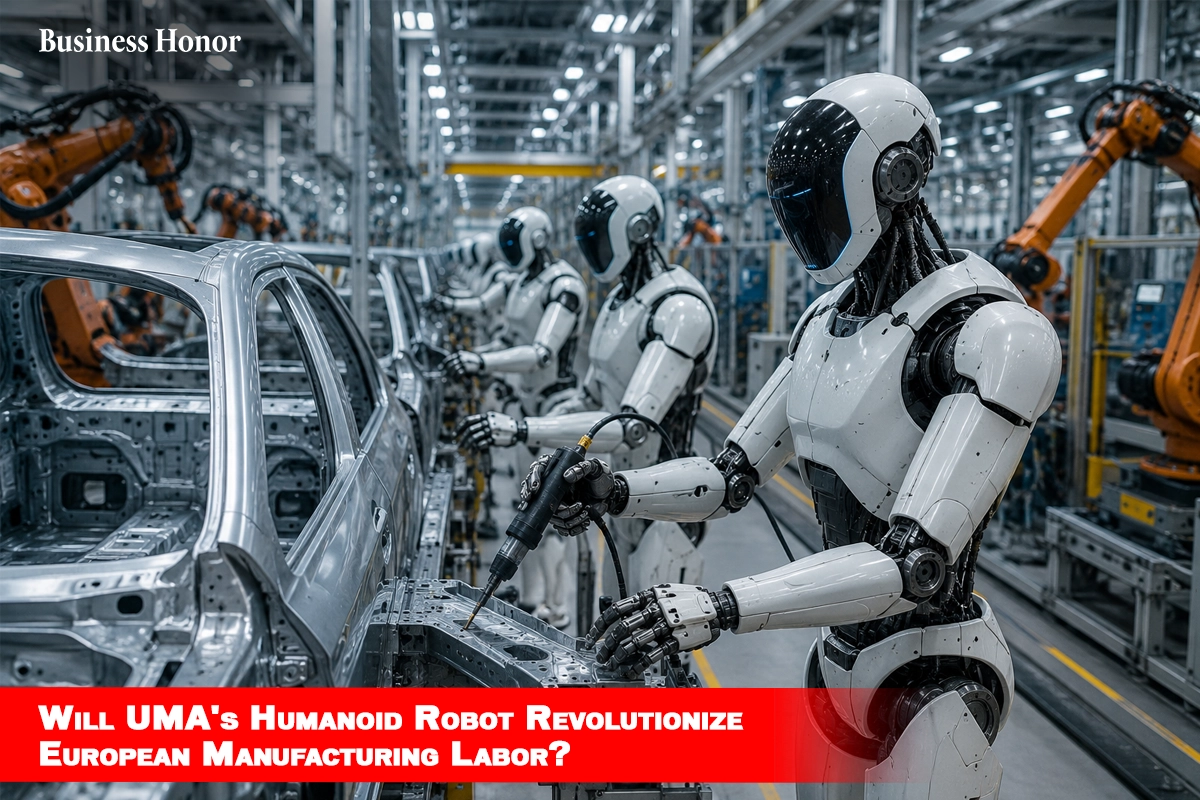
French firm UMA's new humanoid robot learns tasks through human demonstrations, potentially reshaping industrial workforce dynamics across Europe and beyond.
|
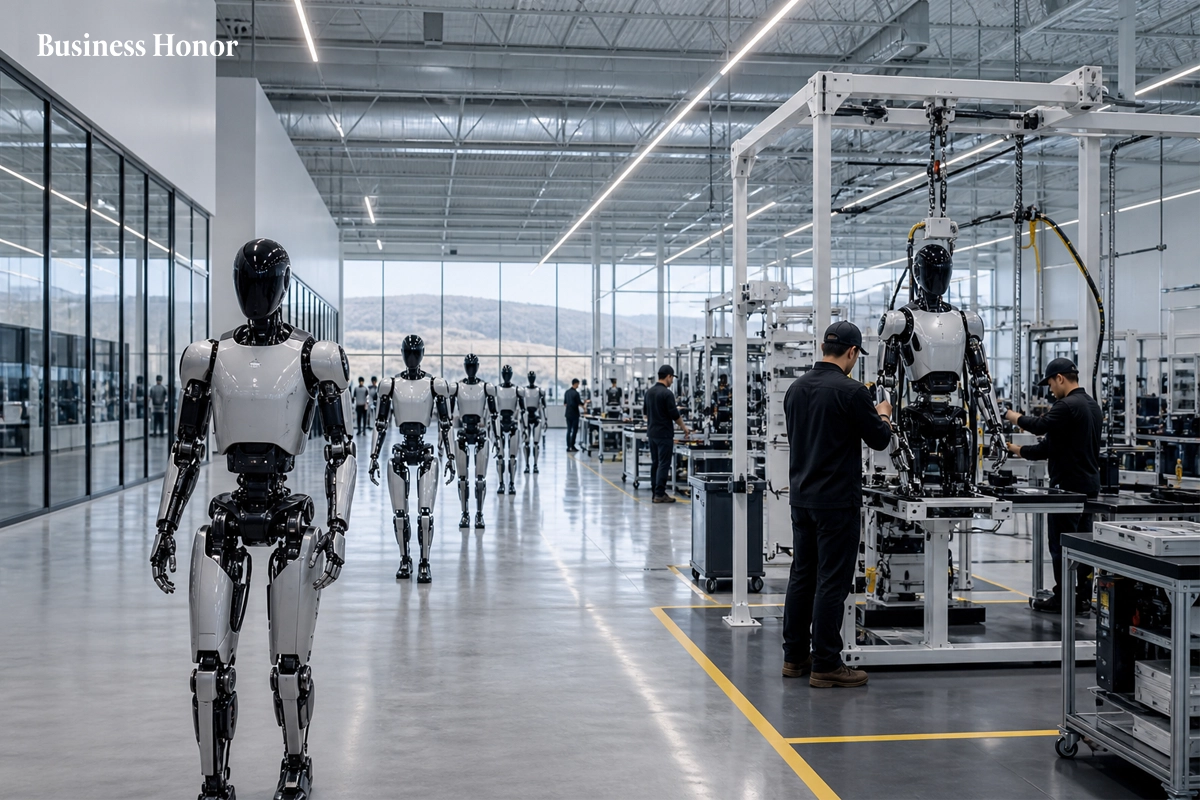
French robotics company UMA has unveiled an ambitious new industrial humanoid robot at the Machina Summit in Paris, marking a significant step forward in the practical application of physical AI in manufacturing and logistics. The creation of the robot marks the first step away from experimental humanoid models toward the technology's practical implementation in European manufacturing. This humanoid features an effective approach to design, emphasizing functionality rather than imitation. It is designed for human proportions, but instead of a traditional face presents a neutral visor making the robot noticeably different from people while remaining a friendly looking machine.
The robot's body has its mechanical joints exposed and uses a soft technology making part of its outer shell transparent while emphasizing the idea of functionality. This design idea is a clear demonstration of UMA's focus on making machines that are capable of performing well in difficult manufacturing environments rather than on showcasing technologies during demonstrations. The essence of innovation that made UMA stand out is the Real-Time Learning technology that represents an AI system changing the way robots learn from their environment completely. Instead of programming machines manually, engineers teach robots the skill by showing them how the task should be done. The robot is able to process information, improving its performance without the need for programming by using the information obtained during the working process.
UMA's vision extends beyond current technological capabilities. CEO and co-founder Rémi Cadène suggested that humanoid robots would require years to reach large-scale deployment, comparing their trajectory to the internet and smartphones, which similarly required substantial time before transforming entire industries. The company believes intelligent robots will reshape the physical economy in comparable ways. The development comes alongside other notable advances in robotics. US-based Weave Robotics recently unveiled Isaac 1, an autonomous home robot designed for residential applications including tidying rooms and doing laundry, highlighting the broader industry shift toward practical, task-oriented robotic systems.
Business Honor is of the view that UMA's Real-Time Learning architecture represents a transformative shift in industrial robotics deployment capabilities and workforce integration strategies.



















.webp)


Comments
0 Comments