
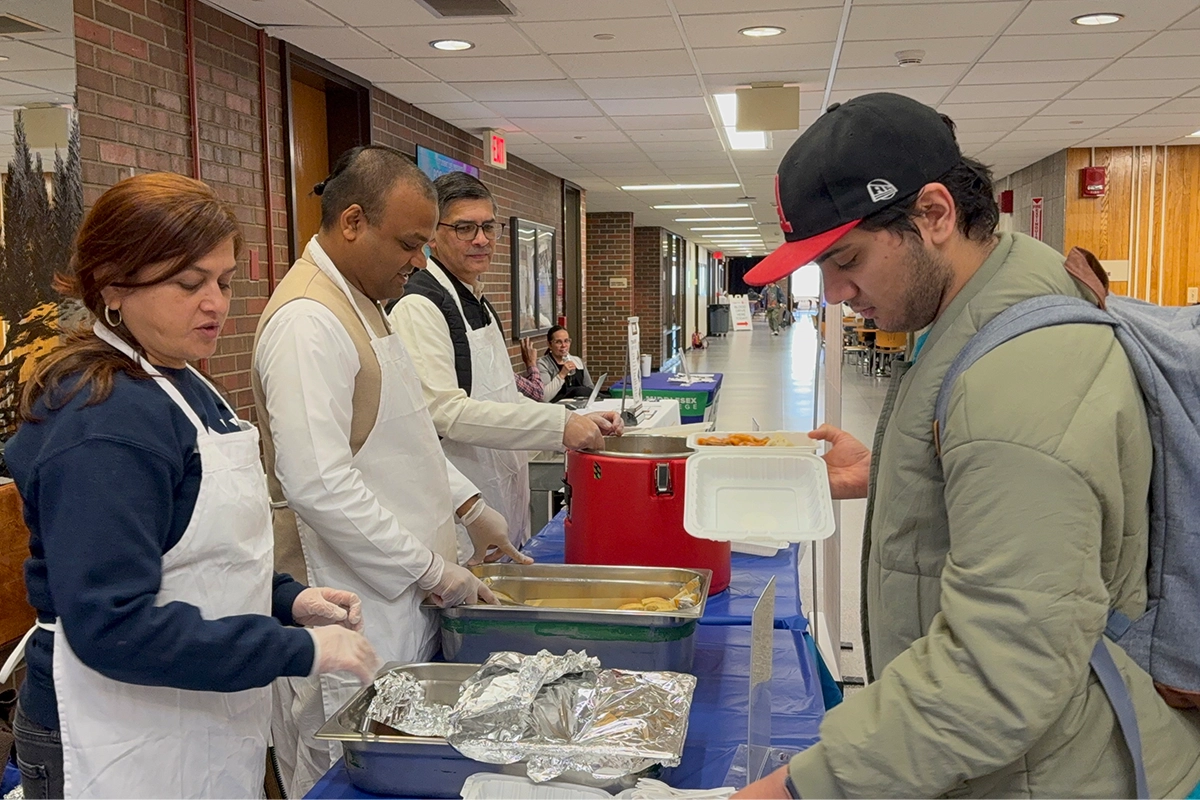
Food insecurity among students and families remains one of the most pervasive hindrances to learning, health, and success.
It is estimated that one out of four college students in the US is food insecure, while one out of seven Americans suffers from the uncertainty of having food consistently available. Large-scale feeding programs are increasingly being explored for what else they can offer beyond emergency aid.
Naveena Neerada Dasa (Nithyanand Kashi Prasad) has been a full-time volunteer and involved in these initiatives for the past 20 years, developing food-security approaches. These connect nutrition, dignity, and education through operational models designed for scale.
Dasa frames the purpose behind this work with a direct focus: "Students should focus on their studies and not worry about whether they are going to think about food."
Based in Bangalore, Karnataka, India, Dasa became a full-time volunteer in 2000 and built his career on building systems for the regular and efficient delivery of meals. Initially, the work began by feeding 1,500 children in five schools in Bengaluru and has grown into a worldwide project that feeds millions every day.
Dasa graduated from the M S Ramaiah Institute of Technology with a B.Tech in 2003–2007. After that, he took several leadership positions: Head of Communications from 2014 to 2018, Director of Strategic Communications and Projects from 2019 to 2023, and Executive Director of Strategy and International Relations since January 2024.
The core of the project is based on the Vedic value of "Sarve Janah Sukhino Bhavantu," which means "May all live happily." This philosophy has developed an approach to food security based on service, transparency, and the impact of meals on education and community development.
One of the major milestones in the project was an event at the United Nations Headquarters in New York to commemorate the four billionth meal. The meeting was attended by community leaders, mayors' office delegates, and politicians seeking to understand how to provide high-quality meals to a large number of people within a nonprofit organization.
Dasa recalls the response from that event: "The event at UN Headquarters in New York brought together community leaders, mayors' offices, and political representatives who were deeply moved by our legacy. They asked why we could not bring the same technology, compassion, and excellence to American students and vulnerable populations."
That international conversation helped encourage adaptation of the model beyond India.
The Akshaya Patra Foundation and the World Food Movement function as part of a federated structure. Akshaya Patra operates as the organization's flagship program in India, while the World Food Movement carries forward the same mission in international settings. There are independent registrations in each country or state where it works. Though legally distinct, the two entities are inspired by the same foundational model. Each is guided by shared founders and executive leadership, and built on the same operational expertise and systems. Every meal served outside India is adapted to suit local tastes and cultural norms.
The work connected food service with broader questions about education, public-private partnerships, and community development.
Shridhar Venkat, CEO of The Akshaya Patra Foundation, describes Dasa’s role in building those relationships: "Dasa’s work with government relations and cross-sector partnerships has shown how collaboration between institutions can help food-security programs expand while maintaining accountability and public trust."
Dr. Taraknath Woddi, CEO and Co-Founder of Anicca Data Science Solutions, points to the strategic capabilities behind this expansion: "What disting
uishes Naveena further is his rare understanding of policy frameworks, regulatory compliance, political dynamics, and grassroots social realities.
He possesses a highly nuanced understanding of how public systems function and how social programs can be designed and implemented to effectively address real community needs."
The scale behind the system reflects decades of operational development. Today, the program serves approximately 2.35 million children daily across more than 25,768 schools in 16 states and three Union Territories through a network of 78 centralized kitchens.
Mukesh Aghi, President and CEO of the US-India Strategic Partnership Forum (USISPF), places the work in a broader institutional context: "The Akshaya Patra Foundation operates the world's largest NGO-led school meal program. Sustaining a program of this complexity requires executive leadership of the highest caliber. Naveena has been a senior architect of that scale for years."
The organization provided around 480 million mid-day meals and 120 million morning nutrition servings in 2025. A special commemoration of the 5 billionth cumulative meal was held at Rashtrapati Bhavan on March 17, 2026, with the President of India.
Measured outcomes show the relationship between nutrition and education.
Reported results include a 78% increase in enrollment, an 86% increase in attendance, and a 60% reduction in dropout rates. Research and stakeholder feedback have also shown that 78.2% of parents reported health improvements in their children, while overall stakeholder satisfaction reached 80%.
For Dasa, the work centers on human impact rather than on numbers alone. The daily process of preparing and delivering meals represents a connection between systems and people: "My deepest motivation is the sound of delivery vehicles departing, loaded with love, affection, compassion, and dignity. Food, in our model, is 'food for transformation' and 'food for education.'"
The shift to the US involved adapting to the new environment, especially to the challenges faced by college students who are food insecure. Unlike the previously employed practice of using donations of packaged products, this program involves freshly cooked meals delivered directly to educational establishments.
Dasa puts the distinction plainly: "What sets us apart is our insistence on freshly cooked, piping-hot meals tailored to local palates, delivered regardless of weather conditions."
Traditional food banks play an important role by distributing donated and shelf-stable products. But Dasa’s model operates through a different structure. The centralized kitchen model is described as a technology-enabled fresh-meal ecosystem. It prepares hot meals at scale and uses AI-supported logistics to manage demand, transportation, and delivery.
The system combines proprietary kitchen technology with rigorous operational standards. In India, the foundation's centralized kitchens can produce up to 100,000 hot meals within five to six hours, supported by AI-driven demand forecasting and route optimization that minimize waste. In the United States, current kitchen capacity stands at 500 meals per shift, with active work underway to scale that figure to 5,000 meals as the program expands.
Prof. Anurag Mairal, Adjunct Professor at Stanford School of Medicine and Director of Global Translation & Outreach Programs at the Mussallem Center for Biodesign, describes what sets the approach apart: "Naveena does not romanticize social work; he is precise about what works, what is hard, and why. His particular skill is connecting the dots across domains that are usually treated separately, reading community needs accurately, designing technological solutions, structuring public-private partnerships, and building financial sustainability."
Scaling works because the model is intended to be a repeatable framework and not a one-off project. New sites can tailor their menu options and partnerships to suit different communities while using the same operational framework. The open-source transfer of knowledge will ensure that other companies learn from the already known process.
According to Dasa, the principle of operation is: “Our proprietary kitchens, each able to provide 100,000 hot meals within five to six hours, combined with AI-driven demand forecasting and route optimization, have become a global standard for cost-efficient mass meal delivery.”
The reason other organizations study the model comes from several factors working together: measurable outcomes, cost efficiency, transparent financial stewardship, and a willingness to share knowledge.
The meal cost efficiency is approximately $0.20 per meal in India. It demonstrates how optimized systems can support large-scale service while managing resources responsibly.
In the United States, where each meal currently costs approximately $12 to produce and deliver, the program has established a presence across multiple states. Operations span three colleges each in New Jersey and New York, two in Boston, seven locations in the Bay Area, and Title I elementary schools in Virginia. Weekly meal volumes have reached approximately 2,300, with cumulative totals of roughly 23,000 meals in 2025 and 40,000 in the opening months of 2026 through May. The organization is targeting 100,000 meals by the close of 2026, scaling toward an annual goal of one million meals between 2028 and 2030.
Madhu Pandit Dasa, Founder and Chairman of The Akshaya Patra Foundation and World Food Movement, describes the U.S. expansion through the example of Rutgers: "The Rutgers experience showed the strength of the model, growing from around 100 meals to 8,000 meals as partnerships, operations, and community support developed together." The model's portability, however, extends far beyond American borders.
Beyond the United States, the model has influenced food-security efforts internationally.
Kenya’s partnership with Food for Education as an official Knowledge Partner represents a formal exchange of expertise, with the partner program reaching more than 500,000 meals daily. The approach has also attracted international delegations, including a visit from the U.S. Envoy’s Office for Future Generations.
Various global forums have provided additional opportunities to discuss the food system and its social impact.
Dasa has been invited to the World Economic Forum in Davos, where hot meals were served to the world leaders, and has given speeches at Stanford University and IIT2026 at Long Beach, CA. In addition, Dasa participated in the YPO "Lights, Camera, Peace" event in Cannes in May 2025 as a guest speaker on peace.
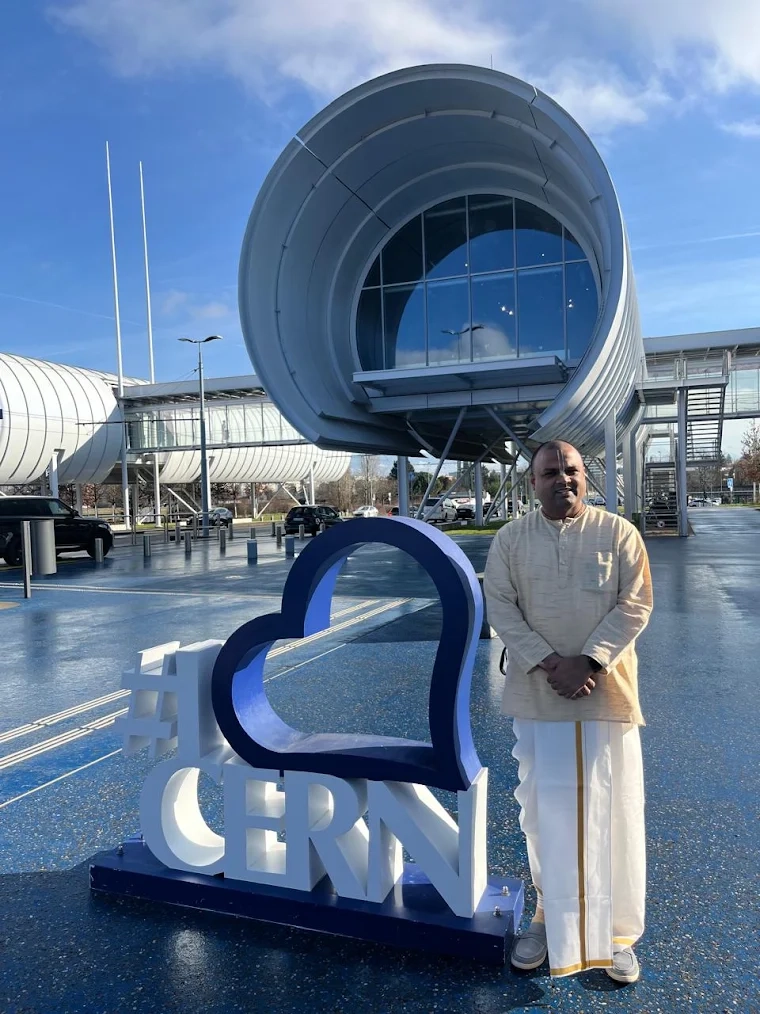
An invitation from Dr. Abhijit Mathad, Senior Research Fellow, to visit CERN in January highlighted interest in the intersection of technology, innovation, and humanitarian systems.
Sustaining growth requires more than expanding meal counts. Dasa identifies long-term institution-building as a major challenge, requiring financial planning, partnerships, and continuous improvement.
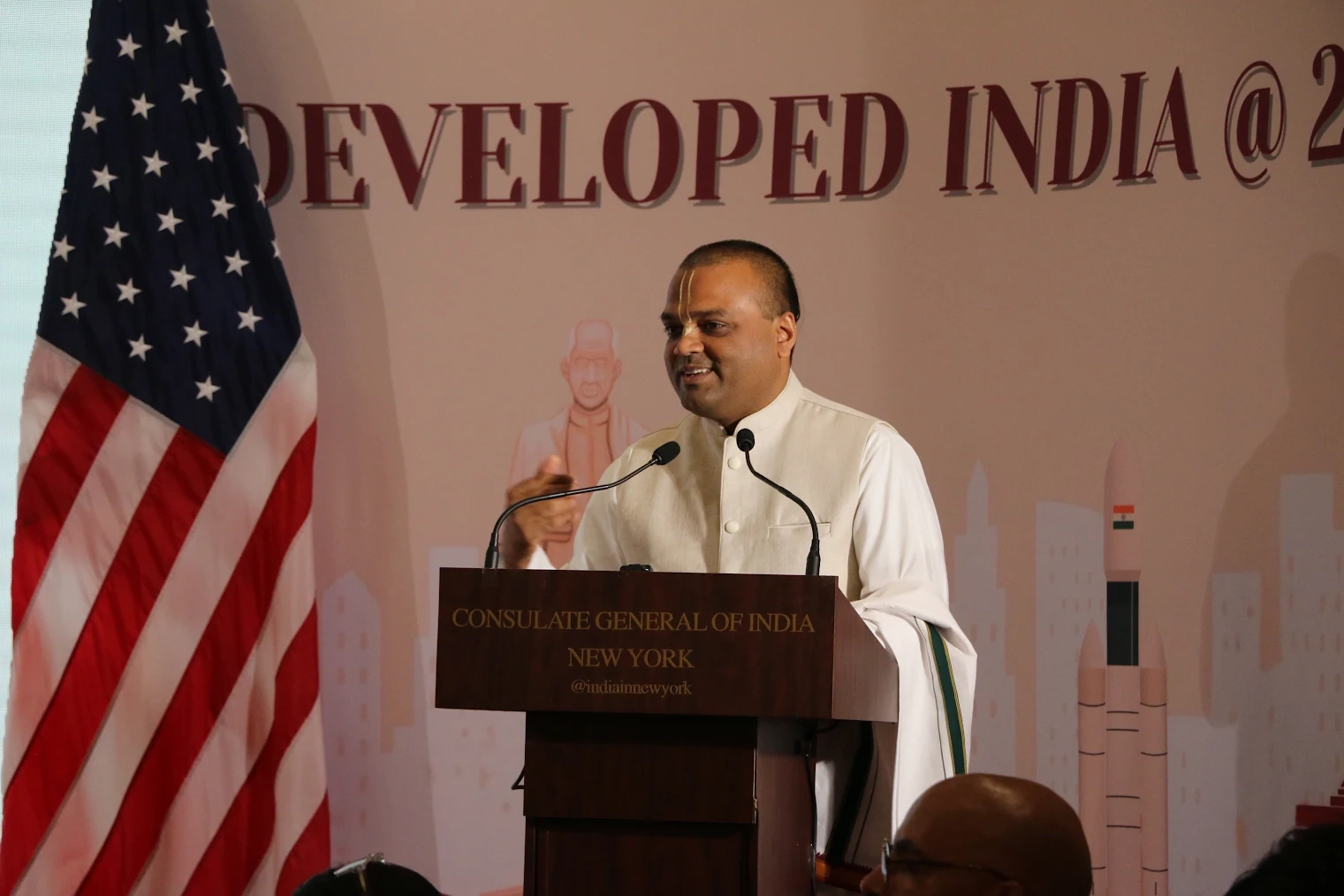
Dasa shares the approach to that challenge: "Sustainable scaling remains our greatest challenge. We tackle this through institution-building: developing endowments, maximizing kitchen utilization beyond midday service, and forging holistic partnerships. These address not only hunger but housing, job training, and community development."
The COVID-19 crisis tested the strength of the system. During that period, the organization delivered 240 million additional meals while adapting operations to changing conditions.
Shridhar Venkat, CEO of The Akshaya Patra Foundation, reflects on that period: "During COVID-19, Dasa helped guide the organization through a crisis that required rapid coordination, decisive action, and continued focus on serving vulnerable communities."
The operational values remain highly relevant to the organization's culture. The value of transparency ensures accountability in finance, efficiency facilitates improvement in cooking and transport, while innovation promotes the application of technology and information. Teamwork is crucial since mass feeding requires the coordination of kitchen staff, logistics, institutions, and volunteers.
Building a strong organizational culture has also been part of the long-term strategy. A workplace focused on purpose, learning, and collective responsibility helps attract people who want to contribute to complex social challenges.
Deepa Prahalad, an author and design strategist, notes the operational depth behind the public-facing work: "The command of every detail of the operations as well as the recall of individual stories that Naveena has is remarkable. In a recent community gathering in San Diego, he clearly articulated his aspirations for the feeding programs in the U.S., which dishes were popular by state, and the financial standing of the families in the programs. The ability to be hands-on and philosophical is something that stands out."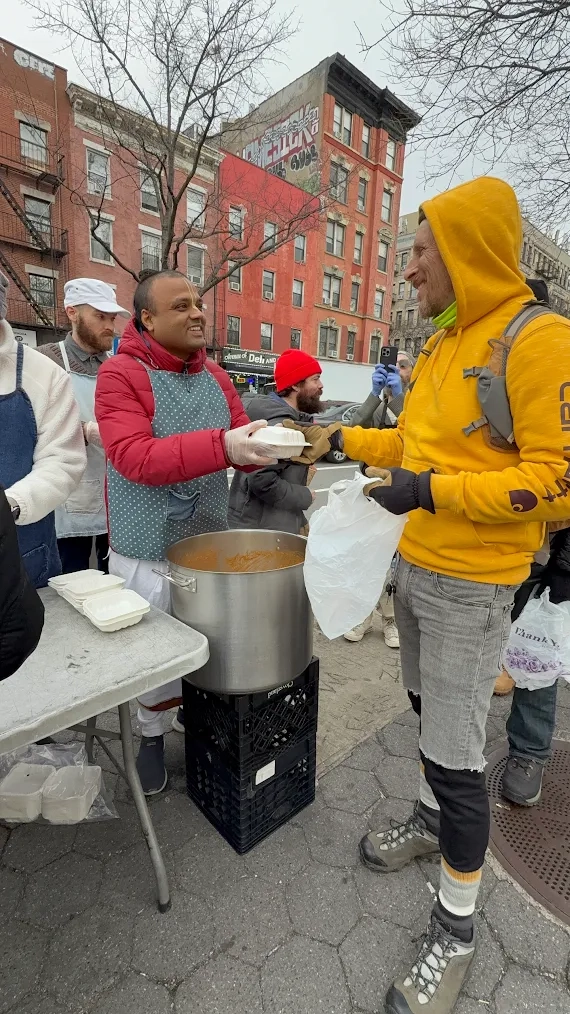
This operational and strategic clarity has been validated by major international recognition. The Akshaya Patra Foundation received the BBC Global Food Champion Award in 2019 and was conferred the Gandhi Peace Prize — both acknowledgments of a model that combines humanitarian scale with institutional rigor. According to colleagues, these accolades reflect the methodology Naveena championed: an integrated system in which technology, transparent accountability, and cross-sector partnerships produce outcomes that awards committees find impossible to ignore.
Asha Saxena, Founder & CEO of World Leaders in Data and AI (WLDA) and Adjunct Professor at Columbia University, describes the consistency between values and global relationships: "Dasa’s approach reflects a strong alignment between values, technology, and collaboration. That consistency helps create trust across borders and supports partnerships built around shared goals."
External validation has been achieved through research and evaluation. The impact study conducted by Nielsen for the year 2025 has shown the impact of the program activities. These results provide further evidence of the impact of food systems on education, health, and communities.
The work of Dasa provides an example of the movement towards understanding that hunger should be treated as a systems problem and therefore requires solutions such as infrastructure, technology, and collaboration. The idea is to develop a reliable mechanism that would enable people to have access to quality food.
Dasa still aims to eliminate food insecurity, which hinders development and success: "Our vision is to eliminate food insecurity as a barrier to opportunity through world-class kitchens, sustainable endowments, and collaborative ecosystems."
Starting with five schools in Bengaluru and serving billions of meals in several countries, this process shows how a well-designed nonprofit organization's system expands without losing focus on dignity and service.
About the Author
Sandra Kelembeth is an experienced content writer known for her strong attention to detail and clarity in communication. She specializes in crafting engaging, well-structured, and informative content across various topics. Her writing focuses on breaking down complex ideas into simple, easy-to-understand language, making information accessible to a wide audience. With a reader-first approach, she aims to educate, inform, and empower individuals to make better, more informed decisions through clear and impactful storytelling.













.webp)
.webp)
.webp)


Comments
0 Comments