
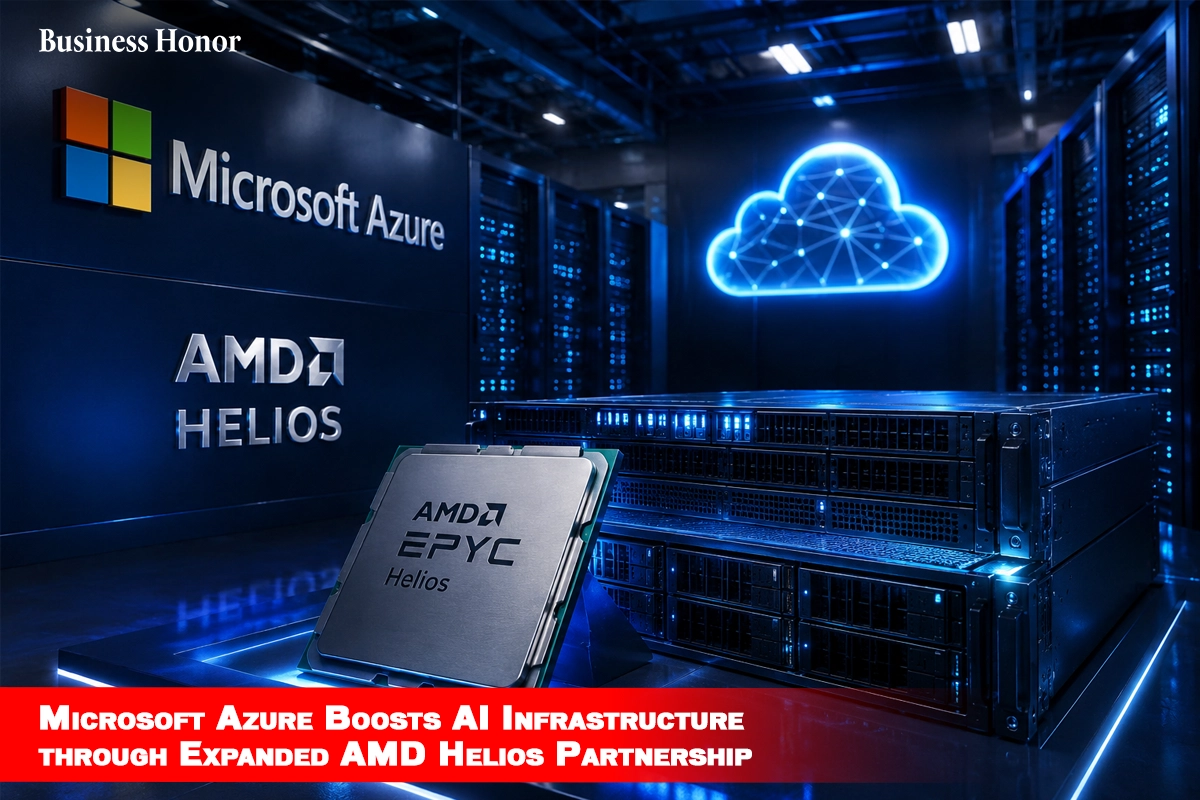
Microsoft Azure expands its AI infrastructure by adopting AMD Helios, delivering greater performance, infrastructure choice and scalable enterprise AI capabilities for production workloads.
|
The enterprise artificial intelligence solution by Microsoft Azure is receiving a boost in the form of a furthered collaboration with AMD, where they will be working towards providing the future infrastructure that will help meet the needs of production-scale AI operations. The collaboration comes amidst the evolving landscape where AI projects are transitioning from being experimental to widespread enterprise deployment that will need highly optimized computing solutions.
One of the key features of this announcement is the adoption by Microsoft of the AMD Helios rack-scale AI infrastructure, which consists of the AMD Instinct MI455X accelerators along with next-gen AMD EPYC processors, Pensando Networking, and the ROCm software stack. It is expected that the initiative will bring a significant improvement in the performance of AI training, inference, simulation, and new-age agentic AI use cases. As Microsoft Azure AI infrastructure expansion continues, organizations will gain more options to deploy workload-specific AI environments while improving operational efficiency.
The partnership is not restricted to accelerators but also involves the introduction of Azure infrastructure using sixth-generation AMD EPYC processors. The systems have been developed specifically to handle intensive workloads, which include semiconductor engineering, AI processing, and massive cloud computing. The Microsoft Azure AMD Helios partnership reflects a broader industry trend where cloud providers increasingly focus on integrated AI platforms instead of standalone hardware components.
According to AMD, Helios is an illustration of its design for AI computing in racks, where processors, networks, coolants, and open-source software have been integrated to ensure handling of various AI loads from enterprise organizations. On the other hand, Microsoft will incorporate these solutions within the cloud ecosystem offered by Azure.
Both these firms stressed the significance of openness in software and infrastructure options. By providing ROCm and Azure's cloud platform, the customer will be able to get more model compatibility and choose the right infrastructure in terms of their needs for performance, scale and costs. Enterprise AI cloud infrastructure solutions that have been built through this partnership will help to boost the use of AI solutions in different industries, including manufacturing, healthcare, finance and others.
With the ongoing investments in artificial intelligence, Microsoft and AMD seek to deliver infrastructure that combines computing performance, power efficiency and ease of use for future enterprise AI solutions. Business Honor observes that Microsoft's expanding AI infrastructure strategy reinforces the growing importance of open, scalable cloud platforms as enterprises accelerate large-scale artificial intelligence adoption.













.webp)

.webp)





.webp)


Comments
0 Comments