
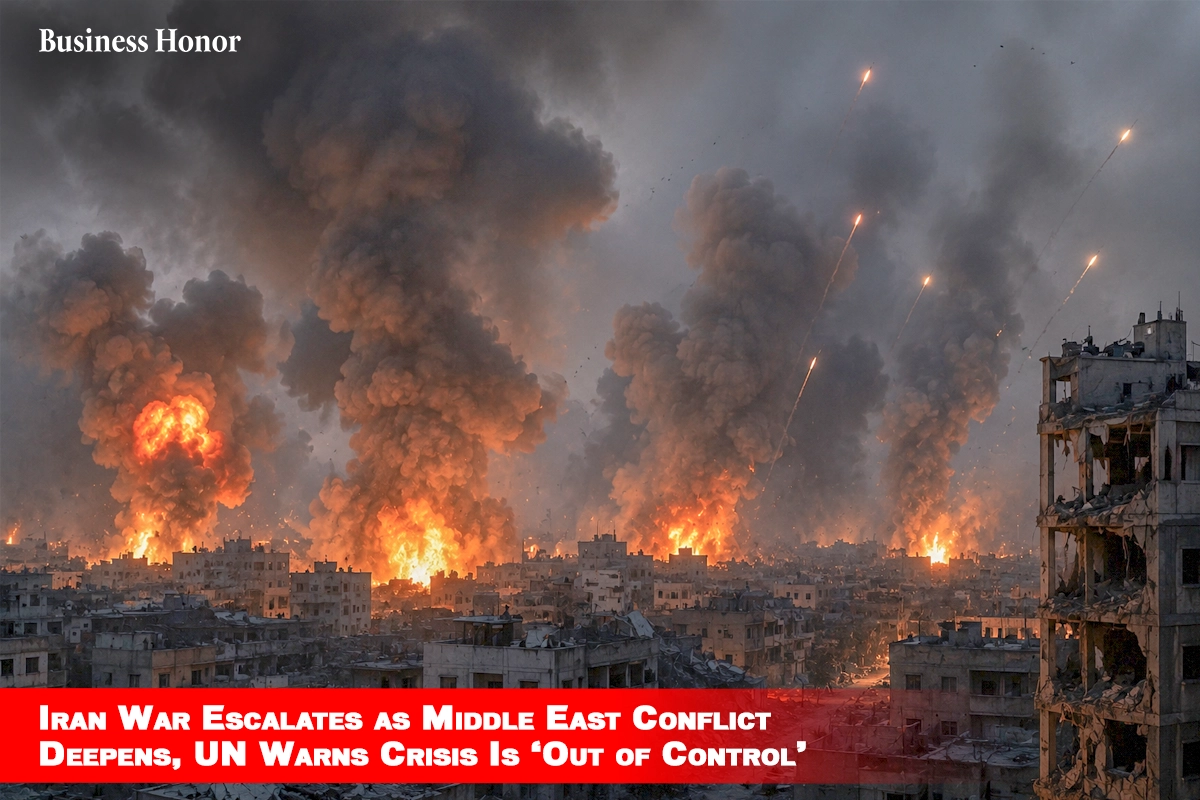
The Iran war intensifies as renewed US-Iran fighting, rising execution fears, and oil above $100 fuel concerns over Middle East conflict, global energy markets, and regional stability.
|
The Middle East war has escalated further as a very fragile peace between the United States and Iran came to an end, leading to new military attacks as well as new fears about the global energy supply. The latest developments have placed the Iran war latest news today among the world's most closely watched geopolitical stories.
According to UN Secretary-General Antonio Gutteres, "the situation is getting out of hand," and he says that confrontations will lead to more widespread conflict in the region, with unknown repercussions around the globe.
U.S. forces conducted their 13th consecutive night of strikes against facilities that produce Iranian drones, as well as other coastal and military facilities. According to Iran’s state media, there were explosions near the Strait of Hormuz and other locations.
At the same time, human rights organizations are warning about the possibility of increased executions of political prisoners as a result of the new conflict. According to advocacy organizations, the government is using the death penalty to suppress the protesters as they protest against the government. Monitoring organizations indicate that there have been more than 400 executions this year, with dozens of political prisoners receiving death penalties.
The war has also affected energy markets around the world. Brent crude rose to above $100 per barrel, hitting a two-month high amid attacks by Iran-backed Houthi rebels on Saudi oil tankers in the Red Sea, which is threatening another oil trade route apart from the Strait of Hormuz. Analysts indicate that this disruption could rekindle global inflation concerns.
President of the United States, Donald Trump, stated that he is thinking about conducting a much bigger military action against Iran, calling it a "massive attack" in case the conflict continues. Trump also threatened Iran not to support additional Houthi attacks, threatening Iran with retaliatory military actions in case of provocations.
Additionally, the White House announced that any future assistance by the US to the nuclear program of Saudi Arabia will be conditional upon the country's participation in the Abraham Accords and the normalization of relations with Israel.
In a situation where diplomatic efforts fail, military escalation, humanitarian concerns, and disruptions in energy markets continue to grow. Business Honor believes sustained diplomacy remains essential, as escalating military conflict threatens regional stability, global energy security, investor confidence, and broader economic recovery.










.webp)

.webp)




.webp)


Comments
0 Comments