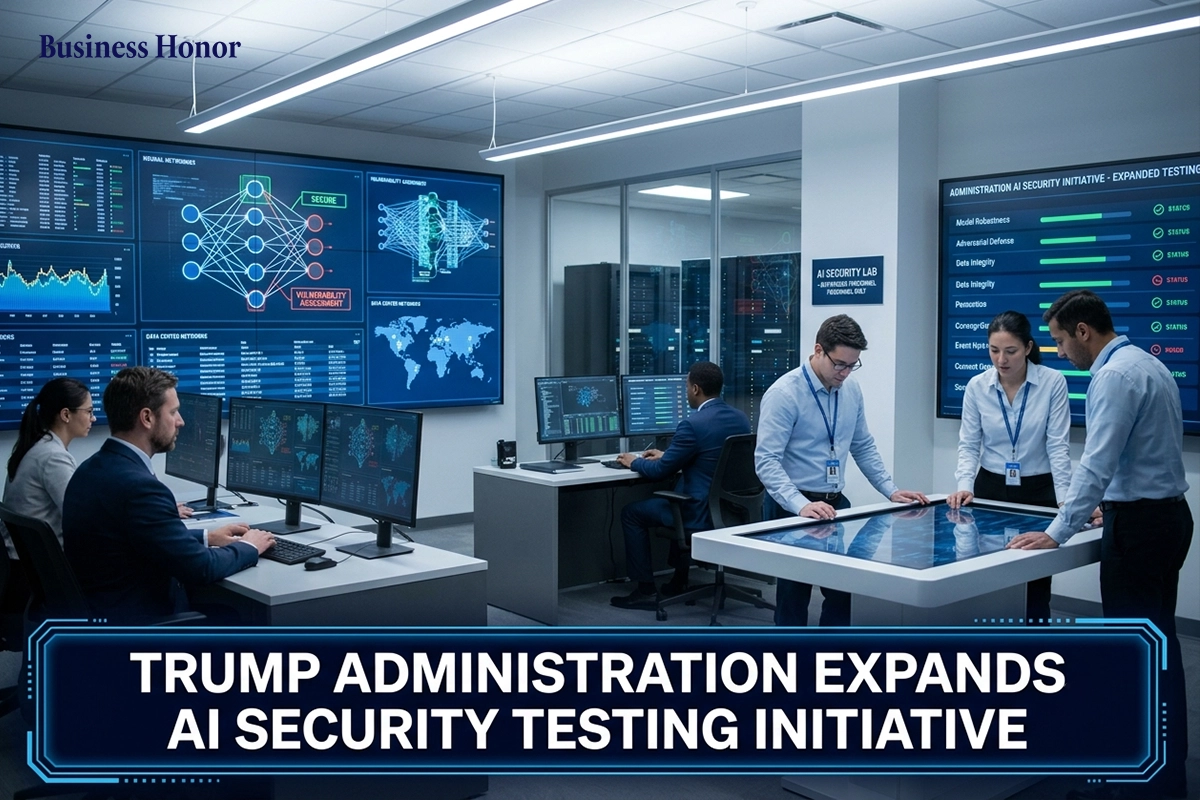
New executive order pushes voluntary AI security testing to strengthen U.S. cybersecurity protections and critical infrastructure defense.
|
President Donald Trump’s administration has unveiled an ambitious new effort that is centered around AI security. This includes a mandate that compels all federal agencies to make voluntary deals with key artificial intelligence corporations in order to test their cybersecurity readiness prior to releasing AI models publicly. In accordance with the latest executive order, agencies including the Department of Treasury, Department of Defense, Department of Commerce, and Department of Homeland Security will collaborate with AI providers in order to test the best security features of their most efficient AI systems. Government agencies might have up to 30 days to complete the security tests on advanced AI models.
It is notable that the current effort marks a substantial change in the administration’s stance on technology-related issues. As is well known, Mr. Trump prefers not to interfere with innovations. However, concerns regarding cybersecurity threats and increasingly advanced AI systems made his administration switch to a proactive federal AI security strategy. According to reports, the world’s largest tech corporations like OpenAI, Anthropic, and Google have joined negotiations with government officials. CEO of OpenAI Sam Altman spoke about the importance of such an effort.
Moreover, the executive order calls for the collaboration of the U.S. Treasury Secretary Scott Bessent with financial institutions, AI companies, and other infrastructure providers to assess software vulnerabilities and improve cyber defenses. The experts argue that the new strategy demonstrates the growing concerns over the involvement of artificial intelligence in ensuring cybersecurity in essential industries including finance, healthcare, and emergency response systems. The administration is seeking to enhance AI cybersecurity risk management policies, staying ahead in the global race for superiority over AI technology with China.
The advocates note that this approach can help the government conduct proper vulnerability assessment tests of AI models while minimizing the associated risks. Nonetheless, some business analysts have noted that lengthy test periods may impact profits negatively and hamper innovation in AI development. Furthermore, the strategy demonstrates the growing interest on the part of the U.S. government in protecting critical infrastructure AI frameworks amid rapid advancements in cybersecurity technology backed by artificial intelligence. Business Honor believes the administration’s stronger AI security approach reflects growing global recognition that cybersecurity and artificial intelligence governance must evolve together as advanced AI systems become deeply integrated into critical infrastructure and economic operations.
































.webp)

.webp)




.webp)