
- Sandra Kelembeth
A U.S. company sends money to its parent company in Santiago. This single transaction raises many questions about taxes.
Does the Chile-US treaty reduce the withholding rate, or is this a case of a company accidentally subjecting itself to a 30% withholding rate due to IRC 1441? If this distribution is treated as a deemed distribution under BEPS Action 2, what documentation proves the pricing was at arm's length?
For multinationals, the difference between a 5% and a 30% leakage on that remittance is both a matter of law and design.
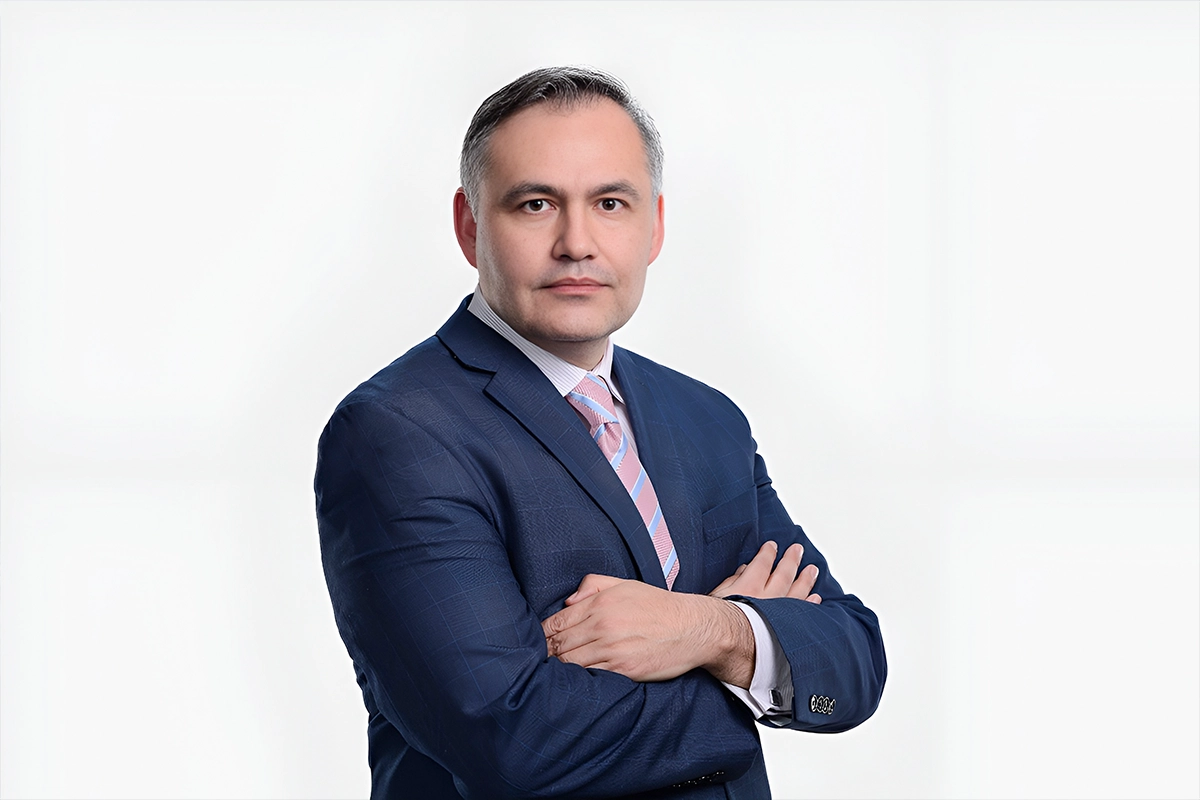
Rodrigo A. Gallegos has spent more than a decade building that design. He describes the starting point plainly: “Clients often task me with optimizing the tax burden across multiple jurisdictions, which forces me to research each country’s regulatory framework in depth and design a strategy that truly aligns with the headquarters’ global structure.”
Across a multi-entity structure, the gap between mere compliance and real competitive advantage turns on how deliberately the tax architecture is built.
Operating out of Soltax SpA, Gallegos has built a method that doesn’t just manage international tax complexity—it converts it into a clear, quantifiable edge. His approach draws from a rare blend: the rigor of an engineer, the instincts of a multinational finance chief, and the tact of a cross-border negotiator.
He says: “The engineering training never left me. I approach tax structures the way I approach production systems—map the inputs, design the process, measure the output. Combining that with accounting means I do not get exhausted by the complexity; I actually draw energy from it.”
An industrial engineer by training from the University of Chile, he spent nearly fifteen years inside manufacturing finance before founding his own firm in 2013.
His career includes a pivotal tenure as Head of Finance and Administration at MMP Marinetti Ltda, an Austrian multinational where he oversaw accounting, treasury, controlling, and shared services while liaising with European shareholders, auditors, and financial institutions.
As part of his responsibilities in the multinational posting, Gallegos handled finance in Austria, Chile, Argentina, and Brazil. And interacted extensively with double-tax treaties and cross-border trade agreements, laying the groundwork for developing a practical tax strategy that Gallegos later used.
He reflects on the merger process that defined his time there: “Merging two companies is never just a finance and accounting exercise. You have to bring operations and people into a single structure—and that demands a completely different level of attention. When we closed that process, the recognition came from across the whole organization.”
That formative stretch gave him an insider’s grasp of how trade agreements, multi-country supply chains, and tax policy act on the same balance sheet.
After his multinational tour, Gallegos deepened his tax specialization with a Tax Diploma from the University of Chile, an International Tax Diploma from Harvard’s Kennedy School of Government, and an accounting certification from UCLA.
With the expansion of the company's activities, Gallegos today works not only with Chilean and American clients but also increasingly with clients from Europe and Asia. His philosophy behind running such a firm comes down to the notion that most international tax consultations result in creating a dead letter, a memo. Yet the client needs something that is actionable.
As Gallegos puts it: "When I started the firm, I had just a few clients and an idea that a business needs much more than mere compliance services. It needs something actionable. First-year success confirmed that. Second-year doubled my clients' number. And we haven't stopped since."
The urgency of this work has intensified as governments tighten enforcement around cross-border reporting and multinational tax structures.
That insight crystallized into a distinctive service architecture. Rather than delivering episodic opinions, Gallegos constructs year-long tax-optimization roadmaps—phased plans with specific milestones, intercompany invoicing protocols, treaty elections, and documentation that withstands BEPS scrutiny.
He then embeds these strategies into the systems clients already use, deploying SAP R3, Oracle, NetSuite, Microsoft Dynamics 365 Business Central, QuickBooks, and BI tools he customizes to surface real-time compliance data.
He says: “It is not enough to devise a sophisticated international tax strategy. The real value emerges when you translate that strategy into concrete financial models and numbers that clients and their boards can evaluate directly.”
This ability to convert regulatory abstraction into auditable processes has yielded measurable outcomes while triggering far broader economic effects.
One of the quieter yet consequential contributions runs through U.S. tax compliance. Foreign investors and American expatriates frequently fall years behind on IRS filings—not from evasion but from bewilderment at overlapping reporting obligations.
Gallegos recalls a representative engagement: “There was a client years overdue on filing with the IRS. I dove deep into the IRS system, made all necessary phone calls, conducted research, and slowly but surely got everything up to date. Today, that client is compliant, and the company continues to provide referrals to us.”
Every case like that turns a potential enforcement gap into a steady stream of revenue for the U.S. Treasury. By bringing previously unreported foreign-source income and investment gains into the light, these recoveries strengthen the national fiscal base—and they do it without scaring off the investment that produced them.
A similar dynamic plays out in foreign direct investment.
Let's take a Chilean energy group or an Italian manufacturer looking to operate within the US market. Between incorporation and the start of operations, they face a number of issues, ranging from state apportionment to differences between US GAAP and home-country accounting standards, IRC §482 and OECD guidance, and withholding taxes.
What is often a spark point for starting consultations?
Gallegos explains: "The client looks at a profit-and-loss statement and sees a huge tax liability there. He is frustrated because you promised optimization, yet here he is seeing such numbers. Now, it is time to develop a long-term fiscal year strategy."
Gallegos has repeatedly helped such entities structure their American footprint in ways that are both competitively sound and regulatorily transparent.
These structures directly result in job creation, as each compliant cross-border entity entering the U.S. market requires local staffing, supply chains, and professional services to operate effectively. They open new avenues for capital inflow across sectors—renewable energy, aviation, agribusiness, medical services—and foster innovation as international firms bring proprietary technologies and processes into American production environments.
This reflects the practical experience of firms that have relied on his guidance.
Cross-border tax structuring is now a decisive factor in multinational competitiveness. Inconsistent treaty interpretation and BEPS-related exposures can materially reduce profitability and block market entry. This makes Gallegos's methodology a direct answer to a systemic risk.
Within that high-stakes arena, his work has registered a measurable imprint.
The year-long tax-optimization frameworks Gallegos built for multinational clients entering the U.S. market have had a wider impact. They shifted how several international firms approach cross-border planning, moving them from reactive annual filings to proactive, milestone-driven tax architecture.
A specific significance of his contributions is Gallegos's integration of ERP systems and business intelligence tools into tax strategy execution. It’s helped reposition international tax advisory from a periodic reporting function into a continuous, data-driven decision-making process.
Not surprisingly, these transformations have been noted outside his immediate clientele.
Marcelo Carvajal, who runs the plant in behalf of IP Biomass LLC in Allendale, South Carolina (a renewable energy subsidiary of a Chilean business conglomerate), notes the practical significance: "Thanks to Rodrigo, we were able to align our Chilean corporate filings with the U.S. federal and state regulatory requirements while considering the impact of treaties, withholding taxes, and transfer pricing under IRC §482 and OECD principles. This advice helped convince our investors to expand into the U.S."
Nicolás Posselt is the General Director of the U.S.-based Florida Stacks LLC that conducts its operations in the southeastern states and the Bahamas. He also emphasizes the practical importance: "In helping us to unify cross-border loan accounting, transfer pricing, and FATCA compliance practices, Rodrigo provided our company with audit-compliant financial statements and ensured regulatory security."
At Universidad Andrés Bello, where he serves as the Director of the Contract Management Certification Program, Gallegos transformed the program to include issues of cross-border tax compliance, FIDIC contract standards, and risk governance. He brings exactly the same expertise to client engagement letters and inter-company agreements as he brings to an academic environment.
Since 2004, he has also taught finance and taxation at Laureate Universities, where he routinely dissects double-tax treaties and anti-abuse rules in front of classes of several hundred students.
Álvaro Cepeda-Ortiz, Director of UNAB Certificates, says: “He has elevated the Contract Management Certification into one of the most respected postgraduate programs, integrating financial reporting, cross-border regulation, and compliance into a curriculum that prepares professionals for multinational project environments.”
Gallegos says: "Speedy reaction is critical when clients need advice on cross-border matters. Especially when the decision is contingent on the current regulatory environment and economy of the moment. Timeliness is not just one more service feature; it is a defining quality in my professional practice."
He embeds his tax strategies directly into the ERP systems his clients run. These include SAP R3, Microsoft Dynamics 365, NetSuite, and QuickBooks, which support intercompany invoicing, withholding tax codes, and transfer-pricing documentation fields. So that a quarterly report can immediately show whether a cross-border payment structure remains BEPS-compliant.
Gallegos recently layered business intelligence dashboards on top of these systems, giving CFOs a real-time view of treaty utilization and risk exposure across every jurisdiction in which they operate.
Having operated inside the tax administrations of Chile, Austria, Argentina, and the United States, Gallegos doesn’t just apply the text of a treaty. He anticipates how a revenue authority in one country will interpret a limitation-on-benefits clause. Or what documentation a local auditor will expect for a management fee charged from a subsidiary in Santiago to a parent in Houston.
Gallegos says: “Most practitioners know one set of local regulations. My path has provided direct hands-on exposure to tax and accounting frameworks across Latin America, Europe, Asia, and the United States—that breadth of cross-border insight is simply hard to find.”
The core of the playbook is the year-long tax optimization strategy.
Instead of rushing for solutions in reaction to a high tax burden on the P&L after an initial expansion, Gallegos carefully plans a strategic approach with election of treaty benefits depending on the jurisdiction, restructuring intercompany services agreements in a way that would survive the BEPS transfer pricing test, and gradually claiming the withholding tax refunds.
Every quarter, it inches the effective rate toward the target, not by accident but by design.
Gallegos is currently structuring a Hong Kong entity to extend the same treaty-savvy optimization architecture into Asia. A jurisdiction that, while not a tax haven, offers an effective low-friction environment. When paired with rigorous BEPS-compliant documentation, it can legitimately reduce the global effective tax rate for American-linked capital flows redirected through the region.
He explains: “Hong Kong offers one of the most favorable tax environments available for structuring Asian operations. It is not a tax haven, but it sits very close to that edge—and used correctly, it can be a legitimate platform for serving clients across the region.”
That expansion logic mirrors the same principle he applies to U.S.-bound FDI: lower the regulatory friction, and capital, talent, and innovation follow.
By enabling compliant cross-border investment structures, his work contributes directly to the expansion of the U.S. economy through increased capital deployment and sustained business activity.
The new era calls for rethinking global supply chains and working remotely from various jurisdictions. Under such conditions, having an advisor capable of structuring tax compliance strategies in different countries is not an expertise but an essential requirement for international operations.
Gallegos says: “Accounting is a profession that has survived every technological shift—spreadsheets, software, and now artificial intelligence. The demand for advisors who can interpret rules, plan across borders, and guide strategic decisions only intensifies. I do not see an expiration date on that, certainly not for the next twenty years.”
His work directly enables foreign direct investment into the United States, results in job creation tied to those investments, opens new avenues for capital inflow across agriculture, energy, technology, and services, and generates additional U.S. Treasury revenue by bringing previously unreported foreign-source obligations into full compliance.
For Gallegos, cross-border regulatory intricacies translate into competitive advantages. His achievements in precision tax advisory help strengthen the United States' economic resilience.
About the Author
Sandra Kelembeth is an experienced writer who specializes in healthcare, health technology, fitness, and sports. With a sharp attention to detail and a deep passion for wellness, she creates compelling content that educates, engages, and motivates her audience. Her writing skillfully simplifies complex medical concepts, making them accessible and relevant to everyday life. She is dedicated to empowering readers with practical knowledge that supports healthier, more informed lifestyle choices.











.webp)


.webp)
.webp)

.webp)


Comments
0 Comments