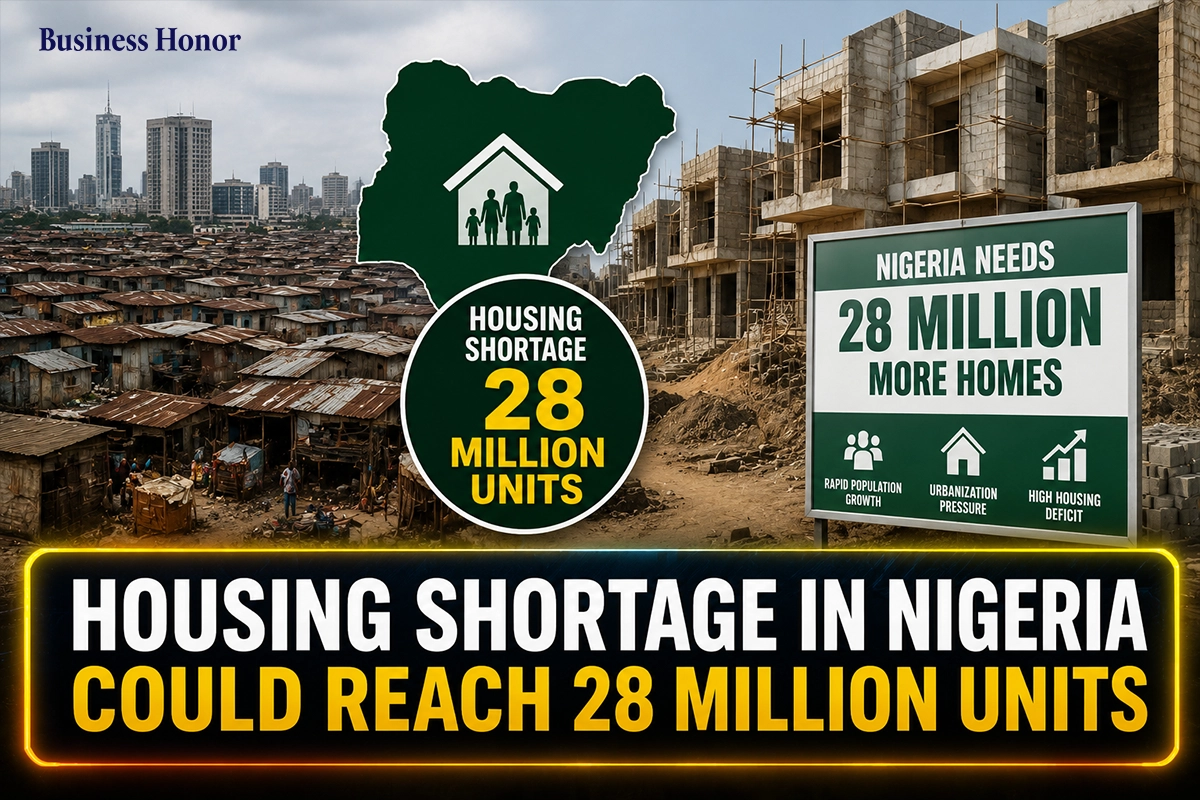
Housing shortage6 in Nigeria threatens economic stability as deficit potentially doubles to nearly 28 million units nationwide.
|
The Nigeria's housing shortage could reach 28 million units without urgent intervention. Lagos faces 3.3 million unit shortage. Launches mortgage financing programs.in Nigeria is continuously getting worse and will likely get even worse over time according to housing officials dealing with one of the biggest urban issues facing Africa today. The Lagos State Government has sounded the alarm bell regarding the nations increasing shortfall in housing. They are warning that there will be an increase in housing shortages, with estimates being that as many as 28 million additional homes may be needed if interventions are not put in place to address this issue. This warning is based on Nigeria National Housing Data Technical Committee’s review, created by the Federal Ministry of Housing and Urban Development where they estimated the initial number of homes needed to meet Nigeria’s average housing gap to be about 14,925,000 per Nigeria National Housing Technical Committee. While the Lagos State Commissioner for Housing, Moruf Akinderu-Fatai, has indicated these numbers do not reflect the true problem.
According to Akinderu-Fatai, there are an additional 15.2 million houses currently defined in Nigeria as being structurally deficient or substandard therefore Nigeria is estimated to have as many as 28 million homes missing from its effective supply of housing. The combined effect of the lack of supply and the deterioration of the housing that exists are viewed by many housing officials as being a major risk to future urban development, economic growth and social stability in Nigeria.
This crisis most severely influences Lagos State. It has an estimated population of over 17.8 million people and an annual growth rate of approximately 3.8 percent that is the reason Nigeria’s commercial capital is short by about 3.3 million housing units. Obstacles to housing are intensified due to its rapid urbanization, influx of individuals moving from rural areas to urban areas and small location. The shortage is particularly significant for low and middle-income households, as they face affordability constraints to access housing. To tackle this problem, the Federal Government and Lagos State Government have ramped up efforts to address it by working together to implement coordinated policy changes, funding additional housing solutions and developing public-private partnerships.
The Federal Government's Ministry of Finance Incorporated Real Estate Investment Fund (Real Estate Fund) is one key way being used to address the housing crisis in Lagos State by providing access to mortgage financing at a single digit interest rate (9.75%) for up to 20 years. This will reduce borrowing costs and make it possible for people to obtain affordable credit to purchase a home. Lagos State has made meaningful strides with respect to assistance for homebuyers through their use of direct funding allocations and the development of public-private partnership initiatives. The Lagos State Government has completed 10,623 housing units over the last 7 years. This number will increase to more than 14,000 units by December 2026 if current construction trends continue at an increasing rate due to high demand.
He added that Lagos has a continuing commitment to removing barriers and creating new affordable housing opportunities through ongoing housing construction. However, given that approximately 28 million new homes or apartments must be built to meet unmet demand and account for the corrections of physical deficiencies in existing homes and apartment buildings; even accelerated construction will still require long-term commitment to continue with new housing developments. The rapid rate of urbanization across West Africa is mirrored in Nigeria as well as continued pressures on infrastructure due to rapid population increases; there is a serious lag between available housing stock and the population (adults and children) living in each area. This illustrates how demographic changes, financial indices and lack of resources contribute to difficulties for low-income families to find affordable places to live in developing countries.
Business Honor is of the view that Nigeria's housing crisis requires immediate federal and state government intervention to prevent economic and social destabilization.































.webp)

.webp)




.webp)