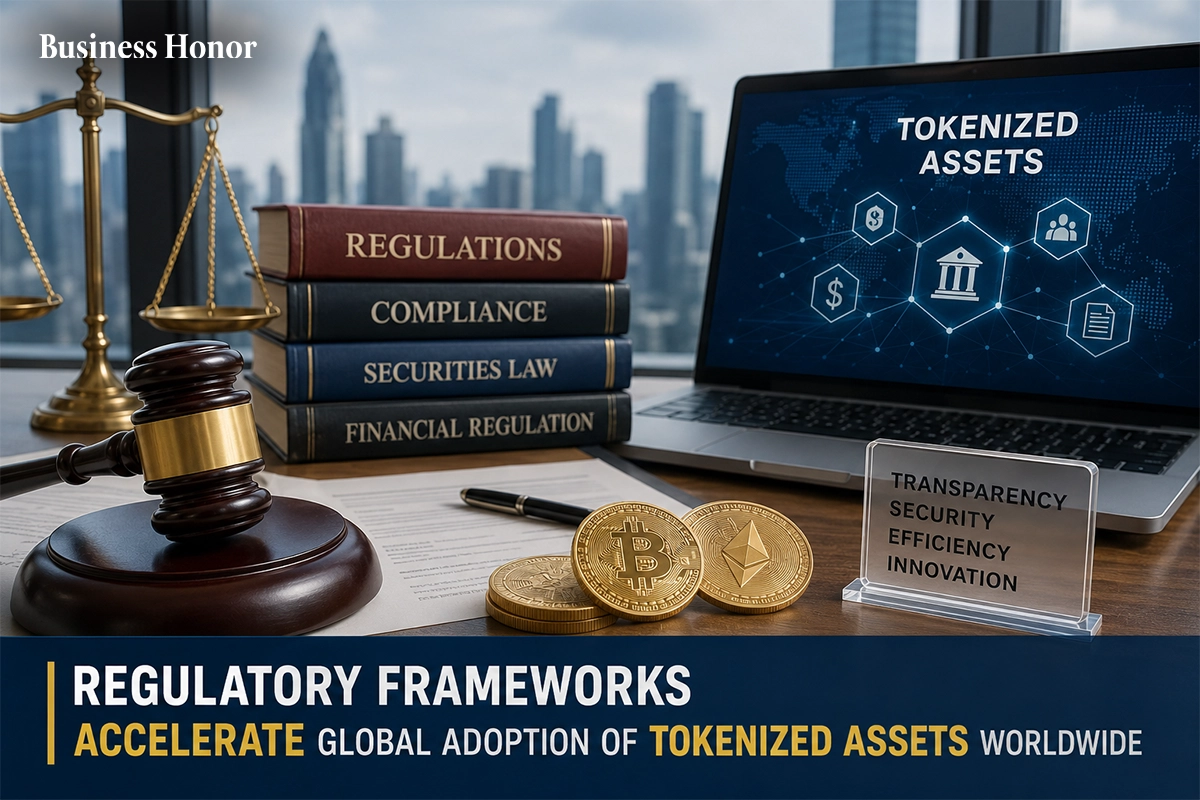
Global regulators are establishing comprehensive frameworks to govern tokenized assets, ensuring investor protection and market integrity while supporting institutional blockchain innovation.
|
The fast growth of blockchain technology and digital tokenized assets has dramatically changed how businesses raise capital, use ownership, and transfer value around the world. One of the most significant innovations resulting from this development is "tokenization" which means taking an asset from the physical or digital world and making it into a token on the blockchain. However, tokenization also creates more regulatory burden on companies in this industry.
By allowing different asset classes (for example – real estate, equity shares, bonds, commodities, intellectual property, art, and financial instruments) to be digitally represented on a blockchain network, tokenization makes ownership of these different asset classes accessible to more people, provides the ability to own a fraction of an asset, and simplifies the process of transacting by using smart contracts. The regulatory environment surrounding tokenized assets is complicated due to the fact that most people would consider tokenized debt or equity to be similar in nature to traditional security or investment products. As a result, most tokenized asset transactions will need to comply with existing financial regulations, which exist to protect the market and the investor.
What Is Tokenization and Why Is It Transforming Global Finance
There are several core regulatory principles that drive the operation of tokenization platforms around the world. The first principle is that protecting investors is the top priority; therefore regulators will require that platforms provide adequate disclosures, accurate financial data, and sufficient disclosures of risk to all investors. The second principle is that all entities engaged in the business of tokenization must comply with anti-money laundering (AML) laws and regulations as well as comply with Know Your Customer (KYC) rules. As part of these requirements, all tokenization platforms must verify their customers' identities, monitor customer transactions for suspicious activity, and file reports on transactions that meet the threshold required for suspicion.
Security classification of laws will be the most critical legal consideration when determining whether a token is a security and whether the issuance will be subject to strict registration and investor eligibility rules. To meet these expectations, token solutions are creating comprehensive compliance infrastructures. An example of this is the emergence of smart contract auditing as an essential compliance control mechanism to ensure both functionality and security. Several companies have deployed compliance-by-design architecture, meaning regulatory requirements were built into the platform infrastructure via transfer restrictions of tokens based on the jurisdiction of the end user and automated monitoring of transactions. Continued compliance obligations include ongoing reporting, licensing requirements, and establishing third-party compliance relationships to ensure operational compliance.
Why Are Compliance and Investor Protection Central to Tokenization
The oversight approach taken by regions differs widely from one jurisdiction to another. The US has one of the most complex regulatory environments as multiple regulatory agencies (e.g. SEC and CFTC) provide oversight based on the securities law classification of tokens. The European Union is developing harmonized digital assets regulations, which highlight consumer protection and promote transparency in the market. The United Kingdom is continuing its efforts to create a balanced regulatory framework that encourages fintech innovation but also enforces strict compliance. The Asia-Pacific region (including Singapore, Hong Kong, and Japan) is becoming recognized for its clarity in regulation and blockchain policy as tokenization initiatives gain momentum throughout the Middle East region.
How Do Different Global Regions Regulate Tokenized Assets
The ongoing evolution of tokenization frameworks is occurring rapidly worldwide, such as the introduction of multi-jurisdiction infrastructure support for blockchain platforms, creation of Security Token Offering (STO) platforms and implementation of investor onboarding solutions. Companies that prioritize regulatory alignment and compliance now will be positioned to succeed through sustainable growth and institutional adoption as we continue into 2026 and beyond and experience a matured digital asset ecosystem.
Business Honor is of the view that proactive regulatory compliance in tokenization represents a strategic shift toward sustainable institutional adoption and cross-border digital asset expansion capabilities.




























.webp)

.webp)




.webp)