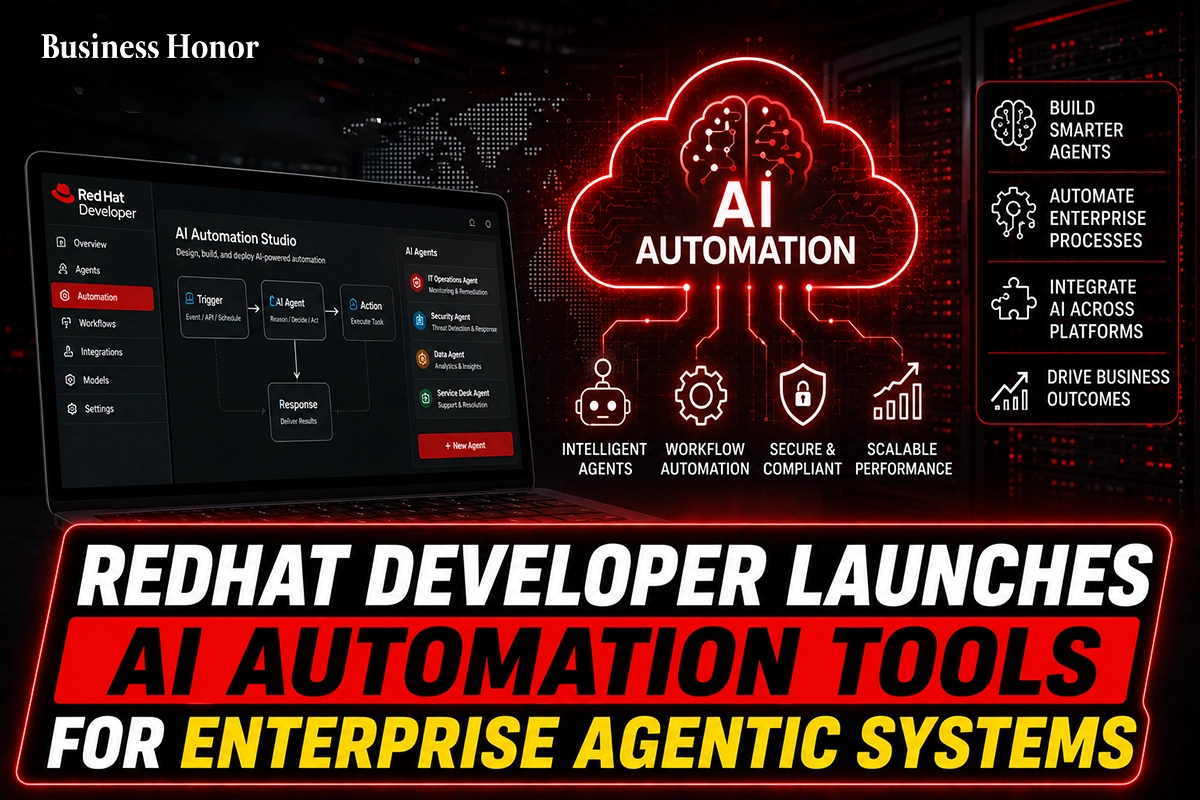
RedHat's new AI automation tools bridge local sandbox testing with production-scale hybrid cloud deployment for developers managing autonomous agents.
|
Red Hat has announced upgrades to its developer tool portfolio to help build an open source enterprise solution for AI agents. Red Hat Desktop is now available for all users, and upgrades have been made to Red Hat Advanced Developer Suite (which has been designed to meet the needs of those who want to deploy AI agents from their workstations through cloud environments) to improve the way AI testing tools and agents are deployed in a hybrid cloud architecture. The availability of Red Hat Desktop allows for commercial support for the Red Hat build of Podman Desktop, which creates a stronger, more reliable foundation for both container-based and AI agent development workflows. Importantly, the addition of isolated AI agent sandboxing will allow developers to pilot and test autonomous agents safely in a sandboxed environment on their local hardware
With this focused way of working, developers can focus on the real issues when fixing a problem instead of trying to fix every flagged issue. In the last year, as created by machine AI continues to grow, many in the IT community are recognizing the need for both a local way to experiment and a way to develop software using enterprise-level security. Red HATS combined work environment, whether on-prem via Red Hat Computer and when running on the cloud via Red Hat OpenShift Development Spaces, also provides a consistent approach to moving an application from development to production using Red Hat OpenShift.
James Labocki, senior director of products at Red Hat stated that the move to using an AI implementer has dramatically changed the way we think about developing modern applications. Labocki said, "Through the use of Red Hat Advanced Developer Suite and Red Hat Desktop, we can provide developers with the means of a trusted way to develop and distribute applications in hybrid environments. As a result, we are giving developers the tools to develop and manage their AI systems as they develop their core IT application with the same level of care."
Red Hat has previously stated that it will try to ensure developer flexibility while still enforcing enterprise-wide standards through OpenShift Dev Spaces, which will support additional integrations for coding assistants (e.g. Kiro from AWS—currently in tech preview; Copilot from Microsoft; and Claude CLI). As a result, developers will be able to use the tools they want to use and have consistent governance across all environments.
One of the focuses of the latest version of Red Hat OpenShift is security. The application is based on Red Hat Hardened Images and Red Hat Trusted Libraries, both of which meet SLSA Level 3 for origin and integrity, giving customers a transparent and verifiable software supply chain. By putting security considerations early in the developer process, organizations can identify and remediate potential security risks prior to the code moving into production. The unified platform also addresses a significant gap in the delivery workflow of AI. Organizations can now recognize AI agents to be tier-one applications deserving of the same level of deployment processes, monitoring and governance normally applied to mission critical systems.
FAQs
Q: What is Red Hat Desktop's main feature for AI development? A: Red Hat Desktop provides isolated AI agent sandboxing to safely test autonomous agents on local hardware. Q: How does Red Hat Advanced Developer Suite improve security? A: It uses AI-driven exploit intelligence to identify vulnerabilities actually relevant to specific application runtimes. Q: What coding assistants integrate with Red Hat OpenShift Dev Spaces? A: AWS Kiro, Microsoft Copilot, and Claude CLI are supported, with Kiro currently in technical preview. Q: Why does Red Hat's approach matter for enterprises? A: It enables consistent governance from local experimentation through production deployment across hybrid cloud environments. Q: What security standards does Red Hat's solution meet? A: Red Hat Trusted Libraries and Hardened Images provide SLSA Level 3 origin and integrity standards. |



































.webp)

.webp)



.webp)