
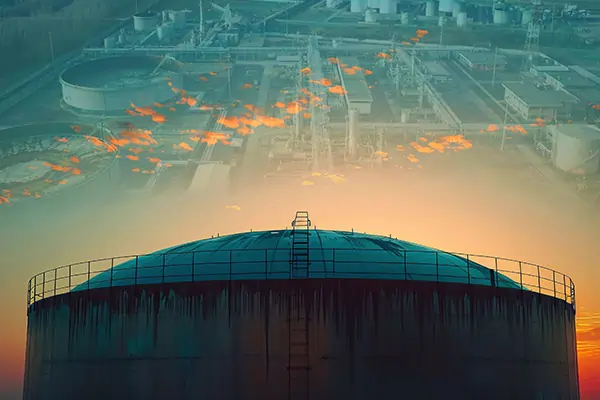
Middle East's growing gas production to surpass Asia, becoming the second-largest producer by 2025.
Rystad Energy has forecasted that by 2025, the Middle East will be the world's second-largest producer of natural gas, after North America. The area, currently accounting for about 70 billion cubic feet per day (Bcf/d), has risen by 15% in production since 2020. Production is forecasted to increase 30% by 2030 and 34% by 2035 with various massive gas projects underway in Saudi Arabia, Qatar, Iran, Oman, and the UAE.
Higher production capacity of the Middle East may meet a major portion of the world's demand, especially for Europe. By 2030, the region will add an additional 20 Bcf/d, which is equal to the total gas needs of Europe today, provided Brent oil prices are steady at $70 per barrel and oil-indexed gas prices between $7 and $9 per million British thermal units (MMBtu). But any drop in gas prices below $6/MMBtu could slow growth and push output growth back to about 20%.
Its growth is dominated by Qatar, Saudi Arabia, and the UAE's low-margin projects with comfortably sub-$5-per-thousand-cubic-feet breakevens. Qatar's expansion of the North Field will add 80% to its LNG capacity by the end of the decade, with Saudi Arabia and the UAE also growing production.
Iran, now the region's largest producer at 25 Bcf/d, is forecast to increase modestly, with production rising to 26 Bcf/d by 2030. Production in Qatar is projected to increase by nearly 50% and, perhaps, be the region's largest producer by the early 2030s. While the Middle East solidifies itself as a world leader in gas, it seems to be foreordained to play a pivotal part in serving increasing energy demands in Europe and Asia.










.webp)

.webp)




.webp)

