
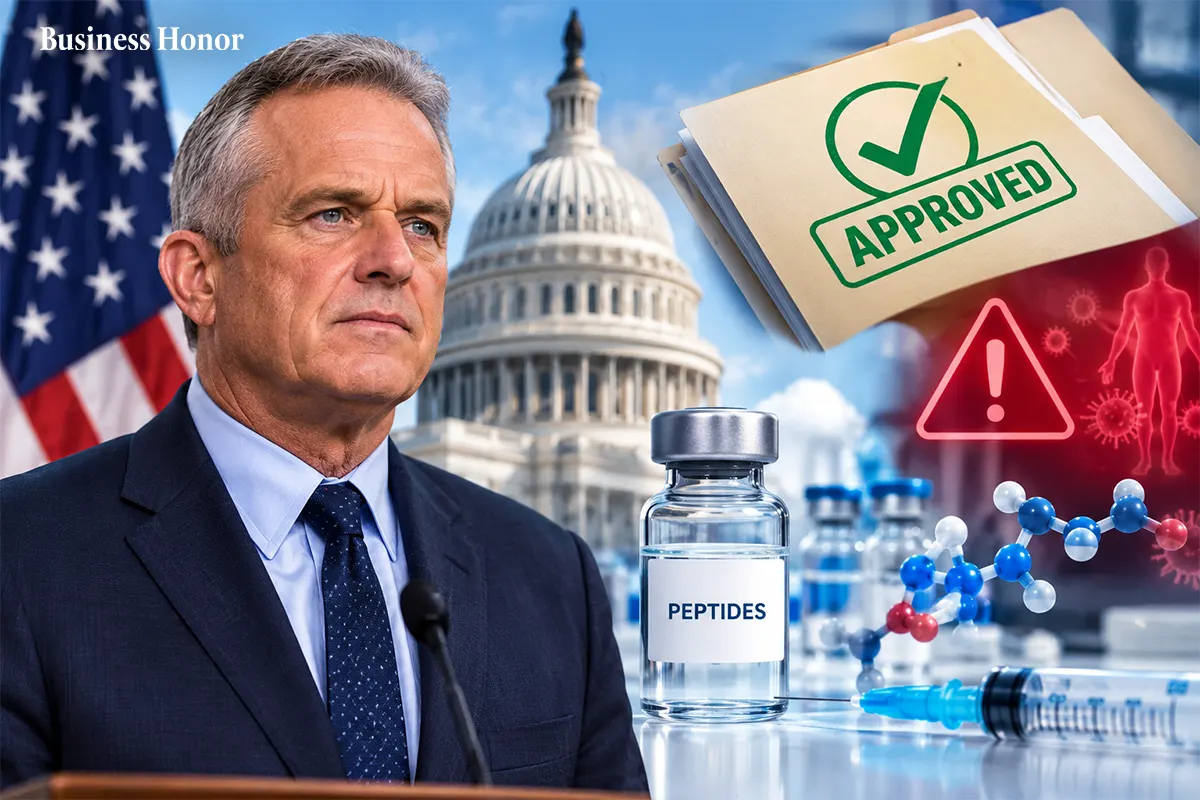
US Health Secretary Robert F. Kennedy Jr. is easing access to six unapproved peptides, despite safety concerns and questions about the evidence behind their health claims.
|
The US government is moving to expand access to six unapproved wellness peptides, setting up a fresh debate over patient choice and medical safety. On October 28, 2026, Health and Human Services (HHS) Secretary Robert F. Kennedy Jr. announced an interim policy allowing certain licensed compounding pharmacies and physicians to prepare the substances under specific safeguards.
According to Reuters, the policy covers BPC-157, TB-500, epitalon, KPV, MOTS-c and Semax. These compounds are promoted for uses ranging from injury recovery and wound healing to sleep and metabolic health, but evidence supporting many of these claims remains limited.
Should easier access come before stronger scientific evidence?
Kennedy argues that regulated access could steer consumers away from potentially unsafe products sold online. In the policy, he said the move “advances patient choice and freedom while appropriately protecting patient safety,”
HHS says the new approach requires patient-specific prescriptions, traceable ingredients, quality testing and safety reporting. The department also says it may reconsider the policy if safety concerns or product-quality problems emerge.
However, the change does not mean the US Food and Drug Administration (FDA) has approved these peptides. Compounded medicines do not undergo the same premarket review for safety and effectiveness as approved drugs.
Can tighter controls make up for missing clinical evidence?
According to the Associated Press, FDA scientific staff opposed easing the restrictions, warning that the compounds lack adequate evidence of safety and effectiveness. The agency has previously raised concerns about possible allergic reactions, kidney damage and tumor growth associated with certain peptides. As reported by CBS News.
HHS defended its decision in a statement quoted, “The policy does not grant FDA approval or establish clinical safety and effectiveness.” The statement adds that quality checks and safety reporting are intended to make these products a more controlled alternative to unregulated sellers.
Who bears the risk if these treatments cause harm?
The decision could create new opportunities for compounding pharmacies and wellness businesses as consumer interest in recovery and longevity treatments grows. Yet wider access could also blur the line between products with proven medical benefits and those still lacking strong human research.
Business Honor observes that Kennedy's policy raises a difficult question: can the government protect consumers from unsafe online products without giving unproven treatments an appearance of medical legitimacy? The answer will depend on effective oversight, reliable safety data and research that establishes whether these peptides actually deliver the benefits their promoters claim.
FAQs
What did the US Health Secretary announce?
Robert F. Kennedy Jr.’s department introduced an interim policy allowing eligible compounders to prepare six specified peptides under defined conditions.
Which peptides are covered by the policy?
They include BPC-157, TB-500, epitalon, KPV, MOTS-c and Semax.
Are these peptides FDA-approved?
No. The policy does not establish FDA approval or confirm their safety and effectiveness.
Why did FDA scientists oppose the change?
Reported concerns include limited evidence of safety and effectiveness and potential risks associated with unproven injectable substances.
What does the policy mean for consumers?
It may expand access through eligible compounders, but consumers should not interpret the change as proof that these peptides are safe or effective.









































.webp)



.webp)



Comments
0 Comments