
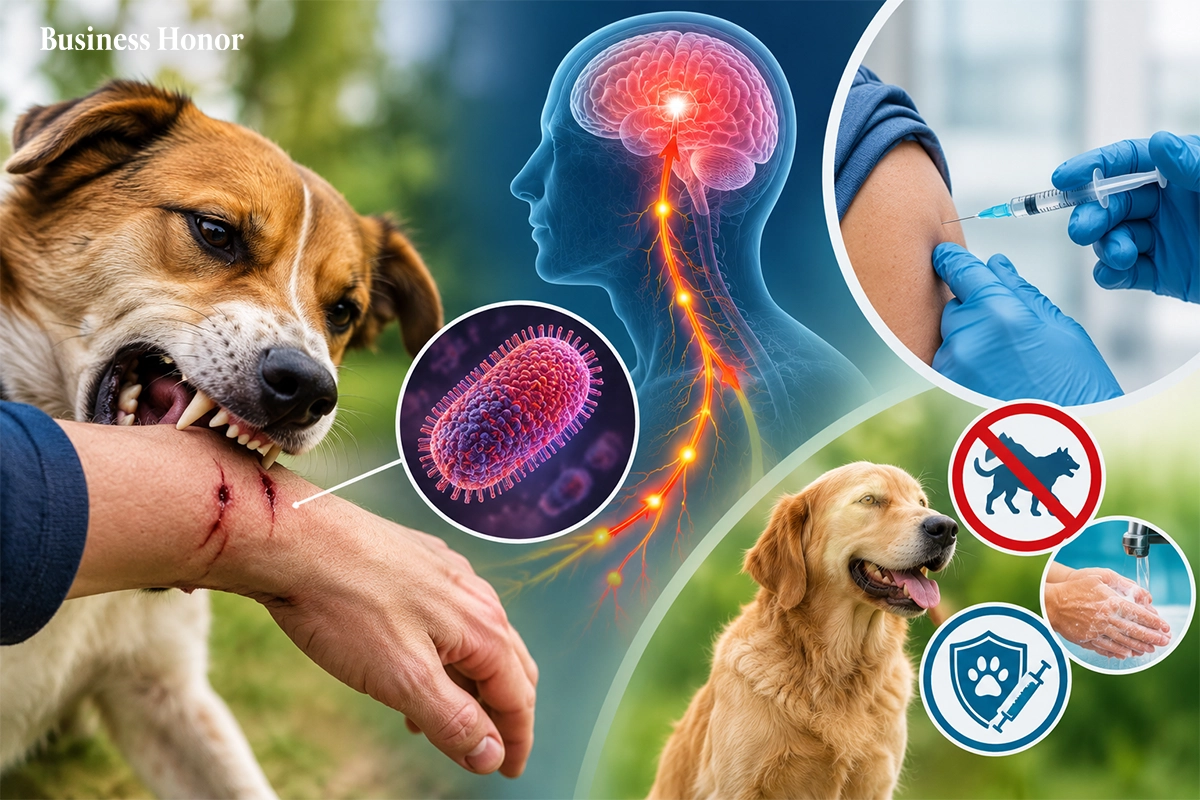
Rabies is a viral disease (caused by the Rabies Lyssavirus, a single stranded RNA virus in the Rhabdoviridae family) which attacks the CNS of warm blooded mammals. It is 100% fatal once clinical signs appear but is also 100% preventable with appropriate post exposure prophylaxis and public health measures.
How the Rabies Virus Spreads
Rabies is a zoonosis (it's an infection that can be transmitted from animals to humans). It's transmitted to humans via direct contact with the virus.
Routes of Transmission
The main mode of transmission globally is via animal bite (the virus is concentrated in the salivary glands of infected animals and gets into the body via a puncture wound). It can also be transmitted via scratches or open wounds where saliva comes into contact with a break in the skin or an abrasion. It's also possible to become infected if infected saliva comes into contact with the mucous membranes (eyes, nose, mouth). Rabies cannot be transmitted through intact skin and there is no risk from casual contact such as petting an animal or touching blood, urine or faeces.
Common Animal Reservoirs
In the global and the endemic situation (particularly in Asia and Africa) rabid domestic and stray dogs are responsible for around 99% of human rabies cases. In North America and Europe the situation is very different with wildlife reservoirs being the main source of infection (bats, raccoons, skunks and foxes).
The Path to Clinical Symptoms
Once it's in muscle or connective tissue it has a very well defined physical route. It gets in via a bite or scratch, it travels down the peripheral nerves, it gets into the CNS and then it causes fatal brain inflammation.
Clinical Progression Phases
Incubation Period
The incubation period is usually 1-3 months (though can range from as little as 1 week to over a year) depending on the site of the bite in relation to the brain and the initial viral load.
Prodromal Phase
The prodromal phase then occurs, characterised by early flu-like symptoms such as fever, headache, muscle weakness and some form of odd tingling or numbness at the site of the bite.
Acute Neurological Phase
The acute neurological phase presents in one of two forms. Encephalitic or furious rabies (85%) is characterised by hyperactivity, agitation, confusion, copious salivation, hydrophobia (painful spasms of the throat on swallowing) and aerophobia (fear of air movement). The other 15% of cases are paralytic or 'dumb' rabies which leads to a progressive weakness of the muscles beginning at the site of the bite and culminating in paralysis.
Coma and Mortality
Both forms inevitably progress to coma and death as a result of respiratory failure and cardiac arrest following the collapse of the central nervous system.
Precautionary Measures and Vaccination Protocols
Medical management is all about intervention as early as possible prior to the onset of any neurological symptoms.
Immediate Post-Exposure First Aid
First aid starts with wound flushing (washing the bite or scratch copiously under running tap water with soap for at least 15 minutes). This is then followed by disinfection with povidone-iodine or a 70% alcohol solution to inactivate any viral particles on the surface. Primary closure (suturing) of the wound should be avoided wherever possible as this would risk trapping viral particles deep in the tissue.
Vaccination Regimens
Pre-Exposure Prophylaxis (PrEP)
Prep is a prophylactic vaccination programme which is recommended for vets, animal handlers, wildlife officers and people travelling to high risk endemic areas. The standard course of immunization is two doses on day 0 and day 7.
Post-Exposure Prophylaxis (PEP) for Unvaccinated Individuals
Unvaccinated patients following an animal bite or those with a high risk exposure need post-exposure prophylaxis. The standard course is the 4 dose vaccine series on Days 0, 3, 7 and 14. In the case of a serious exposure an injection of Rabies Immunoglobulin is also required on Day 0 to provide passive neutralizing antibodies at the site of the wound.
Post-Exposure Prophylaxis (PEP) for Previously Vaccinated Individuals
Patients who have already completed a full course of pre-exposure or post-exposure prophylaxis are given an abbreviated booster schedule. Two doses of the vaccine are given on Day 0 and Day 3 and they do not require Rabies Immunoglobulin.
Verified Vaccine Brands and Manufacturers
Modern cell culture vaccines are made by the various pharmaceutical organisations around the world. The main options available are Rabipur (a purified chick embryo cell vaccine from Bavarian Nordic), Verorab (a purified Vero cell rabies vaccine from Sanofi) and Abhayrab, manufactured by the Human Biologicals Institute.
Public Health Frameworks and Regulations
Governments and international health agencies have policies in place to control the spread of rabies and to eliminate human deaths.
International and National Public Health Initiatives
The World Health Organization (WHO), in conjunction with the OIE and FAO, is the lead organisation for the Zero by 30 global strategy which aims to eliminate human rabies deaths due to dogs by 2030. In the US the Centers for Disease Control and Prevention (CDC) sets the national post-exposure prophylaxis guidelines and has the authority to restrict the import of animals. In India the Ministry of Health and Family Welfare is responsible for the National Rabies Control Programme which ensures that sufficient anti-rabies vaccine and immunoglobulin is available.
Animal Control Laws and Quarantine Policies
Business Honor observes that In India the Animal Welfare Board of India is responsible for the implementation of the Animal Birth Control (ABC) rules under the Prevention of Cruelty to Animals Act, which require humane mass vaccination and sterilisation of dogs as a means of population control. In the UK the UK Department for Environment, Food & Rural Affairs (DEFRA) has a very strict regime in place with regard to pet travel and animal quarantine in order to maintain the country's rabies free status.
FAQ:
What should I do immediately after an animal bite?
Flush the bite or scratch under running tap water with soap for at least 15 minutes. Disinfect the area with povidone-iodine or 70% alcohol solution, avoid immediately stitching the wound, and seek medical attention for post-exposure prophylaxis.
Can rabies be cured after symptoms appear?
No. Once clinical symptoms manifest, rabies is virtually 100% fatal. However, it is 100% preventable if medical treatment and post-exposure vaccination are received immediately after exposure and before symptoms start.
How many vaccine doses are needed for post-exposure treatment?
Unvaccinated individuals require a four-dose vaccine series on Days 0, 3, 7, and 14, plus Rabies Immunoglobulin for severe bites. Previously vaccinated individuals only require two booster doses on Days 0 and 3.
How does rabies spread to humans?
Rabies spreads through direct contact with infected animal saliva via bites, open scratches, or mucous membranes (eyes, nose, mouth). It cannot pass through unbroken skin or through contact with an animal's blood, urine, or feces.
Who should get the pre-exposure rabies vaccine?
Pre-exposure vaccination is recommended for individuals at high risk of exposure, including veterinarians, animal handlers, wildlife officers, laboratory workers handling the virus, and travelers spending extended time in high-risk endemic areas.











































.webp)



.webp)



Comments
0 Comments