
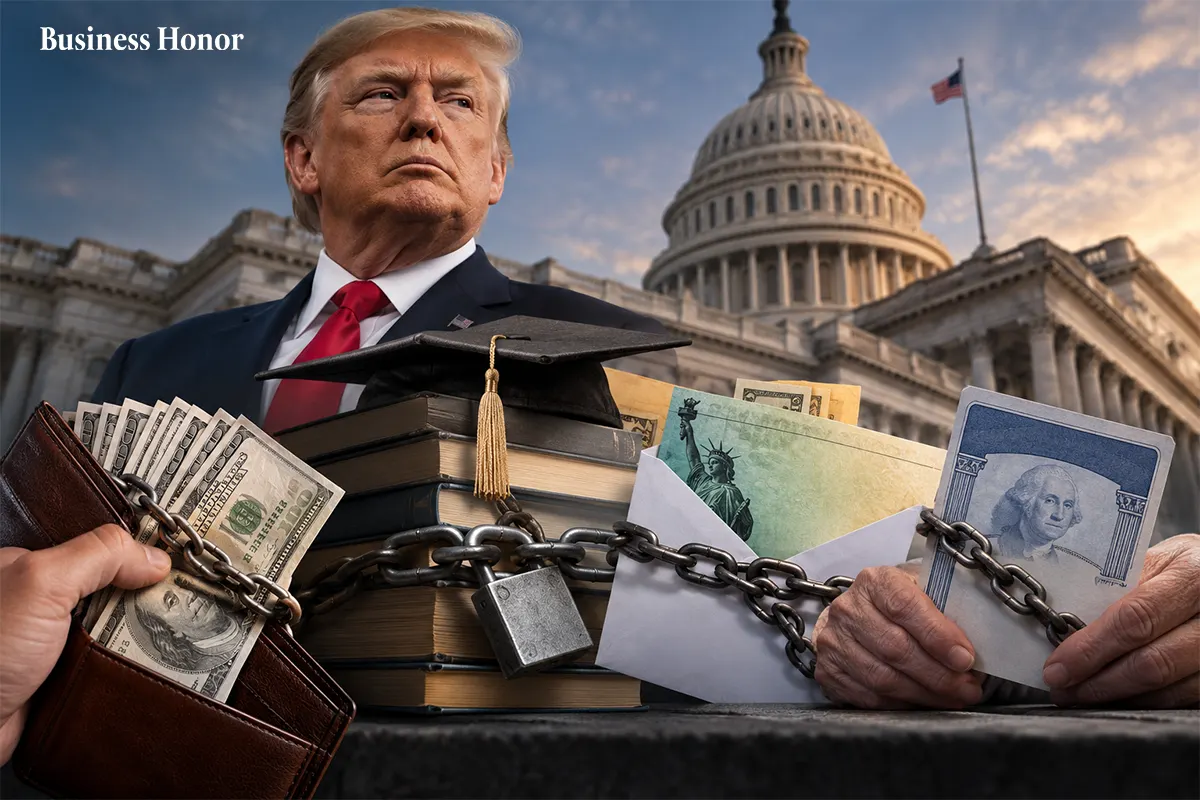
The Trump administration reportedly plans to resume collecting defaulted student loans through paycheck garnishment, potentially affecting borrowers’ wages and other federal benefits.
|
Trump student loan collections could affect millions of borrowers who have fallen behind on their federal student loan payments. Those in default may face efforts to recover unpaid debt, including deductions from their paychecks through federal student loan collections and paycheck garnishment.
According to Yahoo Finance, the U.S. Treasury is looking to employ debt collectors to help chase down outstanding student loans. With close to 9.3 million borrowers in default on their federal student loans by June 2026, some could face debt collectors taking money from their paychecks or certain federal benefits.
The administration is considering bringing in private debt collection firms to help recover overdue student loans. This would give the government extra support in handling unpaid debts as it looks for ways to collect money from borrowers who have missed payments and address the consequences of defaulting on federal student loans.
“Somewhere between treating them all as deadbeats and forgiving all the loans is probably the right solution,” said Preston Cooper, a student debt expert at the American Enterprise Institute.
Some of your paycheck may be garnished if you do not repay your federal student loans. This could cause issues when trying to cover basic living costs. Your student loan debt will be repaid, but how much of your paycheck is garnished will depend on the rules that apply to your loan.
If you default on your federal student loans, you may also lose part of your tax refund. You might also have some of your Social Security benefits withheld to help repay your debt. This could leave some people with less money to cover their usual costs.
Officials are looking to offer borrowers ways to get back on top of their student loan repayments to avoid tougher debt recovery measures. These options could give borrowers more time to address missed payments and manage basic expenses, such as food, before collection efforts resume.
Business Honor observes that the return of student loan collections could put more pressure on borrowers who are already struggling financially.
FAQs
What happens if you default on federal student loans?
Borrowers who default may face paycheck garnishment, tax refund offsets, and the withholding of certain federal benefits to recover unpaid debt.
Can the government garnish wages for unpaid student loans?
Yes. Eligible federal student loan borrowers in default may have part of their wages withheld to repay overdue loans, subject to applicable rules.
Can student loan defaults affect tax refunds and Social Security benefits?
Yes. Eligible borrowers may lose part of their tax refunds, and some Social Security benefits may be withheld to recover defaulted federal student loan debt.
Will private debt collectors handle defaulted student loans?
The administration has reportedly considered using private debt collection firms to help recover unpaid federal student loans.
Can borrowers avoid student loan collections?
Borrowers may be able to explore repayment plans or other options to address their default. They should contact their loan servicer to learn which options are available.








































.webp)



.webp)



Comments
0 Comments