
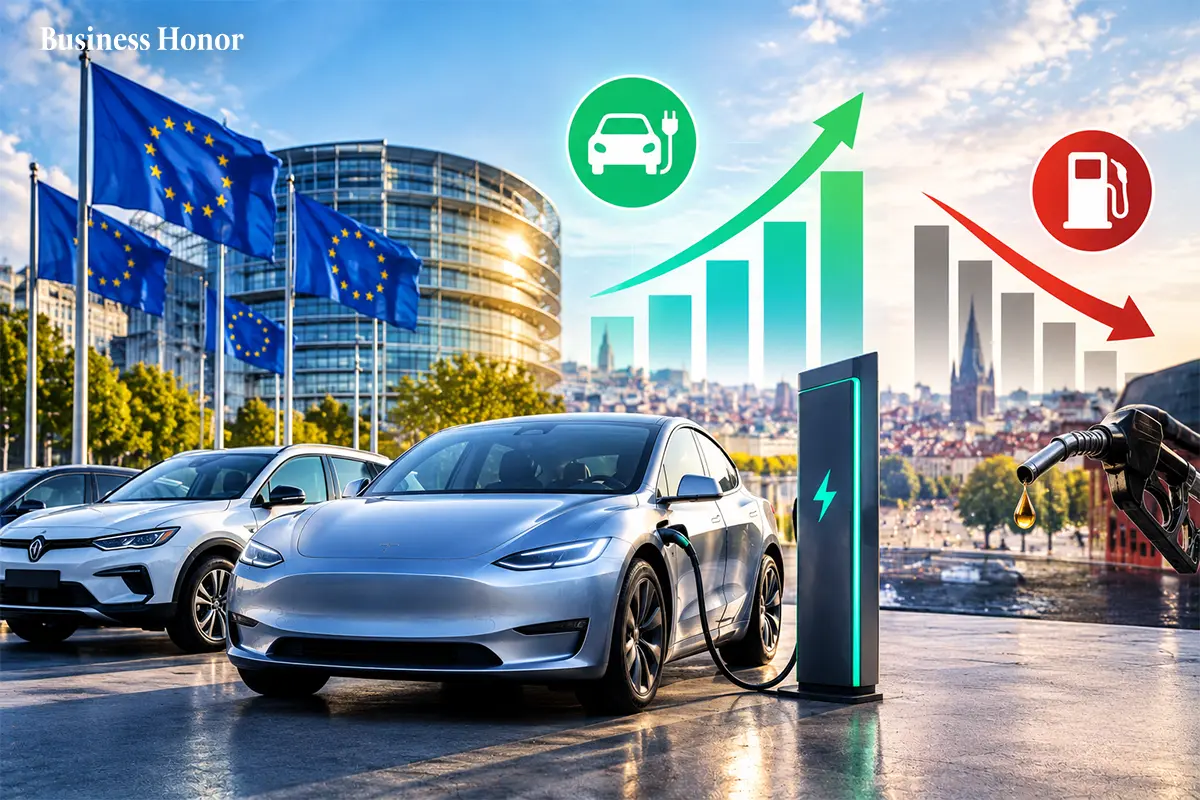
Europe car sales climbed 10.2% in September as electric and hybrid cars attracted more buyers. Petrol and diesel registrations fell, putting pressure on traditional carmakers.
|
Europe car sales climbed 10.2% in September as more buyers chose electric and hybrid vehicles over petrol and diesel models. Around 1.36 million new vehicles were registered across the European Union, Britain and the European Free Trade Association. The increase offers some relief to carmakers, but the figures also show how much the market is changing.
Battery-electric car registrations rose 59.9% from a year earlier. Plug-in hybrids recorded a 24% increase, while conventional hybrids grew 5.3%, according to data from the European Automobile Manufacturers’ Association (ACEA).
European Automobile Manufacturers’ Association (ACEA) said, “New-car registrations, a proxy for sales, rose 10.2% year-on-year to 1.36 million vehicles across the European Union, Britain and the European Free Trade Association.”
Are drivers finally ready to leave petrol cars behind?
This is shown by the fall in the number of traditional cars. The registrations of petrol cars decreased by 20.6%, and those of diesel cars decreased by 28.2%. The number of registrations of electric cars and hybrid cars made up more than 75% of all new registrations.
Electric cars are becoming more available for buyers in the showrooms, increasing their choice at different price levels. However, their cost can be an issue. There are people who consider electric cars too expensive and whose needs can change if the incentives decrease.
Will buyers keep choosing electric cars when the discounts disappear?
The European manufacturers also have to compete against the Chinese car producers. According to Reuters, there was strong growth in the registrations of BYD and Chery.
European Automobile Manufacturers’ Association (ACEA) said, “Demand for electrified vehicles remained strong across major European markets, supported by purchase incentives and a broader model lineup.”
The shift is already showing up in the numbers. Volkswagen, Renault and Stellantis together held 43.7% of the Automobile market, down from 48.4% a year earlier. Volkswagen and Renault recorded declines in registrations, while Stellantis gained ground.
Can Europe’s established brands keep up with cheaper rivals?
For carmakers, rising sales do not tell the whole story. Companies must also compete on price, improve their electric models and convince customers that switching makes financial sense. Growing demand is welcome, but it does not guarantee that every manufacturer will benefit.
Business Honor observes that Europe car sales reflect more than a stronger month for the industry. Buyers are changing what they drive, while Chinese brands are challenging established names on price and choice. The real question is whether European manufacturers can hold their ground without relying heavily on incentives. The coming months should show whether September’s growth can last.
FAQs
Why did Europe car sales increase in September 2026?
Higher registrations of electric and hybrid vehicles helped lift the market by 10.2% year on year.
How many new vehicles were registered in Europe?
Around 1.36 million vehicles were registered across the EU, Britain and the European Free Trade Association.
Which vehicles recorded the strongest growth?
Battery-electric registrations rose 59.9%, while plug-in hybrids grew 24%.
Why are petrol and diesel car sales falling?
More electric models, changing buyer preferences and fuel costs are contributing to the decline.
Are Chinese carmakers gaining ground in Europe?
Yes. Brands such as BYD and Chery are attracting buyers and increasing pressure on established European manufacturers.








































.webp)



.webp)



Comments
0 Comments