
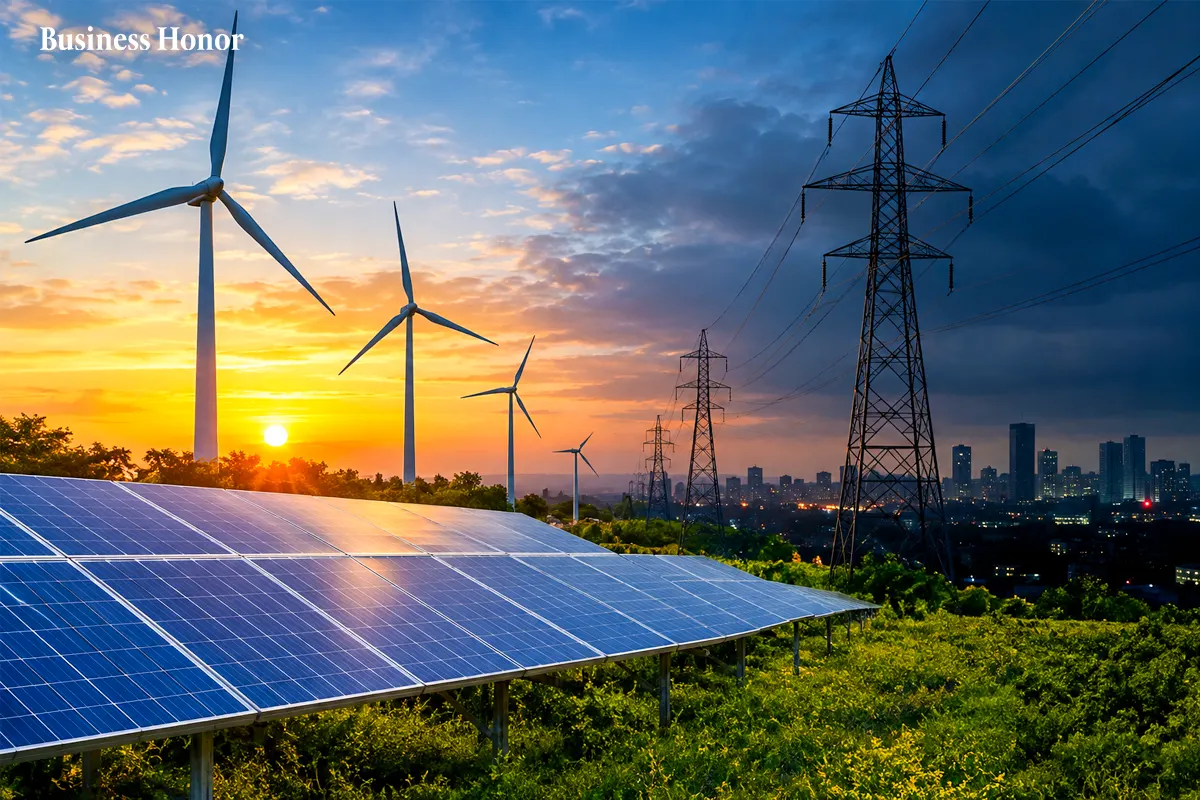
Less clean energy capacity is expected in 2026 as grid constraints slow renewable expansion, putting global climate targets under growing pressure, warns the International Renewable Energy Agency.
|
The world is expected to add less clean energy capacity in 2026 than in 2025, marking the first annual slowdown in five years, according to the International Renewable Energy Agency (IRENA). The warning, on October 27, highlights a growing problem for the clean energy transition: renewable projects are expanding, but electricity networks are struggling to deliver their power.
Global renewable installations, including hydropower, increased by a record 692 gigawatts in 2025, lifting total capacity to 5,149 GW. Renewables now account for roughly half of the world's installed power capacity. Yet the momentum behind that expansion may not continue at the same pace this year.
What happens when countries generate clean power but cannot deliver it?
IRENA Director-General Francesco La Camera identified the mismatch between generation and transmission infrastructure as the main reason for the slowdown.
"The main cause of a lack of new record in additions this year is the mismatch between generation capacity and the capacity to distribute and transmit electricity," La Camera told during Singapore International Energy Week.
China, the world's largest renewable energy producer, illustrates the scale of the problem. According to Reuters, the country curtailed enough renewable electricity in the first half of 2026 to power Mexico for a year. Grid constraints have also affected renewable integration in Australia and Japan.
Is building more solar and wind capacity enough to meet climate goals?
Not if electricity networks cannot absorb the additional supply. Transmission lines, distribution systems and grid upgrades require investment, planning and time. Trade barriers add another obstacle by complicating the supply of equipment needed for renewable projects.
La Camera also warned that growth in other markets was unlikely to offset China's slowdown. "The amount of the (capacity) increase in the other parts of the world this year, I don't think it will offset the slowing down in China,”
Could weak infrastructure undermine the clean energy transition?
Business Honor observes that the expected slowdown exposes a contradiction in global energy policy. Governments want cleaner, more affordable electricity, yet investment in the networks needed to deliver it has not kept pace with renewable generation.
The next challenge is not simply adding more wind turbines and solar panels. It is building an electricity system capable of using the power they produce. Without that progress, ambitious climate commitments may prove harder to achieve.
FAQs
Why is the world expected to add less clean energy in 2026?
Inadequate transmission networks, grid constraints and trade barriers are slowing renewable capacity additions.
What is the International Renewable Energy Agency (IRENA)?
IRENA is an intergovernmental organization that supports countries in adopting and expanding renewable energy.
How much renewable capacity was added in 2025?
Global renewable installations, including hydropower, increased by a record 692 GW in 2025.
Why is China important to global clean energy growth?
China is the world's largest renewable energy producer, and its slower deployment could outweigh capacity growth in other markets.
Can grid infrastructure affect climate targets?
Yes. Insufficient transmission and distribution capacity can prevent renewable electricity from reaching consumers, limiting the benefits of new installations.










































.webp)


.webp)



Comments
0 Comments