
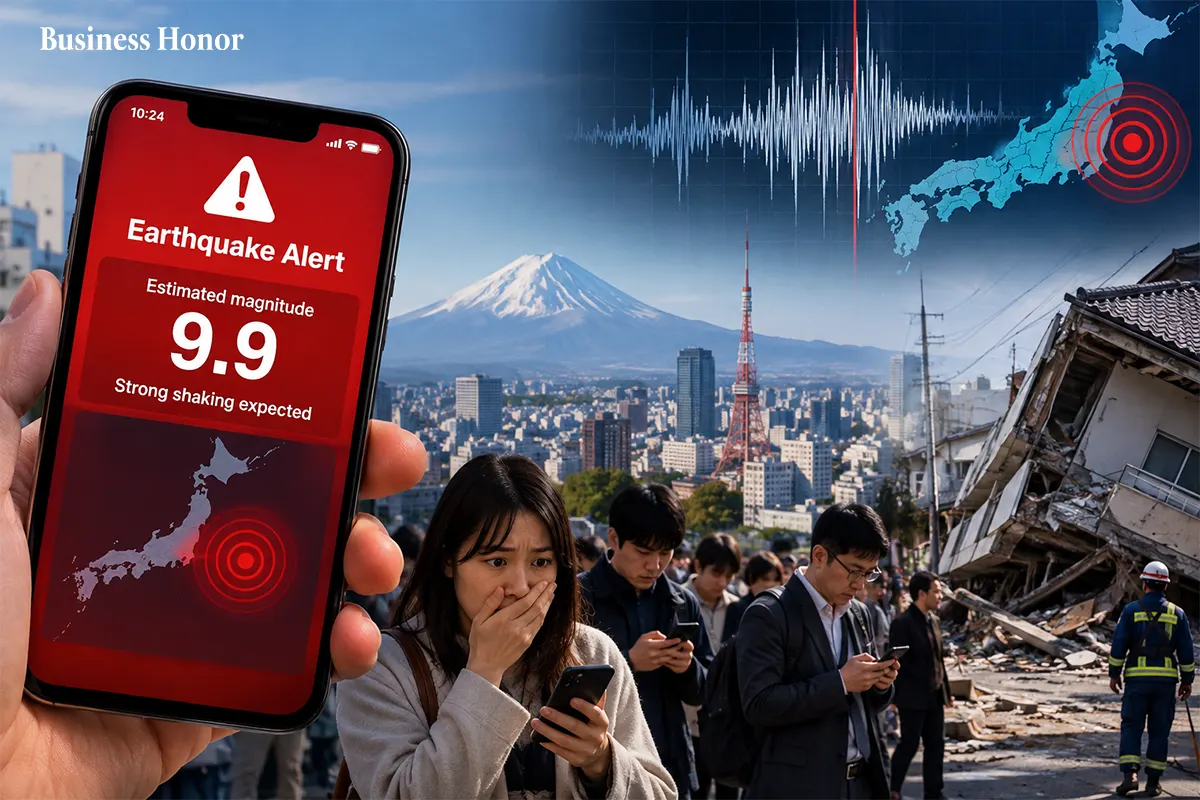
Japan earthquake alert systems issued a mistaken 9.9 magnitude warning after a 6.9 tremor near Russia. The agency withdrew it, raising safety concerns.
|
Japan’s earthquake alert system mistakenly warned of a magnitude 9.9 earthquake on October 16 after a 6.9-magnitude tremor near Russia’s Kamchatka Peninsula. The Japan Meteorological Agency (JMA) later withdrew the warning, raising questions about the accuracy of a system designed to give people precious seconds to protect themselves.
The alert forecast strong shaking across northern, eastern and central Japan. According to The Japan Times, the warning was issued at around 12:40 p.m. local time and canceled at approximately 12:48 p.m. The actual earthquake occurred near the Kamchatka Peninsula, north of Japan.
What happens when a warning system creates more fear than the earthquake itself?
The JMA attributed the mistake to an overestimation of the earthquake’s magnitude. A report by Hindustan Times, citing Japanese media, said the alert reached mobile phones and public warning systems before authorities withdrew it. The agency was investigating the cause of the error.
The difference between the predicted and actual magnitudes was enormous. A magnitude 9.9 earthquake would exceed the strongest earthquake ever recorded, the magnitude 9.5 event that struck Chile in 1960, according to the US Geological Survey. However, earthquake magnitude is logarithmic, meaning each whole-number increase represents a substantial rise in released energy.
Could a false alarm weaken public trust when a real disaster strikes?
Japan depends on early warnings because of its exposure to powerful earthquakes and tsunamis. The JMA’s official guidance urges people receiving earthquake early warnings to protect themselves immediately and remain calm. These alerts can provide valuable time to take cover, stop machinery or prepare for strong shaking.
“I sincerely apologize for this incident.” said Ayaki Ebita, head of the Earthquake and Tsunami Monitoring Division at the Japan Meteorological Agency.
The tremor near Kamchatka did not lead to a tsunami warning. Reuters reported that a magnitude 7.0 earthquake struck the Russian peninsula on Friday, October 16. The reported magnitude was later assessed at 6.9 in other accounts.
“The government must continue to collect and analyze information accurately and communicate accurate information to the public.” said Haruko Arimura, chair of Japan’s House of Councillors Budget Committee
Is speed enough if the information is wrong?
The Japan earthquake alert incident exposes a difficult problem for emergency authorities: warnings must arrive quickly, but inaccurate estimates can trigger confusion and undermine confidence. Business Honor examines that The Japan’s challenge is to identify what went wrong without weakening a system that can save lives when the next major earthquake hits.
FAQs
Why did Japan issue a mistaken 9.9-magnitude earthquake alert?
The Japan Meteorological Agency said the earthquake’s magnitude had been overestimated. The precise cause was under investigation.
When was the Japan earthquake alert withdrawn?
The warning was issued around 12:40 p.m. on October 16 and withdrawn at approximately 12:48 p.m. local time.
What was the actual magnitude of the earthquake?
The earthquake near Russia’s Kamchatka Peninsula was reported at magnitude 6.9.
Did the Japan earthquake alert lead to a tsunami warning?
No tsunami warning or advisory was issued following this event, according to The Japan Times.
Why are earthquake alerts important in Japan?
They give people time to protect themselves before strong shaking arrives and help authorities prepare for possible damage.








































.webp)

.webp)



.webp)



Comments
0 Comments