
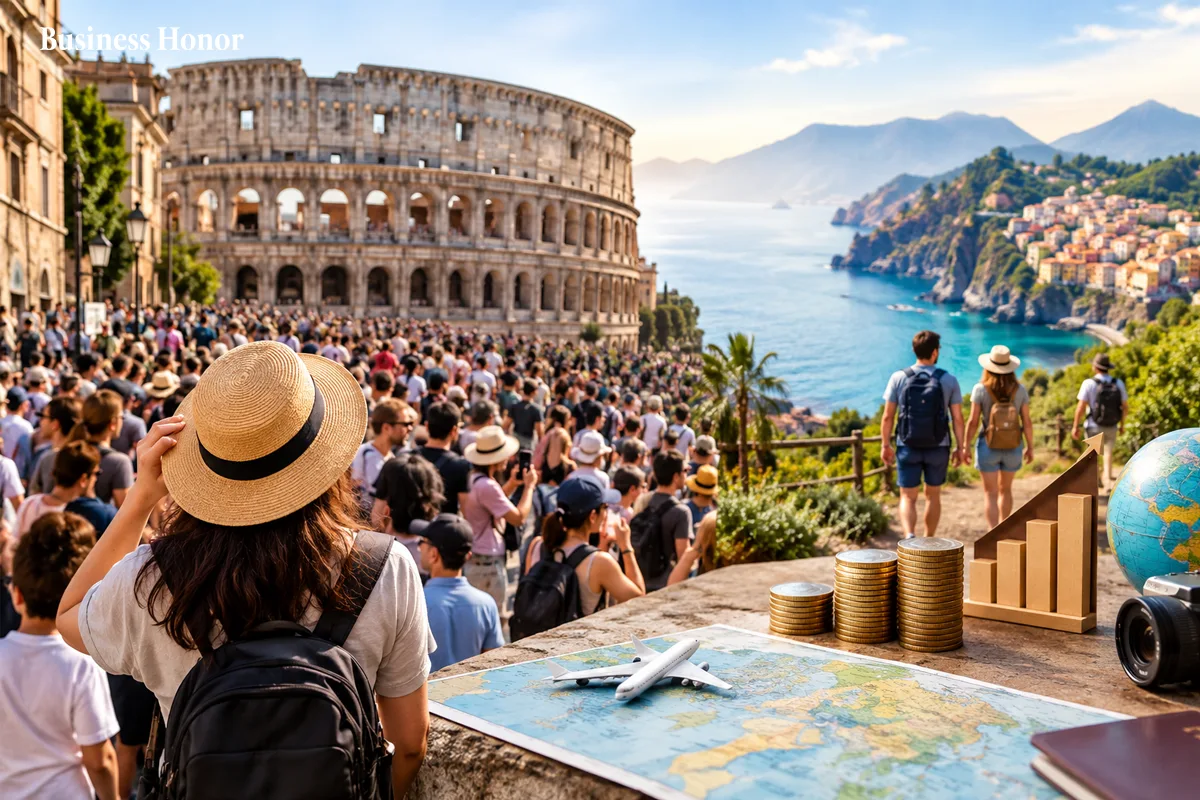
Tourism trends 2026 are showing something the industry did not quite plan for. Overcrowding used to be a local headache, handled with an apology and a press release. Now it is a real market signal, and it is already moving investment, policy, and where travelers actually want to go.
Take Capri. The island now caps tour groups at 40 people and has banned loudspeakers on its streets. That is what happens when peak-season crowds hit 50,000 visitors a day on an island where only about 15,000 people actually live. Florence has gone further and banned outdoor dining across its historic core. Pompeii, one of the most visited archaeological sites on earth, now caps daily entry at 20,000 people. None of this is random. These places simply got more visitors than they were ever built to hold, and anyone with money in hotels, property, or travel tech should be watching closely.
For years the industry ran on one idea: more visitors, more money, more jobs, end of story. That idea is starting to fall apart. Once a place gets too crowded, the numbers stop working the way they used to. The UN Tourism agency, the UN body that sets global tourism policy, defines overtourism as the point where visitors start hurting residents' quality of life or ruining the experience for everyone else. Cross that line and the cost of managing the crowd often outweighs what the extra tourist actually spends. And that is not just a headache for the local tourism board. It is starting to shape hotel investment, property prices, and how whole regional economies plan ahead.
The Backlash Is Not Just Emotional, It Is Financial Too
Housing prices in tourist-heavy cities have shot up as short-term rentals swallow up local housing. Residents in some of these places say their own neighborhoods now feel built for visitors, not for them. Social media keeps sending everyone to the same dozen spots. And a few years of pent-up post-pandemic travel hit all at once instead of spreading out. Add it all up, and a lot of destinations are now years behind on infrastructure they should have built already.
Governments are not just talking about it anymore. They are writing it into law. Venice requires every guest staying in the city to pay a tourist tax based on how long they stay and where, and the Comune di Venezia has also tightened the rules around short-term rentals in the historic center. Florence's city council passed a formal rule restricting restaurants and cafés across its UNESCO-listed core to protect the area. And in Alaska, Juneau signed a deal with the Cruise Lines International Association capping daily cruise arrivals at 16,000 passengers most days and 12,000 on Saturdays, starting in 2026, after locals pushed for something even stricter. Every one of these is a government deciding that too many visitors is now a cost, not a win.
What happens to a destination's reputation once its own city hall starts advertising limits instead of access?
Crowds Are Now Hitting the Bottom Line, Not Just the Patience of Locals
This is not only about bad press. Running a packed destination costs real money. Crowd control, garbage, road repairs, security, it all grows with foot traffic. Meanwhile the money coming in per visitor often stays flat or drops, because day-trippers and budget tourists push out the guests who actually spend. Palma de Mallorca capping cruise ships and hotel rooms, specifically to draw fewer but higher-spending visitors, tells you the math has changed. More tourists does not automatically mean more profit once a place tips past what it can handle.
Barcelona's tourism authority has built its whole strategy around managing its busiest zones and spreading tourism's benefits into other districts, instead of just chasing bigger visitor numbers. The European Commission's regional office has even backed this with close to €41 million in EU recovery funding, aimed at spreading tourists out and taking pressure off the city's most crowded landmarks. That is a big shift for a city that spent twenty years building its name on exactly the kind of mass appeal it is now trying to scale back. If you built an investment plan around flagship destinations growing forever, this is worth a second look.
Even places with barely any people living there are feeling it. Scientists have warned that Antarctica's visitor numbers could double by 2033, which is wild considering how far and expensive it is to even get there. If overtourism can reach a continent that remote, is anywhere really safe from it?
Where the Money and the Crowds Are Actually Going
This is the part that matters most if you are the one making decisions with real budgets behind them. Overtourism has not killed people's appetite for travel. It is just pushed that demand somewhere else, and that is quietly creating a whole new set of places worth investing in.
Smaller cities are picking up the overflow. Travelers are choosing Porto over Lisbon, or Girona over Barcelona, chasing the same culture and food without the endless lines. Regional tourism boards have noticed and started marketing these places on purpose, partly to take heat off their more famous neighbors. Shoulder-season travel used to be a budget trick. Now it is just how a lot of people book, and it spreads income across the calendar instead of cramming it into three brutal months. Slower travel is catching on too, road trips, train journeys, farm stays, all of it spreading money across a whole region instead of dumping it on one landmark.
For hotel groups and destination marketers, this is the real opening. The places that build the right infrastructure now, before the internet catches on, are the ones ready to catch demand the bigger cities can no longer take without a political fight. Is your market actually set up to catch that overflow, or is it about to become the next overcrowding headline?
The Competition Is Moving Faster Than Most Marketing Plans Can Keep Up
Here is the tension nobody is really saying out loud. Destination marketers spent years building name recognition around a handful of famous sites. That recognition now cuts both ways, because it keeps pulling demand exactly where governments are trying to cap it. Meanwhile, places with real assets, good food, good scenery, decent infrastructure, but a smaller name, suddenly look a lot more appealing simply because nobody is overwhelmed there yet.
That is a real chance for smaller economies to compete on something the big names cannot sell anymore: room to breathe. Can a mid-sized city actually build a brand around having space, right when its bigger neighbors are marketing restriction and scarcity as a selling point?
Cruise lines, hotel chains, and booking platforms are adjusting too. Juneau's tourism office has said its agreement exists specifically to bring the city's busiest, least sustainable days under control while building something that lasts longer, and other port cities are watching closely. Hotel groups moving into smaller markets are betting that today's overflow city becomes tomorrow's main destination.
The Risks Are Just as Real
Redirecting tourists is not a clean fix. A lot of these overflow spots do not have the transit, housing, or waste systems that the big cities spent decades building. Without real planning, today's quiet alternative turns into tomorrow's overcrowded headline, just a few years behind on the same problem.
There is a pattern worth watching here too. The moment a "hidden gem" gets written up as the alternative to some overcrowded hotspot, it tends to attract the exact same crowd that wrecked the original place. The cycle does not really end, it just moves somewhere new, unless governments and investors build in limits before the strain shows up instead of after.
Can these places actually learn from what happened to their neighbors, or does every "next big thing" have to burn out the same way before anyone fixes it?
What This Means Going Forward
Tourism trends 2026 show an industry finally dealing with something it ignored for twenty years: capacity. Overcrowded destinations are learning that unlimited growth has a real price tag, and the quieter alternatives are learning that fewer crowds is now a selling point. For investors, operators, and marketers, the real question is not whether this shift is happening. It is whether your money is already positioned for where demand is heading next, or still sitting where it used to be.
Business Honor examines that The industry spent a generation chasing volume. The next stretch might belong to whoever figures out how to profit from restraint instead.
FAQ
What are the biggest tourism trends 2026 business leaders should track?
Visitor caps, tourist taxes, and cruise restrictions are pushing demand toward secondary cities and shoulder-season travel, opening up real opportunities in places that used to get skipped over.
How is overtourism impact on tourism affecting hospitality investment?
Investors are putting more money into alternative travel destinations that still have room to build infrastructure, since flagship markets are hitting capacity limits that cap how much further they can grow.
Why are overcrowded destinations introducing visitor caps in 2026?
Places like Pompeii, Venice, and Capri are capping numbers because the cost of managing the crowds and keeping residents happy now outweighs what extra low-spending tourists actually bring in.
What are the most promising alternative travel destinations right now?
Secondary cities like Porto and Girona, plus regions that tourism boards are actively promoting to take pressure off their bigger neighbors, are seeing the strongest overflow demand.
How are mass tourism effects changing destination marketing strategy?
Marketers are moving away from chasing raw visitor numbers and leaning into space, access, and lower-impact travel to attract guests who spend more and actually care about sustainability.








.webp)

.webp)



.webp)


Comments
0 Comments