
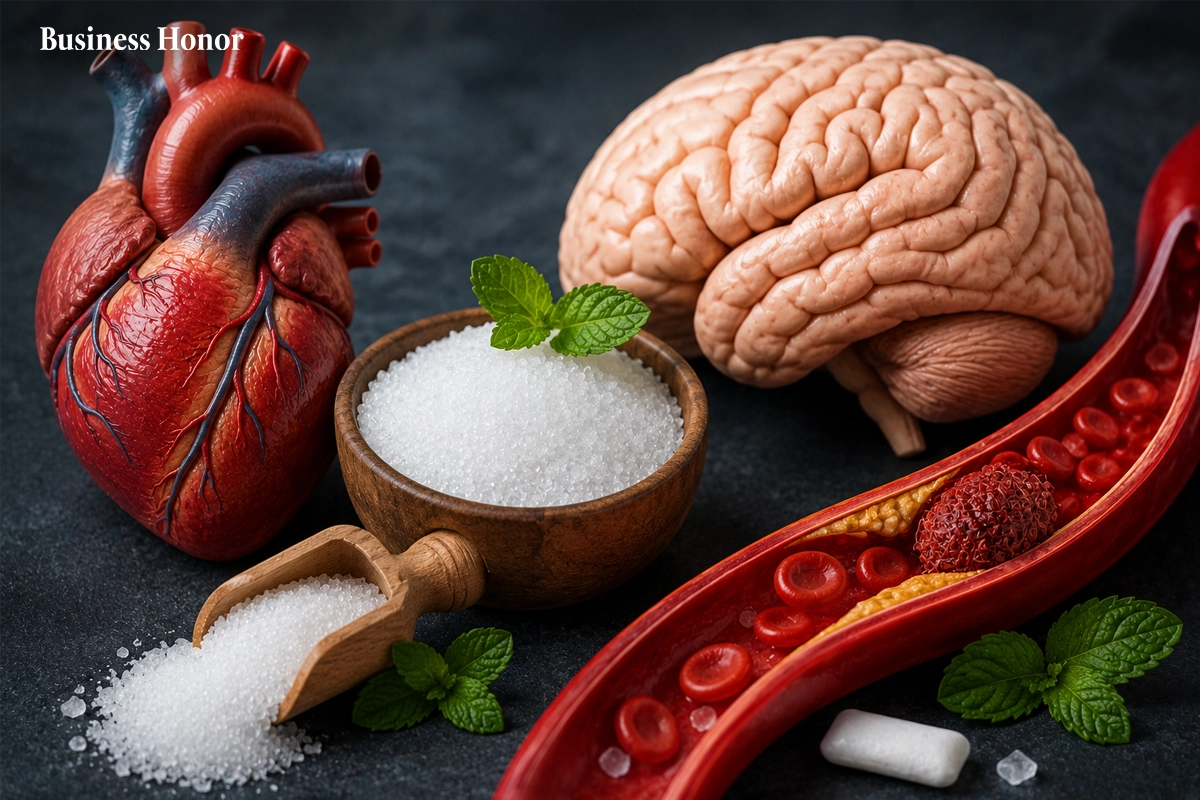
A major study of 17,710 people links high blood xylitol levels to greater cardiovascular risk, raising fresh questions about the sweetener’s long-term safety.
Xylitol, an artificial sweetener found in chewing gum, toothpaste, jams, yoghurt and ice-cream, is under fresh scrutiny after new research shows a link between higher blood xylitol levels and major cardiovascular complications.
The findings, published at the annual congress of the European Society of Cardiology in Munich, were based on the analysis of 17,710 individuals. Scientists compared the highest and lowest quartiles of blood xylitol concentration and followed patients for several years.
Those patients who belonged to the highest quartile of blood xylitol concentration had a 57% higher chance of either dying or suffering from a heart attack or stroke within six years compared to the lowest quartile patients. Even after 30 years, the risk of such a cardiovascular event remained higher by 18% among high-blood xylitol patients.
Researchers observed a dose-response relationship: cardiovascular events became more common as xylitol concentrations increased in the bloodstream. Dr Marco Witkowski of Charité University Hospital in Berlin noted that the study supported previous evidence suggesting xylitol may affect the coagulation process. Previously, his team had observed that xylitol could enhance the clot formation ability of platelets.
Nevertheless, it is necessary to note that the findings of the study do not prove any causal connection between xylitol intake and the development of a heart attack or stroke. This study was purely observational.
According to Prof Dan Atar of the European Society of Cardiology, further study is required regarding the cardiovascular safety of artificial sweeteners.
The British Heart Foundation further warned that one must not take the findings as an indication to go back to products rich in sugar content. Nutritionist Dell Stanford pointed out that limiting the consumption of processed food and eating a healthy diet still holds great importance for heart-related problems.
According to the researchers, there is now a need to conduct clinical trials to see if xylitol itself increases cardiovascular risks. Business Honor believes the findings warrant caution, while further research is needed to confirm xylitol’s long-term heart risks.









































.webp)

.webp)



.webp)



Comments
0 Comments