
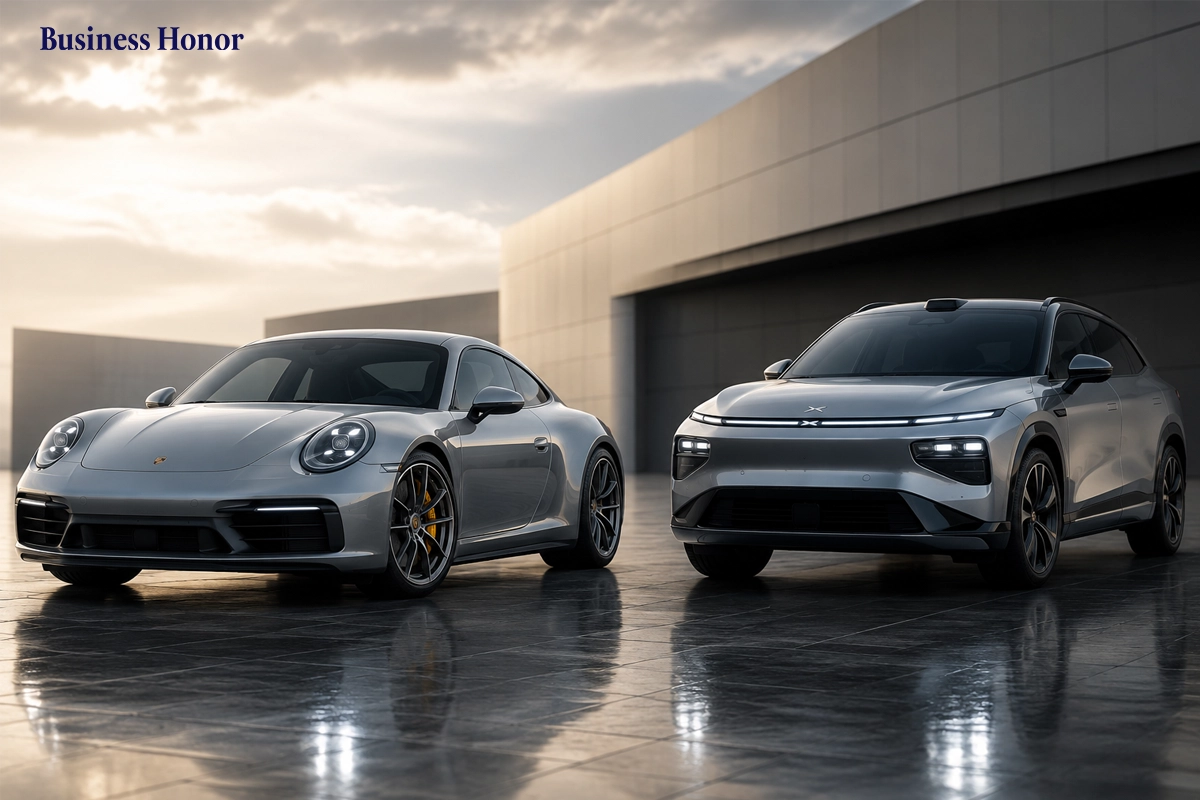
Porsche Xpeng CO₂ Pool marks a sharp shift in Porsche’s EU emissions strategy as it exits Volkswagen’s pool and joins forces with rising EV maker Xpeng.
|
Porsche is taking a new route to tackle Europe’s tightening emissions rules. Porsche Xpeng CO₂ Pool will link the German luxury carmaker with Chinese EV manufacturer Xpeng for 2026 and 2027, after Porsche reportedly exited Volkswagen Group’s existing emissions pool.
An official European Commission filing dated August 5 confirms the change. Porsche has also confirmed the arrangement, saying the move provides greater flexibility during its transition to electric mobility while keeping its long-term strategy intact. Under EU rules, automakers can pool vehicle registrations with other manufacturers to meet fleet CO₂ targets. That means Porsche can now balance its emissions position with Xpeng rather than relying on Volkswagen’s wider group pool.
The decision is especially notable because Volkswagen Group owns a five per cent stake in Xpeng. The new Porsche Xpeng partnership therefore connects two very different players: a traditional European performance brand facing EV pressure and a Chinese EV maker rapidly building its European footprint.
Xpeng delivered nearly 20,000 vehicles across Western Europe during the first six months of 2026, according to Schmidt Automobile Research. The company could approach 50,000 deliveries for the full year, helped by its L03 volume model.
That growth could make the emissions pool valuable for Xpeng while giving Porsche another tool to manage its regulatory position.
The timing is important for Porsche. Its battery-electric vehicle registrations in Western Europe have reportedly dropped almost 30 per cent year on year in 2026. EVs now account for about 30 per cent of its regional registrations, down from nearly 40 per cent a year earlier.
Porsche is also moving toward a greater share of combustion-engine vehicles, adding pressure to its Porsche EU CO₂ emissions strategy.
Meanwhile, Volkswagen Group recorded average fleet emissions of 100 g/km in 2025 across the EU27 plus Norway and Iceland, above its 93.6 g/km target. Removing Porsche’s higher-emission fleet from Volkswagen’s pool could ease the burden on the group’s remaining brands. For Xpeng, stronger European EV sales could create additional financial value.
Business Honor observes that the Porsche Xpeng CO₂ Pool reveals a changing automotive landscape: European luxury brands are under emissions pressure while Chinese EV makers are gaining influence. The real question is whether this is a short-term compliance solution or a sign of a deeper shift in Europe’s automotive power balance.


























.webp)

.webp)




.webp)



Comments
0 Comments