
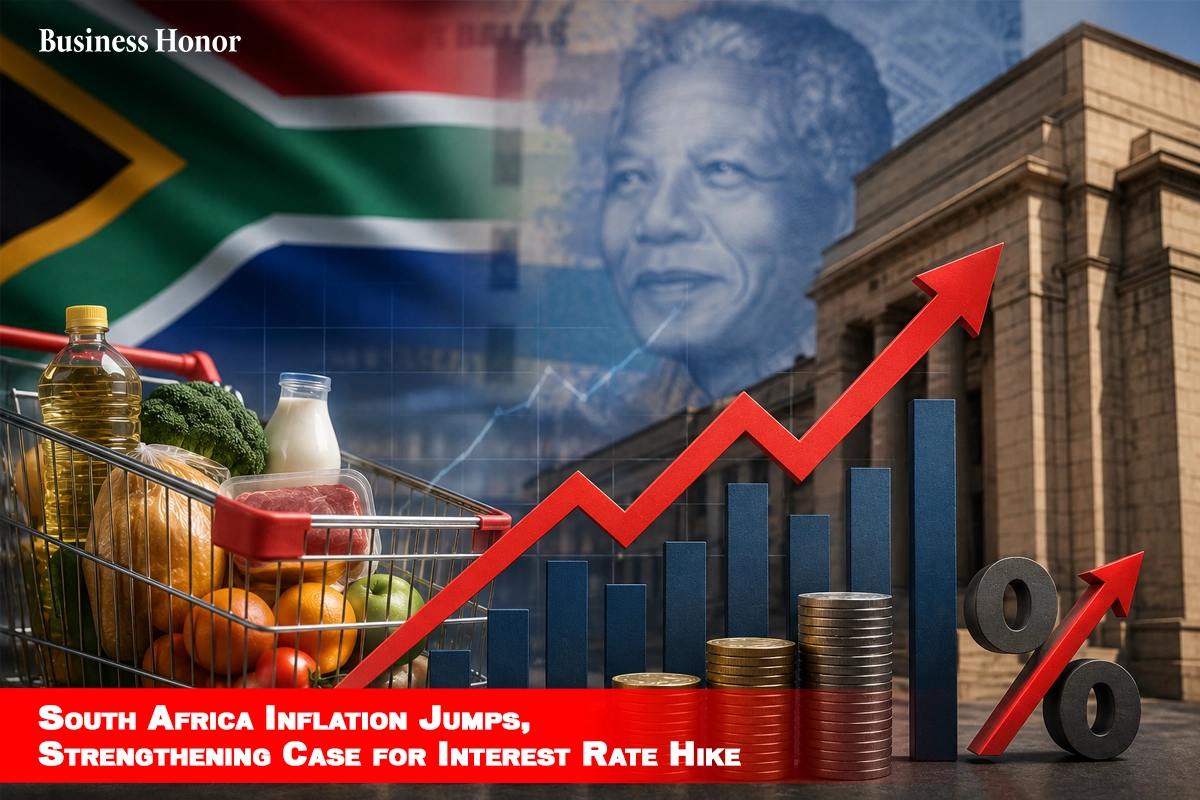
June inflation climbed to a two-year high of 5%, reinforcing expectations that South Africa's central bank will raise interest rates to contain persistent price pressures.
|
Inflation in South Africa saw a greater-than-expected rise in June, reinforcing expectations that the South African Reserve Bank (SARB) would make yet another interest rate increase during its policy meeting this week. The latest figures indicate that inflation pressures persist in the country regardless of the central bank's attempts to contain them.
Headline inflation grew to 5.0% in June compared to 4.5% in May, which is the highest figure since two years ago and higher than economists' expectations of 4.7%. Headline inflation increased because of a rise in the price of transport services due to geopolitical conflicts in the Middle East. The core inflation figure – the rate of change in prices with the exclusion of volatile items such as food and energy – came out higher than the forecast as well, reaching 4.1% against an expected 3.9%.
The coming South African Reserve Bank interest rate decision on Thursday is now expected to lead to a 25 basis point hike. The central bank had previously stated its resolve to keep inflation levels close to its target of 3%, which became more pronounced given the increasing inflation expectations of households.
As economists mentioned, the inflation numbers coupled with the SARB’s revision in the inflation projections of 2026 and 2027 make a rate hike highly likely. Policymakers are expected to give more weight to price stability despite the negative effect high interest rates might have on consumers and businesses.
The better-than-expected inflation number highlights the problems with South Africa’s economic performance amid the efforts to balance economic growth and inflation. Markets are expected to watch the upcoming rate decision to determine South Africa interest rate outlook and inflation outlook in South Africa. Business Honor believes South Africa's inflation surge underscores the need for balanced monetary policy that controls prices while sustaining economic growth, investment, and consumer confidence.














.webp)

.webp)




.webp)


Comments
0 Comments