
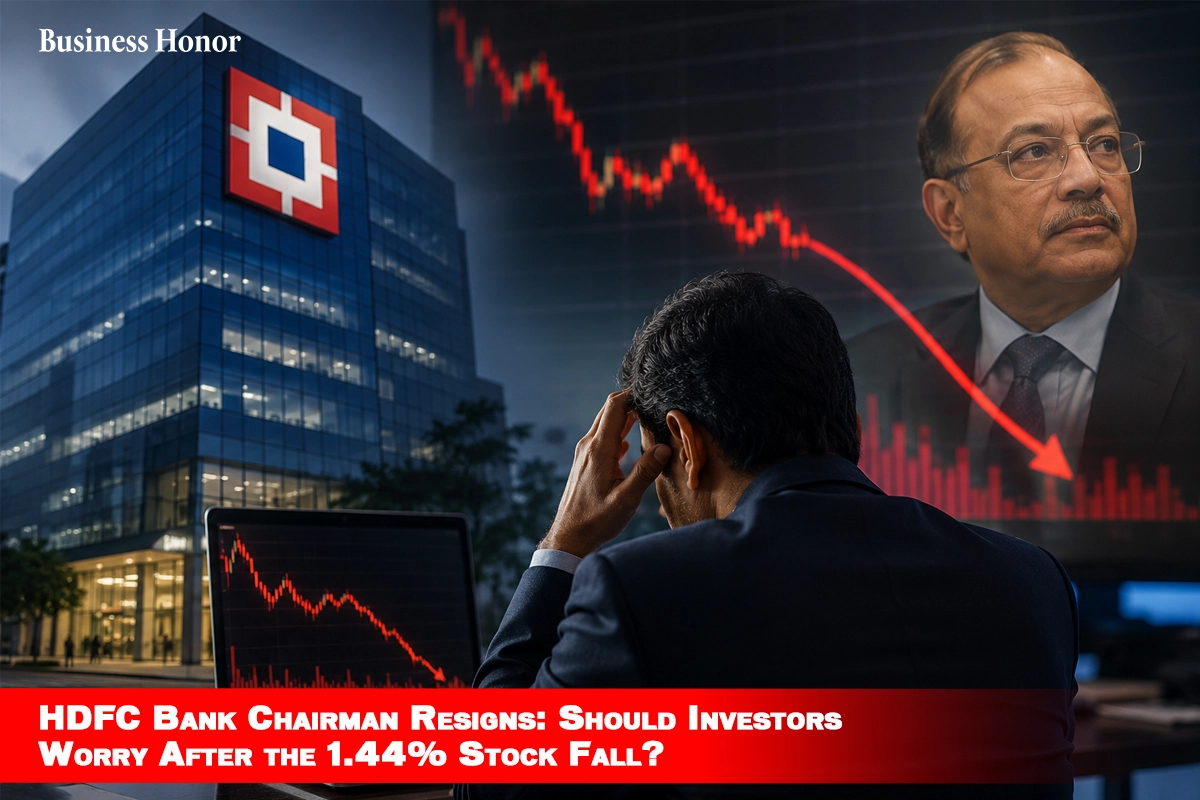
HDFC Bank, India's largest private-sector lender by market capitalization, recently came under the spotlight following the sudden resignation of its Chairman, Atanu Chakraborty. The statement was bound to raise further alarm for investors, especially with HDFC Bank stock price falling by nearly 1.44% due to possible regulatory inquiry in the United States. The latest development has raised the question regarding whether investors should exit their positions with HDFC Bank or hold on to them despite the current uncertainties. The timing of the resignation cannot be overlooked.
In addition to this, there are reports that American law firms have begun inquiries due to recent disclosures from HDFC Bank's top management. Despite the negative impact that these events have had on market sentiment, market experts that one should not confuse market reaction with the fundamentals of doing business have stressed it.
One-day fall of any banking stock is quite normal when there are uncertainties around it and when all the news is about the company's governance. The critical question now for retail investors is whether they should sell their HDFC Bank stocks or redeem themselves from this investment completely. Headlines are usually misleading, but investing is always a financial and long-term decision.
This article examines the reasons behind the chairperson’s resignation, the impact of the HDFC Ltd. merger, why the stocks declined by 1.44%, and whether investors should genuinely be worried or simply prepare for short-term fluctuations.
Why Did HDFC Bank Chairman Resign?
Sudden Exit Raises Questions
Atanu Chakraborty’s resignation as chairperson caught many investors by surprise since the news of his departure arrived at a time when HDFC Bank was under intense scrutiny from all sides. It appears that leadership problems or governance issues could have been behind his move, but it is important to note that the bank denies any such problems.
Reports of Internal Differences
There are some media reports that there has been a disagreement between top management and the CEO regarding certain strategies. However, these reports are still just media reports, and no official confirmation of any such allegation has been made by the bank. Investors must understand this difference.
Regulatory Scrutiny Adds Pressure
The resignation has taken place during the period when law firms from the United States involved in securities regulation have been analyzing the disclosures about the chief executive officer (CEO) and chief financial officer (CFO) of the bank. As of now, these investigations do not constitute any kind of wrongdoing.
Leadership Transition Is Not Uncommon
Large financial institutions frequently undergo leadership changes. While sudden resignations can create uncertainty in the short term, strong governance frameworks and experienced management teams often ensure business continuity.
Why Did HDFC Bank Shares Fall 1.44%?
Market Reacted to Multiple Headlines
The 1.44% decline was driven by a combination of factors rather than a single event. Investors reacted to:
- The chairman's resignation
- Reports of U.S. securities investigations
- Concerns regarding corporate governance
Broader market uncertainty
When several negative headlines emerge simultaneously, institutional investors often reduce short-term exposure until greater clarity becomes available.
Profit Booking After Previous Gains
HDFC Bank remains one of India's most widely held banking stocks. Whenever uncertainty emerges, many traders book profits, increasing selling pressure even if the company's long-term fundamentals remain unchanged.
Banking Stocks Are Sensitive to Governance News
Investment banks rely highly on investors' confidence. Any news about the firm's senior management or board of directors is likely to generate greater reactions in the market than firms from other industries since governance affects confidence levels.
Has the HDFC Ltd. Merger Increased Investor Concerns?
Integration Takes Time
The merger between HDFC Ltd. and HDFC Bank was one of India's biggest financial sector consolidations. Combining two large organizations naturally involves operational integration, technology alignment, and balance-sheet adjustments.
Short-Term Challenges
Since the merger, investors have monitored several factors:
- Deposit growth
- Credit expansion
- Net interest margins
- Liquidity management
- Operating efficiency
These metrics have experienced some pressure during the integration period, contributing to cautious investor sentiment.
Long-Term Benefits Remain Intact
Though there are some immediate problems, most of the analysts still continue to regard this merger as good for the bank since it improves the bank’s mortgage operation, expands its customer base, and creates more chances for cross-selling. These kinds of benefits take time to materialize.
Should Investors Sell HDFC Bank Stock?
Short-Term Volatility Does Not Always Signal Long-Term Weakness
This recent drop is a result of uncertainty rather than any deterioration of the performance of HDFC Bank. Stocks of large-cap banks sometimes go through a correction after any governance-related news.
Focus on Fundamentals
Before making investment decisions, investors should evaluate:
- Quarterly earnings
- Asset quality
- Loan growth
- Capital adequacy
- Deposit growth
- Regulatory developments
These factors provide a clearer picture of the bank's financial health than short-term price movements alone.
Avoid Emotional Decisions
Selling investments solely because of negative headlines can lead to poor long-term outcomes. History has shown that fundamentally strong companies often recover after temporary governance concerns are resolved, although every situation should be assessed on its own merits.
Long Term Investors May Choose to Monitor Rather Than Panic
For long-term shareholders, monitoring future regulatory updates, management appointments, and financial results may be more prudent than making immediate decisions based solely on a one-day stock decline. Investors with different risk tolerances may reach different conclusions, so decisions should align with individual financial goals and risk capacity.
Conclusion
The resignation of HDFC Bank Chairman, Atanu Chakraborty, together with the news of regulatory scrutiny and a drop of 1.44% in its share value, has obviously worried its investors. However, it should be noted that market reaction is not always an indication of the true position of the bank as far as its business is concerned. The merging of HDFC Bank and HDFC Ltd. is still posing difficulties for the bank, yet, at the same time, there are many prospects in terms of strategy. Any issues related to governance should be considered with regard to the bank's finances and its leadership plans. Instead of selling HDFC Bank shares and withdrawing capital, investors would be better off concentrating on the factual data about the situation.











.webp)

.webp)





.webp)


Comments
0 Comments