
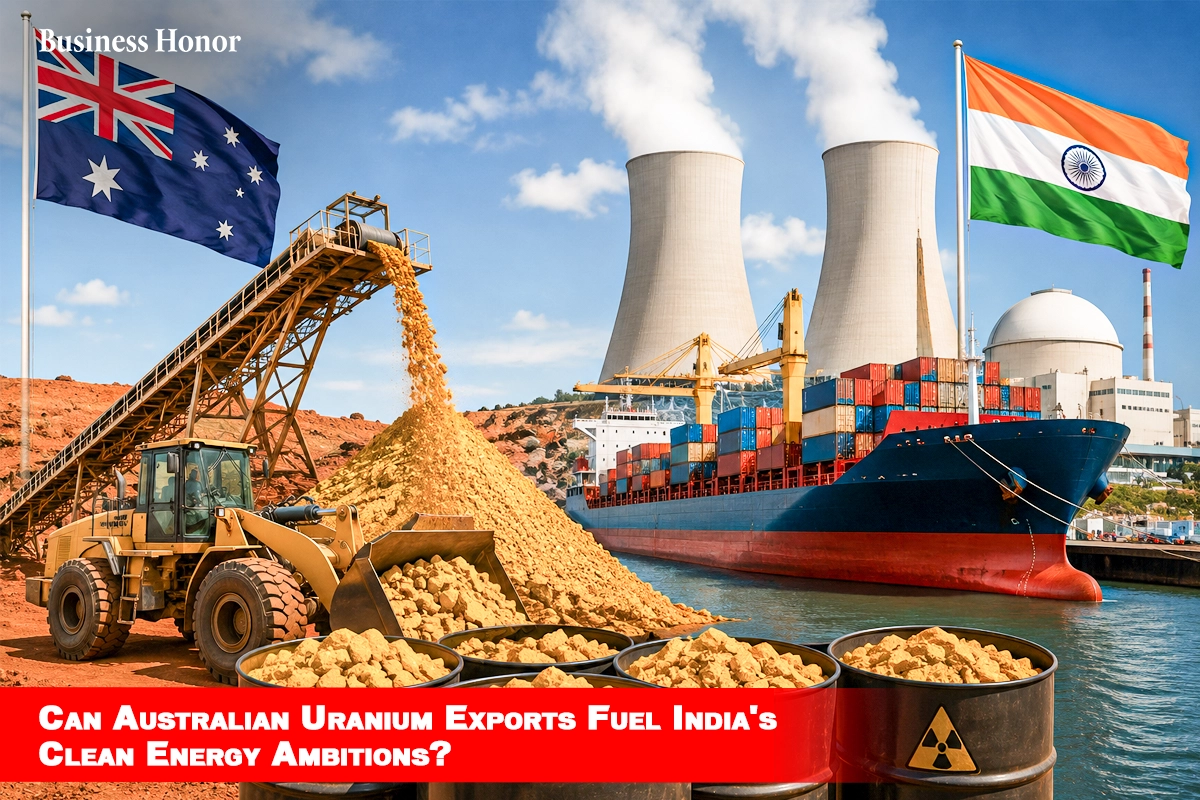
Australian uranium exports to India mark strategic pivot in bilateral nuclear cooperation and energy security partnerships across Indo-Pacific region.
|
Narendra Modi, the Indian Prime Minister, and Anthony Albanese, the Australian Prime Minister, have signed an historic agreement on the supply of uranium from Australia to India that opens up prospects for nuclear cooperation between the two countries. The signing took place after the leaders of both states held talks in Melbourne in which they discussed ways of enhancing the bilateral cooperation in other fields such as trade, defence, and space technology. The new nuclear cooperation agreement marks a new stage in the development of nuclear trade between the two countries which had been limited for several years because of Australia’s fears of weapons proliferation. Under the agreement, the uranium supplied from Australia will only be used for peaceful purposes and all activities within the scope of the agreement will have to comply with all the existing regulations set by IAEA.
So, this agreement marks a big success for India which needs uranium from Australia to implement its ambitious plans. However, from Australia's point of view, the deal possesses some additional strategic advantages in the economy. As Australia aims at cutting its trade reliance on China, which is now its leading trade partner, the agreement with India becomes a considerable chance for achieving diversification. Thus, India takes the fifth place in the rating of Australia's trade partners, with bilateral trade in goods and services amounting to 54.4 billion Australian dollars in the financial year of 2024-2025. It is worth noting that although Australia and India laid down the foundation for nuclear cooperation in 2014, uranium supply volumes were relatively low due to concerns regarding the military use of nuclear materials. The agreement solves historical problems, by providing that safety measures and peaceful use will be in the center of cooperation.
|
"Your leadership and your personal engagement with Australia have been absolutely central to this change," Albanese stated during joint remarks to reporters. Modi's visit to Australia follows diplomatic engagements in Indonesia, where he concluded agreements on agriculture and defence cooperation. |
He is scheduled to continue his regional tour with visits to New Zealand before returning to India, underscoring the importance New Delhi places on strengthening relationships across the Indo-Pacific region. These consecutive high-level visits demonstrate India's strategic focus on deepening partnerships with key democratic nations in the Asia-Pacific region during a period of significant geopolitical realignment.
Business Honor is of the view that Australia's uranium export agreement represents a transformative shift in India's nuclear energy strategy and bilateral trade diversification away from Chinese economic dependency.












.webp)

.webp)





.webp)


Comments
0 Comments