
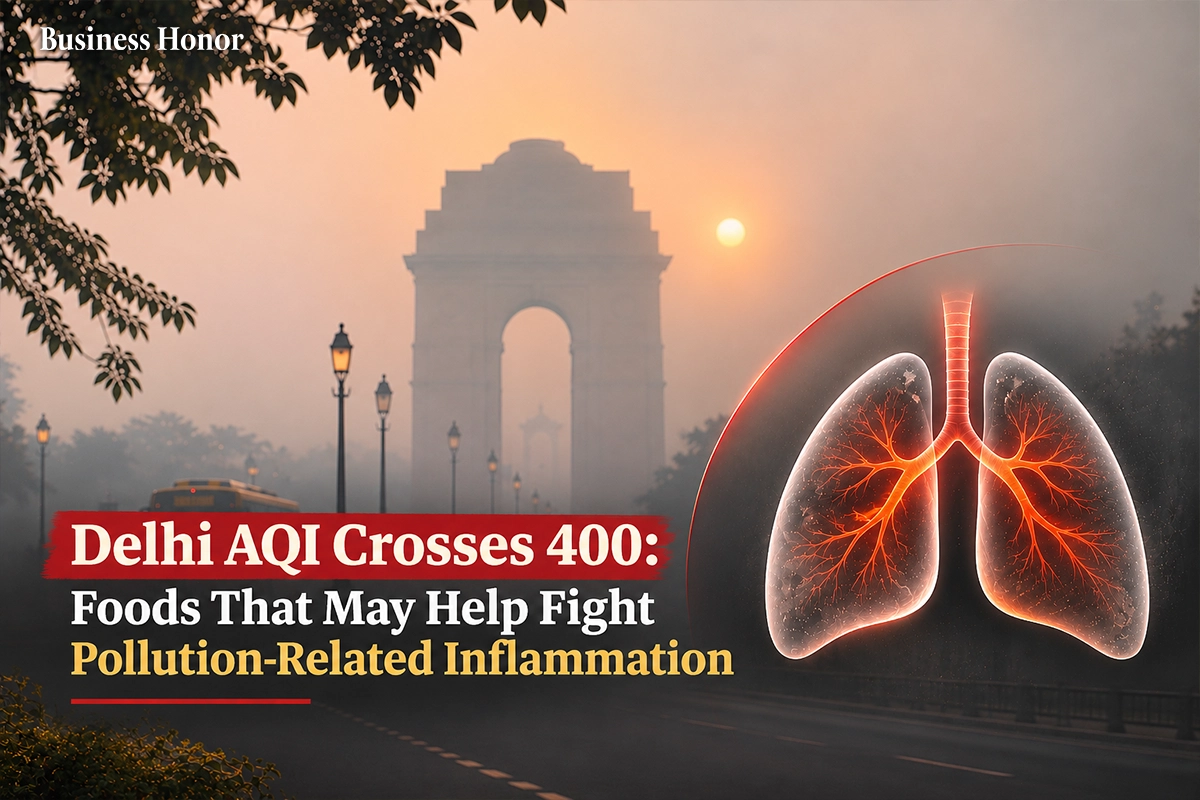
Delhi AQI crosses 400 as severe pollution raises health concerns, putting the focus on antioxidant-rich foods and omega-3 sources that may support the body.
|
Delhi's AQI has crossed 400, making the air unsafe to breathe. Rising pollution has become a major health concern for people living in the city. Breathing polluted air can cause coughing, throat irritation, burning eyes and difficulty breathing.
NDTV reported that air pollution can also cause oxidative stress and inflammation in the body. The effects may extend beyond the lungs, as harmful pollutants can affect organs such as the heart, brain, liver and kidneys. The report also points to foods rich in antioxidants and omega-3 fatty acids that may help the body deal with pollution-related stress.
When people breathe polluted air, PM2.5 particles can travel deep into their lungs. Some can also enter the bloodstream and reach other parts of the body. Long exposure to these particles can lead to health problems.
“When the AQI crosses 400, the air quality is considered severe and can affect even healthy individuals, not just those with pre-existing respiratory conditions. The immediate priority should be to minimise exposure to polluted air,” said Dr. Arun Chowdary Kotaru, Director and Unit Head of Pulmonology at Fortis Memorial Research Institute.
Vitamin C can be found in amla, guava and oranges. Antioxidants can be found in carrots, tomatoes and spinach which can help protect cells. Almonds and sunflower seeds can also be included in your daily meals to add extra nutrients. Having these foods regularly in your diet can help your body fight the effects of pollution.
Salmon and mackerel provide omega 3 fatty acids. If you don’t eat fish, walnuts, flaxseeds and chia seeds are great alternative source. These foods may help reduce inflammation within your body caused by breathing in polluted air. Including these foods into your daily diet can help improve your overall health.
While eating certain foods can help your body, wearing a properly fitted N95 mask will help reduce the intake of harmful particles when you are outside. Using an air purifier at home can help to reduce pollution levels. Avoid exercising outside when air quality is poor, and ensure that windows are shut when pollution levels are high.
Business Honor observes that Delhi's rising pollution levels are a serious concern for public health.













































.webp)


.webp)



Comments
0 Comments