
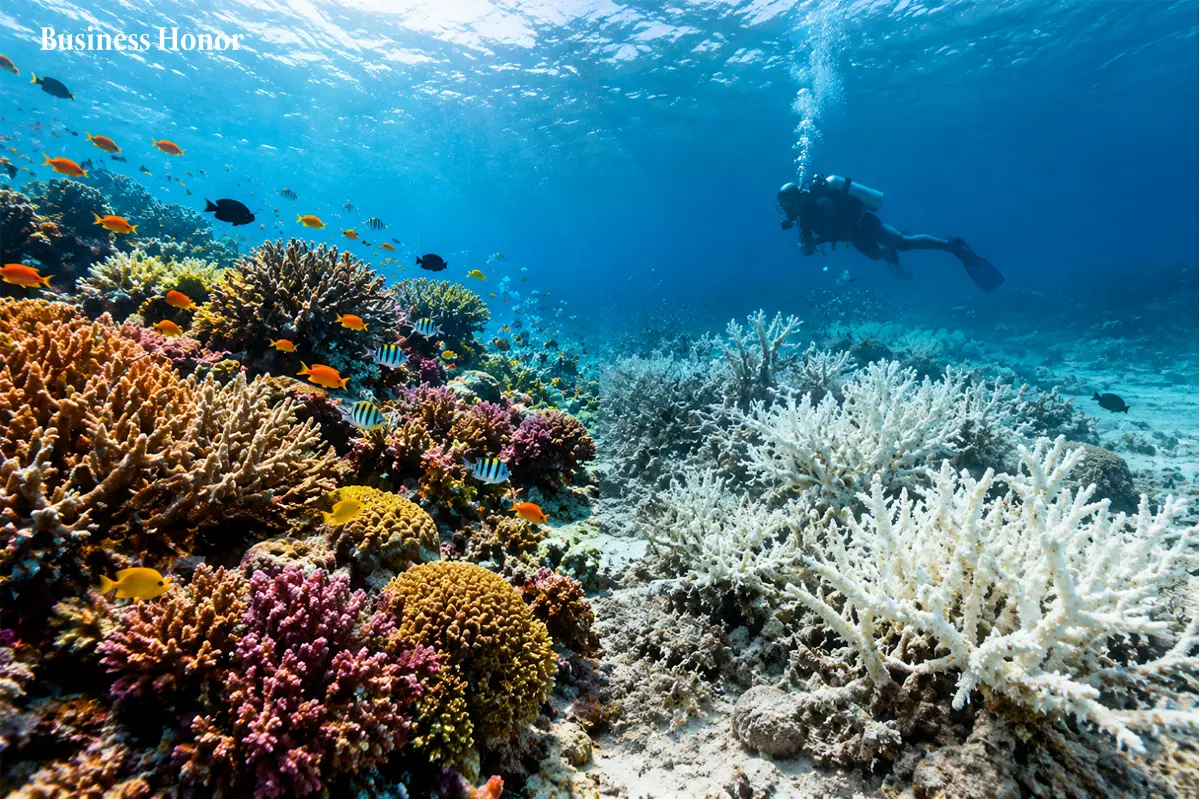
Coral Reefs at risk as 96% face a critical threat of collapse, putting all four Indian reef regions under pressure.
- 96% of assessed coral reefs at risk face a serious threat of collapse worldwide.
- All four Indian coral reef regions are projected to become critically endangered
- Rising ocean temperatures and marine heatwaves threaten reef survival
- Pollution, overfishing and coastal development add to the damage
- Scientists stress the need for stronger reef protection and lower greenhouse gas emissions
A new study has found that 96% of assessed coral reefs at risk are facing a serious threat of collapse. The finding raises concerns about the condition of reefs around the world. Rising sea temperatures and human activities are adding to the problem, making it harder for these marine ecosystems to survive.
The Telegraph India report highlights the findings from monitoring work carried out across Indian reef sites. India contributed 162 of the 350 monitoring sites included in the assessment. This gave researchers a closer look at the condition of the country's coral reefs and the changes taking place in these marine habitats. These findings also shed light on the threats facing coral reefs around the world.
All four coral reef regions in India could soon be listed as Critically Endangered. These include the Andaman and Nicobar Islands, Lakshadweep, the Gulf of Mannar and Palk Bay, and the Gulf of Kutch. This puts the marine life living around these reefs at greater risk and raises concerns about their future.
“A collapse of corals could mean catastrophic loss of marine biodiversity, including fish, which could impact coastal economies and livelihoods,” said Dr. Tamal Mondal, Scientist at the Zoological Survey of India.
The increased temperature of oceans puts pressure on coral reefs. Corals can become weakened after long periods of extreme heat. The corals will lose the small algae that they rely on for food causing coral bleaching. Many corals may die. This makes conservation of coral reefs in India even more important.
Coral reefs are also affected by humans. The sea can become polluted with plastic waste and contaminated water. Overfishing reduces marine life around coral reefs. Building work near these areas can also destroy parts of the habitat and disturb the species. These problems add to the damage caused by climate and weather changes.
Scientists say coral reefs need better protection if they are to survive. Governments and local communities have a role to play in this effort. Cutting greenhouse gas emissions is also necessary to slow global warming and reduce the pressure on these fragile ecosystems.
Business Honor observes that the findings are a warning about the condition of coral reefs around the world.
FAQs
Why are 96% of assessed coral reefs at risk of collapse?
Rising sea temperatures, marine heatwaves, pollution, overfishing and coastal development are putting coral reefs under severe pressure.
Which Indian coral reef regions face a critical threat?
The Andaman and Nicobar Islands, Lakshadweep, the Gulf of Mannar and Palk Bay, and the Gulf of Kutch are all under threat.
How do rising ocean temperatures damage coral reefs?
High water temperatures cause corals to lose the algae they depend on for food. This leads to bleaching and can eventually kill them.
How do human activities affect coral reefs?
Plastic waste, water pollution, overfishing and coastal construction damage reef habitats and disturb marine life.
What can be done to protect coral reefs?
Stronger reef conservation, better control of coastal pollution, responsible fishing and lower greenhouse gas emissions can help protect these ecosystems.












































.webp)


.webp)



Comments
0 Comments