
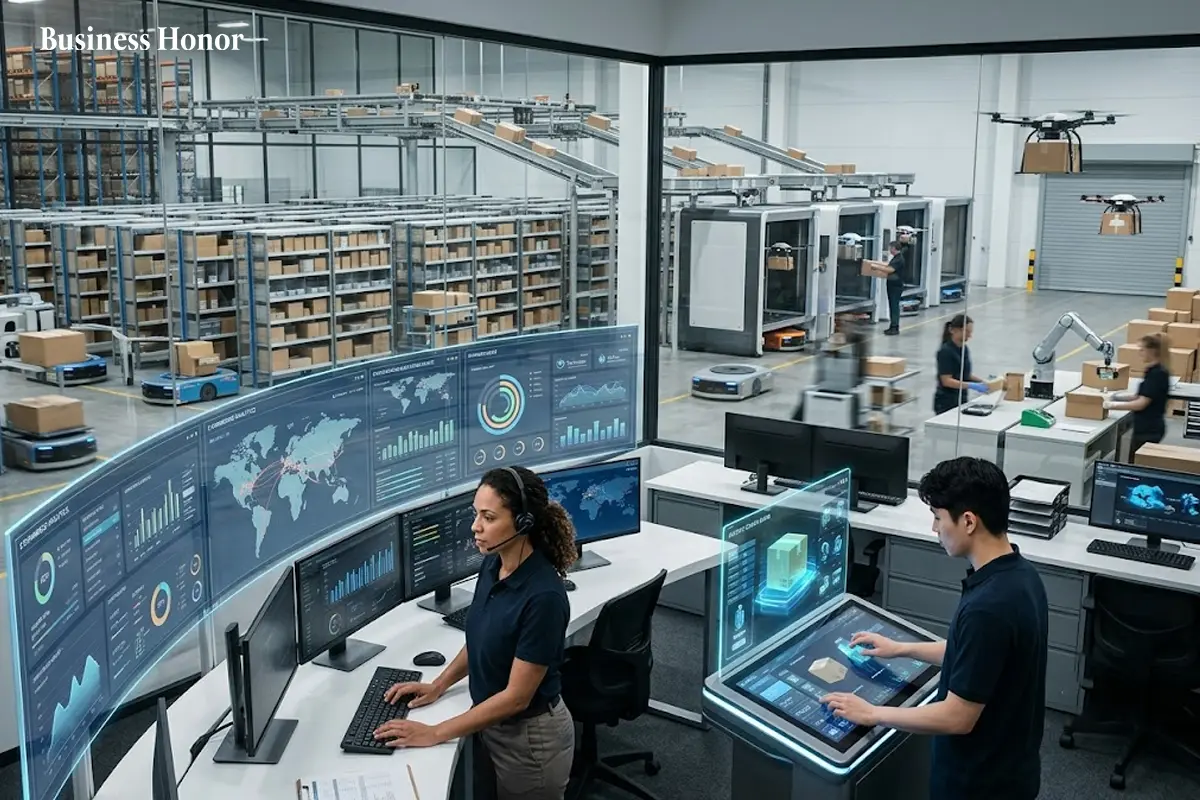
E-commerce is not simply a matter of uploading products online and waiting for purchases. The advent of AI in product search and discovery in e-commerce is one area that is evolving, while trends in social commerce for online retailers in 2026 represent another area through which online businesses can connect with consumers.
The basic concept still remains the same, that is, that e-commerce is the process of purchasing and selling items via the internet. However, each time there is an online transaction taking place, there is a whole host of processes involved behind it.
E-Commerce Defined: Types, History, and Examples
Electronic commerce, or simply e-commerce, involves the online buying and selling of products and services. It may involve computers, smartphones, tablets, marketplaces, websites, and other electronic devices. The different types of e-commerce are B2C, B2B, C2C, and B2G.
The origins of e-commerce date back further than one might think. Companies used Electronic Data Interchange in the 1960s to transfer documents electronically. The first online transaction took place in 1994 with the sale of a CD through an online retail website.
Today, there are large companies such as Amazon and Alibaba that do business on a large scale, while smaller companies may sell through Shopify, Etsy, and other marketplace stores.
E-Commerce Has More in Common With Traditional Retail Than You Think
Online selling might appear to be entirely distinct from brick-and-mortar selling; however, there are many fundamental concepts of retail that continue to apply.
Firms have to know their customers, conduct market research, advertise their products, provide the right incentives, and gain buyers’ trust. As Floship suggests, an online store is similar to a brick-and-mortar store because it creates the first impression on a potential customer.
New technology changes how these goals are achieved, but the fundamentals of retail remain the same.
Knowing Your Customer Still Matters
An effective online store requires an understanding of its target consumer. Age, location, income, lifestyle, interests, and purchasing behavior may affect product selection and how consumers respond to marketing.
Market research helps businesses make decisions about what to market, how to market it, and who to target.
This is still essential in light of the changing trends in the e-commerce industry toward more personalized shopping experiences.
Product Information Can Influence a Purchase
The consumer cannot physically inspect the product before purchasing it online. This increases the importance of product information.
Providing information such as the product description, specifications, images, cost, delivery details, and directions on how to use the product can assist in decision-making. Floship’s previous article also emphasized the importance of comprehensive product information in online shopping.
Content Is Still Part of E-Commerce
Online stores are not limited to product pages. Other content such as articles, videos, guides, reviews, social media posts, and more can help people understand products and make a decision.
The seven articles summarized by Capital & Growth cover different areas of e-commerce, including marketing, starting an online business, growing sales, customer experience, mobile commerce, and payment systems.
This shows how broad e-commerce has become. Selling online now involves marketing, technology, customer experience, logistics, and much more.
Social Media Has Become Part of the Shopping Journey
Social media allows firms to promote their products, build their brands, gather consumer feedback, and guide consumers to their online stores.
Social proof is also supported by user-generated content and reviews provided on social media. Reviews, testimonials, the number of purchases, and social proof in general are identified by Floship as ways to build consumer confidence.
In 2026, social and livestream shopping continue to be trends for firms to follow in relation to online shopping.
Abandoned Carts Are Part of Online Retail
Every buyer who decides to put a product into their shopping cart does not always complete the buying process. This can happen due to reasons such as additional shipping fees, a complex checkout process, few payment options, or compulsory creation of an account.
This issue can be handled through certain measures, which include clear pricing, easy checkout, multiple payment options, and proper recovery messages for those who do not complete an order.
Customer Service Does Not Stop at Checkout
Good customer service continues to be crucial even after a customer has placed an order. Customers may require assistance in many areas, including product information, deliveries, returns, and payments.
According to a previous Floship post, 24/7 availability and chatbots are two methods through which e-commerce companies can stay in touch with their customers outside normal business hours.
In general, customer experience has become one of the aspects of the Top Ecommerce Trends to Watch in 2026.
Delivery Is Part of the Customer Experience
The online purchase does not end when a customer clicks the payment button. Delivery is a major part of the overall experience.
The Capital & Growth summary notes that businesses need to pay close attention to delivery because attracting customers is only one part of e-commerce success.
Inventory management, fulfillment, shipping options, tracking, and returns can all influence whether a customer has a positive experience and chooses to shop with the same business again.
E-Commerce Platforms Are Not All the Same
There are numerous e-commerce platforms and software applications, but they vary in features, integrations, security, user-friendliness, marketing capabilities, and scalability.
According to Floship, it is essential for companies to take their individual needs into account when choosing an e-commerce platform, instead of making a decision based solely on looks and popularity.
The 7 Must-Read E-Commerce Articles
From Capital & Growth’s summary titled “7 Must-Read E-Commerce Articles,” there are sources that provide information about various aspects of e-commerce. Some of these include information on the state of e-commerce, starting an online business, e-commerce marketing, e-commerce trends, the connection between online and brick-and-mortar retailers, retailing after the pandemic, and e-commerce statistics from around the world.
All these sources prove one thing: e-commerce is not a single concept but rather consists of several different components.
What the E-Commerce Industry Looks Like in 2026
The current trend in e-commerce is greater integration across websites, mobile phones, social media, marketplaces, and traditional physical stores. Trends to watch in 2026 include AI, automation, personalization, flexible payments, subscription services, and omnichannel commerce.
But the fundamentals remain the same. Businesses still need the right product range, clear information, good service, effective marketing, and a strong understanding of their customers.
Business Honor observes that the future of e-commerce will depend not only on adopting new technology but also on getting the basic customer experience right.
FAQs
What is e-commerce?
E-commerce is the buying and selling of goods and services over the internet through websites, marketplaces, apps, and other digital platforms.
What are the main types of e-commerce?
Common models include B2C, B2B, C2C, and B2G. Other models include C2B and C2G.
What are the key e-commerce trends in 2026?
AI, personalization, social commerce, mobile shopping, automation, flexible payments, subscriptions, and omnichannel experiences are among the major areas being watched in 2026.
Why do customers abandon online shopping carts?
Common reasons include unexpected shipping costs, complicated checkout processes, limited payment options, and unnecessary registration requirements.
Why is customer experience important in e-commerce?
A smooth experience across product discovery, checkout, payment, delivery, and support can help businesses build customer trust and encourage repeat purchases.





































.webp)

.webp)



.webp)



Comments
0 Comments