
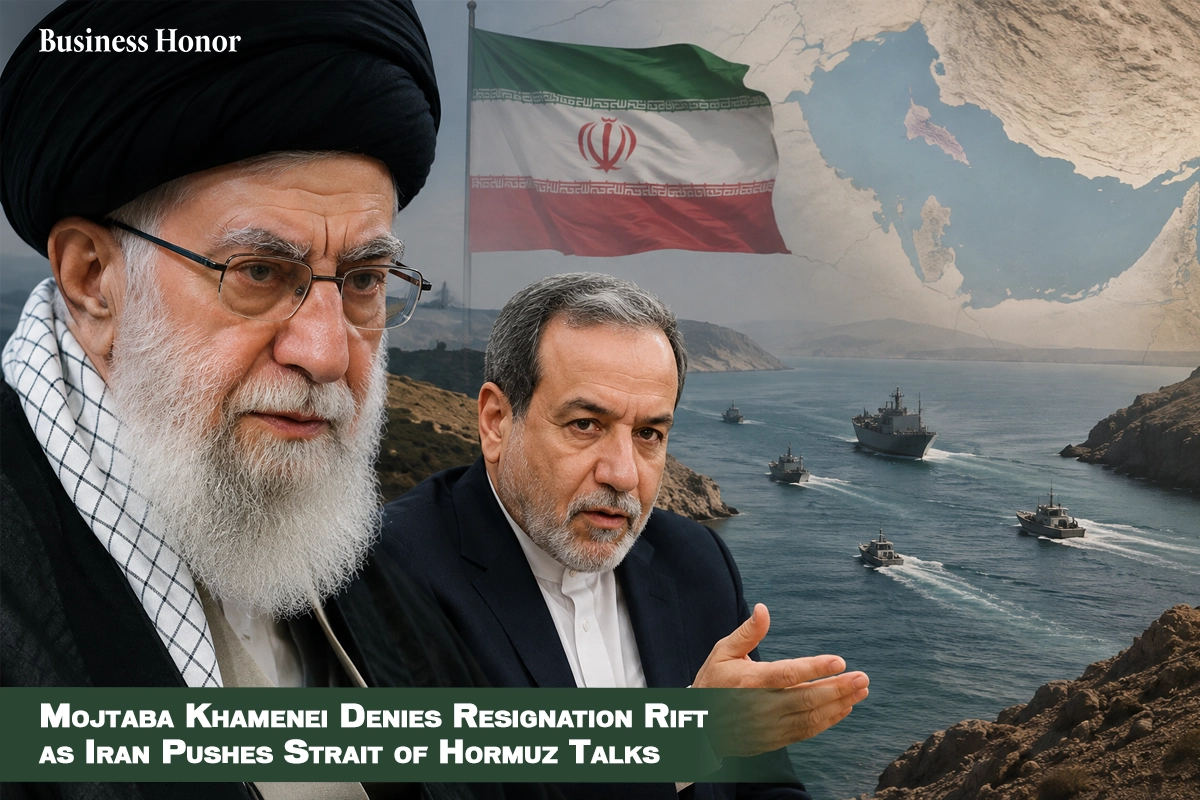
President Masoud Pezeshkian dismissed reports of resignation threats as debate intensifies over U.S. negotiations and the future of the Strait of Hormuz.
|
Iran's President Masoud Pezeshkian has denied rumors that he is resigning amid escalating political rifts in the context of ongoing discussions concerning the Strait of Hormuz. This issue has drawn even more attention to Mojtaba Khamenei, whose office also refuted the claim.
In a television interview dedicated to his two-year term as President, Pezeshkian refuted rumors of several offers of resignation, and stated that he is determined to finish his presidential term. The developments come as the latest Iran-US diplomatic negotiations over the Strait of Hormuz continue to dominate regional politics and energy markets.
These rumors were spread by Mohammad Bagher Kharazi, who said that Pezeshkian became disappointed that he was not included in any of the important decision-making processes. Besides, Kharazi said that the Supreme Leader Mojtaba Khamenei told the President that future offers to resign would be accepted. Later on, Khamenei's office later dismissed the claims as "fundamentally false."
Pezeshkian insisted that his government is still in complete unity with the Iranian military commanders, and that those who oppose him are trying to politicize the issue. Staff members of the presidential palace added that those reports were all fake and politically motivated.
The conflict is linked to differences in opinion negotiations between Iran and the U.S. about the Strait of Hormuz. Although the West believes that such an agreement could secure one of the most crucial oil transit points, conservative elements in Iran are still not willing to reach an agreement with Washington.
Furthermore, political tensions have increased after the conservative Iranian assembly of experts declared that reaching an agreement with the U.S. is "futile" and that Iran shouldn’t be making any concessions under the name of peace. Even amid criticism from within, Pezeshkian seemed to suggest that agreements made with the United States might affect Iran’s future foreign policy, provided they abide by them.
These new developments illustrate the complex political environment that awaits Iran, where diplomacy and security issues are inextricably linked. Business Honor believes political stability and transparent diplomacy will remain essential for reducing regional tensions and supporting long-term energy security.



































.webp)

.webp)



.webp)



Comments
0 Comments