
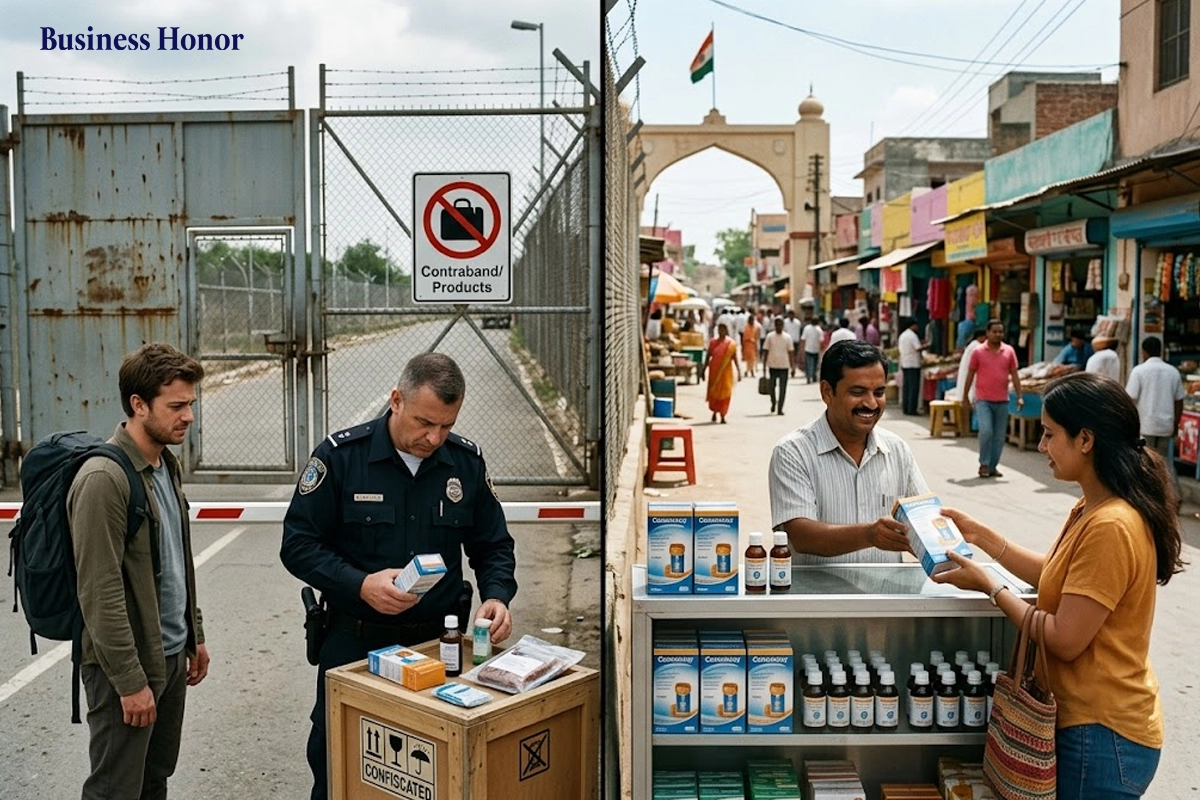
A product is prohibited in one country does not necessarily mean that it cannot be sold legally in another one. It might seem unusual, but it is a natural consequence of different national regulations and requirements. Each country has its own authorities, testing procedures, and ways to evaluate risks.
The issue has become more evident with the growth of international commerce and online purchases. Nowadays, people can purchase goods from sellers located several thousand kilometres away. However, a product that is legal in the country where it is produced may not comply with the laws of the country where it is sold or used.
Why Are Products Banned in Some Countries?
There is no global agency that approves the sale of every product worldwide. Instead, individual governments and regions establish regulations covering foodstuffs, cosmetics, toys, electrical devices, chemicals, and other products.
In Europe, there is a uniform system of product safety standards among EU members. In the US, India, Canada, Japan, and Australia, for example, there are their own regulatory schemes.
This means that the same product may have different conditions under which it is allowed to be sold in different markets. One country may ban a substance, while another may allow it to be used in small amounts. A product may also be restricted for one application but permitted for others.
That is why claims about products banned in another country should always be verified.
What Does "Banned" Really Mean?
"Banned" is a term that is sometimes used too loosely.
There are various ways for authorities to regulate products. They can ban a product altogether, limit its usage, restrict certain ingredients, require specific labelling, prohibit its import, or order a recall.
A recall and a ban are different things. A recall normally means removing a product from the market because it may pose health risks or does not comply with certain requirements.
Understanding this difference is important because social media posts may claim that a product was banned when only one of its ingredients or a particular use was prohibited.
Why International Product Safety Regulations Differ
Product safety regulations vary between countries because legislation and approaches to risk assessment differ.
Regulatory authorities can consider scientific information, potential use, possible health impacts, and other factors such as the availability of safer alternatives. Even when two nations receive similar data, they may establish different regulatory limits.
This does not mean that there is no international cooperation. Nations exchange information about product recalls and other safety issues. There are also relevant regulations within the framework of the World Trade Organisation relating to technical standards.
However, this does not mean that every nation needs to have the same product safety legislation.
Are Global Product Safety Standards the Same Everywhere?
The term "global product safety standards" can be misleading.
The International Organisation for Standardisation and the International Electrotechnical Commission create international standards covering safety, quality, and technical aspects.
These standards can provide a technical basis for manufacturers and regulators. However, international standards do not automatically become laws in every country.
It is up to individual governments to implement them and add other requirements if necessary.
Thus, a manufacturer can comply with an international standard but still be required to meet additional national criteria to market its products in a particular country.
How Can Banned Products Be Sold in Other Countries?
Differences in national laws are typically the reason.
For example, Country A might prohibit the use of a certain substance in a product.
Meanwhile, Country B might allow the same substance provided that its concentration remains within a certain limit.
As a result, a company might legally produce and sell the product in Country B but not in Country A.
The differences can involve substances used, electrical parts, packaging, warning labels, and other requirements.
Therefore, banned products sold in other countries are not automatically proof that one country is ignoring a known danger. The countries may simply have different rules or different assessments of acceptable risk.
Online Shopping Makes the Issue Harder
Cross-border e-commerce has created an additional challenge.
Buyers can purchase goods from overseas sellers without knowing whether those products meet the safety standards of their own countries.
A product may comply with all safety standards in its country of origin but fail to meet the requirements of the country where the consumer lives.
This is especially relevant for products such as baby goods, cosmetics, chemicals, and electronics.
Consumers should therefore check the safety requirements of their own countries instead of assuming that overseas products will always meet them.
What Happens When Unsafe Products Cross Borders?
Regulatory cooperation becomes important when potentially harmful products are available in international markets.
The European Union’s Safety Gate initiative helps national authorities share information about harmful non-food products and the measures taken against them. Such information-sharing initiatives can help identify products that may also be available in other markets.
This is particularly important because modern supply chains often pass through several countries. A product could be made in one country, distributed through another, and purchased by consumers in yet another market.
What Should Consumers Check?
Consumers need to be careful when buying products from abroad.
Instead of believing social media claims that "this product is banned in the whole world," they should verify the information through an authentic source, such as a government or regulatory website. They should check the product name, brand, reason for the ban, and date of the announcement.
They should also be aware of certification marks. A certification in one country does not necessarily mean that the product meets the requirements of every other market.
The Bigger Picture
The fact that a product is prohibited in one country and allowed in another does not necessarily mean that either country has made the wrong decision. Different regulations can exist because governments rely on different laws, limits, and risk assessments.
But transparency is what really matters here.
Consumers need to know why a product has been prohibited and whether the restriction concerns the entire product, a particular ingredient, or a specific use.
Businesses also have a role to play. The legal status of a product in one country does not guarantee that it can legally be sold in another.
As international business continues to grow, cooperation between regulators and access to reliable safety information are becoming increasingly important. Business Honor believes safety must come before profit. Different rules can exist, but consumers deserve clear information about risks, restrictions and product safety.


































.webp)

.webp)



.webp)



Comments
0 Comments