
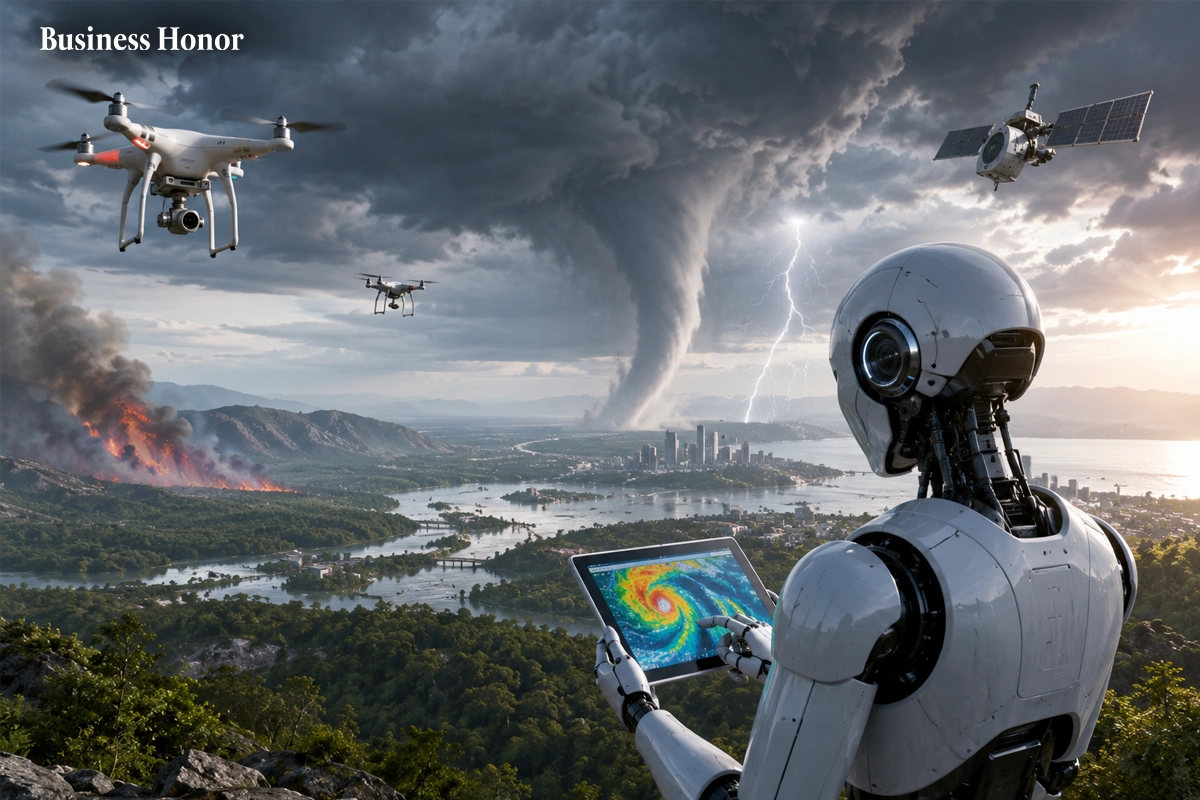
AI could strengthen climate-disaster preparedness as extreme weather intensifies, while conventional forecasting remains essential.
|
Artificial intelligence is emerging as a powerful tool for predicting extreme weather, raising an important question: can AI become the world’s new frontline against climate disasters? As climate-related hazards intensify, faster and more accurate forecasts could help governments and communities prepare for floods, storms and other emergencies.
Countries such as China have developed AI weather forecasting systems that are being trialed alongside numerical weather prediction, including Fengwu, Huawei’s Pangu, and Fudan University’s Fuxi, among others. This differs from the traditional numerical weather prediction method, which uses supercomputers to generate predictions based on atmospheric physics.
This speed might come in handy during emergencies that develop very quickly. Advanced forecasts will be of great help to authorities when planning, securing infrastructure, and arranging transport before bad weather.
Fengwu has gained popularity due to the fact that the inventors of this model said it showed better results compared to Google GraphCast in about 80% of assessed weather parameters. It is stated that in the case of Typhoon Dolphin, Fengwu predicted its landing on the mainland of China five days before the event with an accuracy of 30 minutes and 30 kilometres, as mentioned by CTO of Techwind Sun Zhi.
But there are some shortcomings associated with AI predictions. According to Sun, AI is not as efficient at predicting the strength of a storm, which is one of the key variables to consider when analyzing its impact. Moreover, AI models have yet to prove themselves in forecasting major climate events weeks or even years in advance, such as the El Niño effect.
This suggests that AI is unlikely to displace traditional weather models any time soon. Instead, it could be more productive to combine the efficiency of AI calculations with the knowledge of physicists and meteorologists. Business Honor believes AI could become an important frontline technology for climate-disaster preparedness, but its greatest value will come from strengthening existing forecasting systems rather than replacing them.





































.webp)

.webp)




.webp)



Comments
0 Comments