
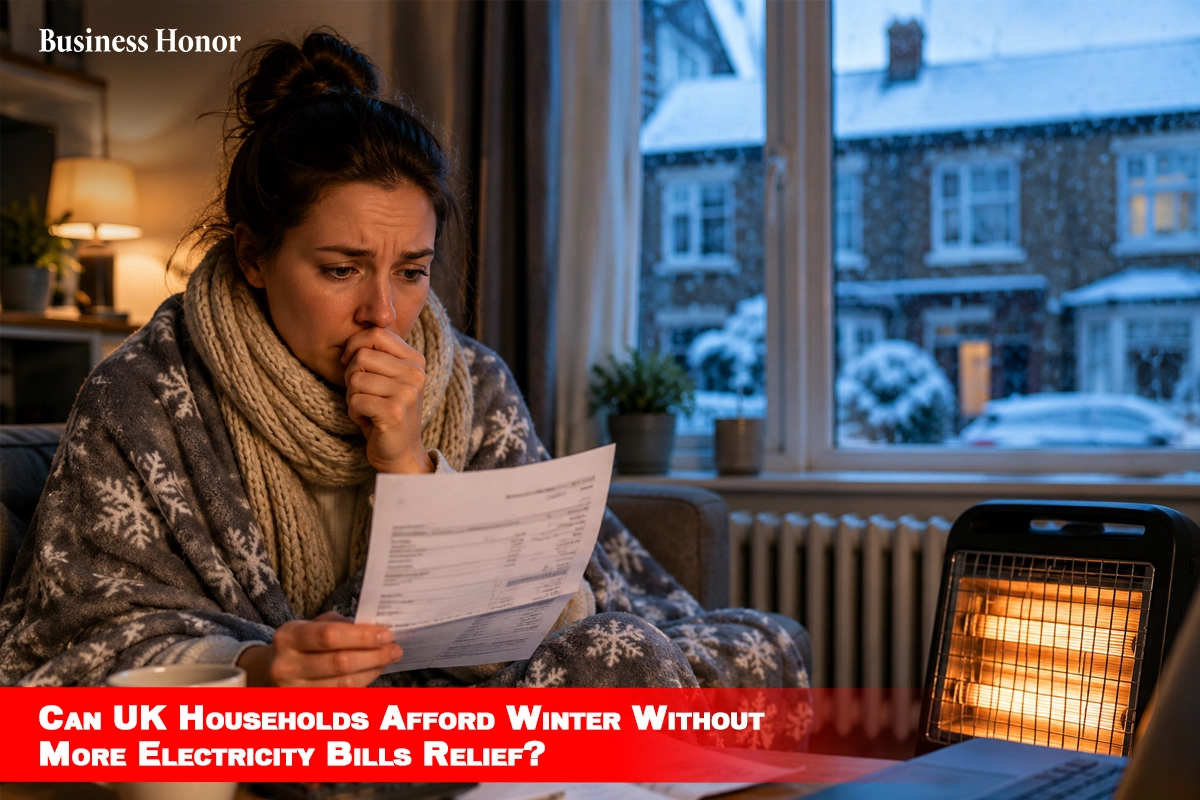
Government's VAT cut on electricity bills signals shift toward immediate cost-of-living intervention over long-term structural reform strategy.
|
The first thing that new PM Andy Burnham has done is to announce that the government will remove VAT from electricity costs starting from October 1. The plan is on account of the growing crisis among the UK families due to high prices that await them this winter. It is expected that households will save some £45 on their Ofgem bill due to the VAT falling to zero level from 5 percent. Price caps will help people save some £150 this October, marking another effort of the state to help the most disadvantaged families with their electricity bills.
Chancellor John Healey MP confirmed the tax cut is funded entirely through cancellation of the controversial £1.8 billion Digital ID programme, which was scheduled to roll out over the next three years. Rather than identifying savings through budget reprioritization, the government is redirecting these funds directly to support households struggling with energy bills. The announcement comes as cost of living remains elevated following Russia's invasion of Ukraine and subsequent regional conflicts that have destabilized global energy markets. Government modeling indicates the VAT cut will reduce Consumer Price Index inflation by approximately 0.10 percentage points and Retail Price Index inflation by around 0.14 percentage points—a meaningful deflationary impact during inflationary periods.
Energy suppliers are expected to pass the full VAT reduction to all customers, including those on fixed-rate tariffs, mirroring their compliance with the previous £150 energy bill reduction. The measure also extends benefits to small businesses qualifying for domestic energy VAT relief, charities, and residential care homes eligible for reduced rates.
The government has committed to providing comparable funding to Northern Ireland's Executive, ensuring households across the entire United Kingdom benefit equitably from the tax relief. While this represents immediate action, Burnham indicated that longer-term support measures will be announced at the forthcoming Budget, with all future decisions structured to comply with the government's established fiscal rules and accompanied by updated Office for Budget Responsibility forecasts. The timing proves critical, with the reduction taking effect before the next Ofgem price cap adjustment in October, maximizing its impact during the winter months when household energy consumption peaks. Officials estimate the measure will cost approximately £850 million in 2026-27, based on current electricity price projections.
Business Honor is of the view that Prime Minister Burnham's VAT elimination on electricity bills represents strategic prioritization of immediate household relief over fiscal consolidation measures.































.webp)

.webp)




.webp)



Comments
0 Comments