
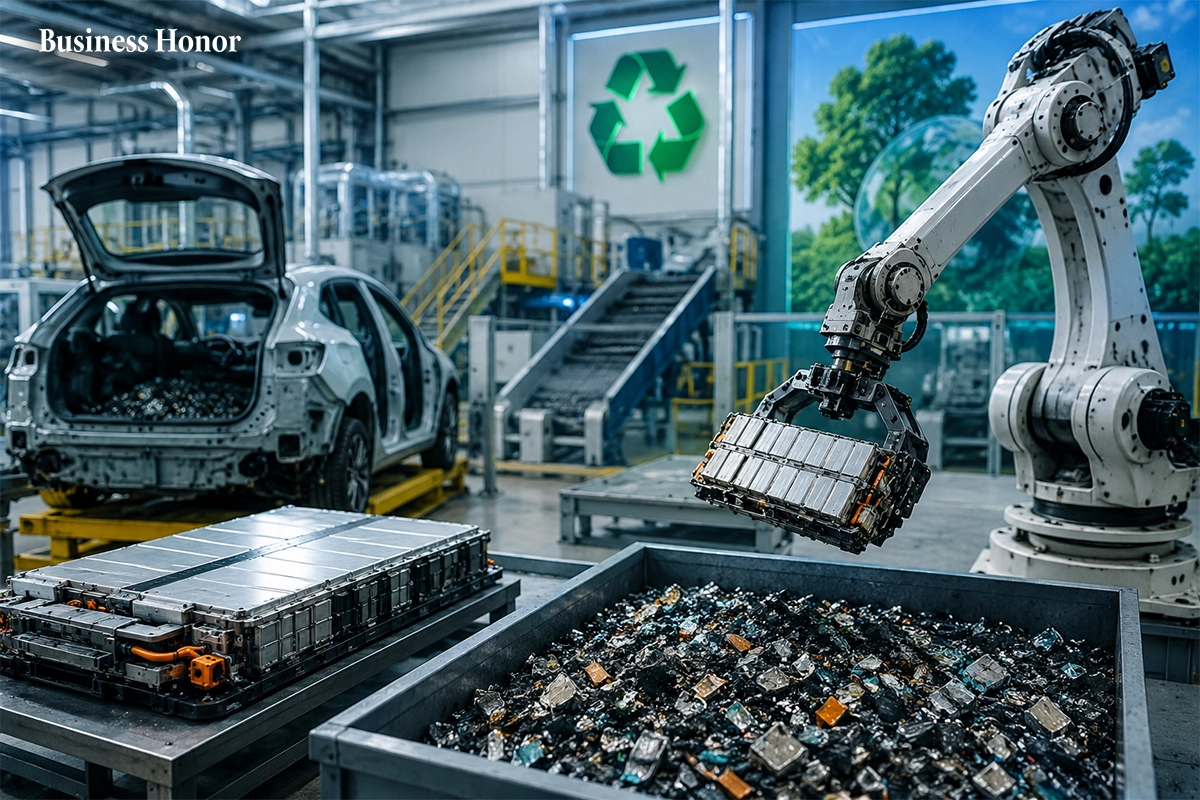
Growing volumes of retired EV Batteries are driving demand for advanced recycling systems, creating new opportunities in the global clean energy and mobility sectors.
The rapid growth of electric vehicles hitting the roads across the globe, there has been an increasing interest in discussing the future of EV Batteries, with business leaders and politicians now considering EV Batteries recycling as an important economic opportunity rather than as just another problem related to waste disposal. The increasing number of electric vehicles means that more efficient battery recovery systems need to be designed.
As stated by experts in this field, retired EV Batteries are expected to amount to 20.5 million tons worldwide by 2040. Such forecasts give rise to many debates about the future of EV battery recycling industry, especially when talking about the need to come up with efficient ways to extract precious metals such as lithium, nickel, or cobalt from old batteries.
The growing focus on circular economy solutions for EV Batteries comes amid concerns that current recycling capacity may not keep pace with electric vehicle adoption. For example, China being the world leader in terms of battery recycling infrastructure, struggles with channeling retired batteries into the proper recycling channels.
Industry experts observe that there are more benefits to EV battery recycling beyond its contribution to the environment. The materials obtained from such processes will not only allow for less dependence on new raw materials, but will enable companies to maintain their cost efficiency. According to the International Energy Agency, battery recycling may substantially lessen future needs for lithium, nickel, and cobalt.
Second-life applications for used batteries represent yet another trend in the industry. Even though the battery may no longer be suitable for driving purposes, it can still find application in an energy storage system or similar less demanding technologies.
Finally, governments are now taking steps toward promoting the industry. For example, recent policies introduced in Europe and Asia highlight such issues as battery recycling, materials recycling, and circular production as essential factors in ensuring future competitiveness within the industry. Leading battery companies and carmakers have taken notice and started to integrate such processes into their production. Business Honor observes that EV Batteries recycling is evolving into a strategic growth sector, offering long-term advantages in resource security, supply chain resilience, and sustainable industrial development.


































.webp)

.webp)




.webp)



Comments
0 Comments