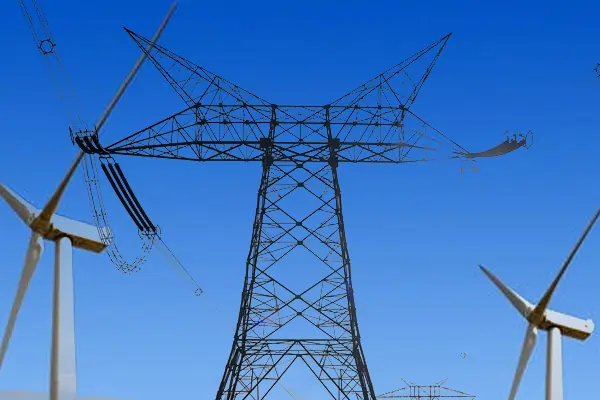
After nearly a decade of delays and legal challenges, the 145-mile NECEC project begins delivering hydropower from Quebec to Massachusetts.
After nearly a decade of litigation and delays, resistance construction slowdowns, the New England Clean Energy Connect (NECEC) transmission line is finally operational. It allows for the delivery of hydro power to Massachusetts from Quebec. The high-voltage transmission line will stretch for 145 miles and have the capacity to supply up to 1,200 megawatts of electricity, which will meet approximately 20% of the state’s power demand. The transmission line will help the state meet its goal of net-zero emissions by the year 2050.
Under a 20-year fixed price agreement with the Massachusetts utilities, it is expected that the project will yield savings of about $50 million per year to ratepayers. Although a saving of about $18-$20 per year is expected in household bills, experts believe that these figures are set to rise as electricity demand in the region continues to increase. The transmission line is entering a critical phase as far as the power infrastructure in the New England area is concerned. There is going to be an increase in electricity demand for the first time in several decades, coupled with uncertainty in offshore wind energy initiatives. The entry of reliable and relatively cheap hydropower will enhance the reliability of the grid, in addition to decreasing dependence on fossil fuel sources.
Despite the advantages the project has to offer, it has been met with stiff resistance in the State of Maine, where the project needed to cut down the forest land for the construction to take place. The project was put on hold by a referendum in 2021 due to cost overruns occasioned by the postponement. In exchange, the state of Maine will get discounted power rates, infrastructure investment, energy efficiency funding, and economic development. Energy observers point to the NECEC project as an example where greater regional cooperation is required to spur the deployment of clean energy infrastructure in the area.





























.webp)

.webp)




.webp)