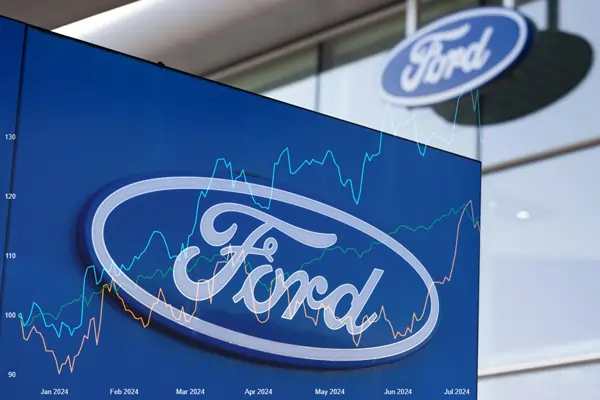
Detroit automaker Ford faces challenging future with narrow margins and limited growth potential amid industry disruption.
Ford Motor Company saw an increase of 33% in share price during 2025. There are still many challenges facing the company that could reduce investor confidence. What appears to be a good recent rise in stock prices for the company hides some serious long-term concerns with respect to the financial health of the company. The company's financial health is characterized by the volatility that is typical within the automotive industry. Ford's current business model is based on the sale of sporadic, high-priced items. This business model creates a high degree of susceptibility to changes in economic conditions, such as interest rates, employment levels, the inflation rate, and fuel prices; thus creating unpredictably large variations in revenue.
Because of the thin margins Ford has on its operating margins (which have averaged just 2.5% over the last five years); there is less room for error in terms of costs that the company faces. Additionally, the company's admission of a recent error in EV strategy is a major concern for Ford. The company has made $19.5 billion in special charges associated with restructuring its EV business, including pulling back on some EV operations. The losses from these charges reflect the overall industry’s ongoing difficulties adjusting to the pace of the transformation towards sustainable vehicles.
The return on Ford's stock over the last 10 years was 61%, compared to a whopping 297% increase in the S&P 500. Industry experts believe that Ford has underachieved because it was unable to quickly change with the fast-moving marketplace and did not have any significant growth opportunities in the automotive Industry. It appears that there are not any clear indications or "catalysts" for future growth for Ford, indicating that Ford will have ongoing problems increasing shareholder value.






































.webp)

.webp)



.webp)