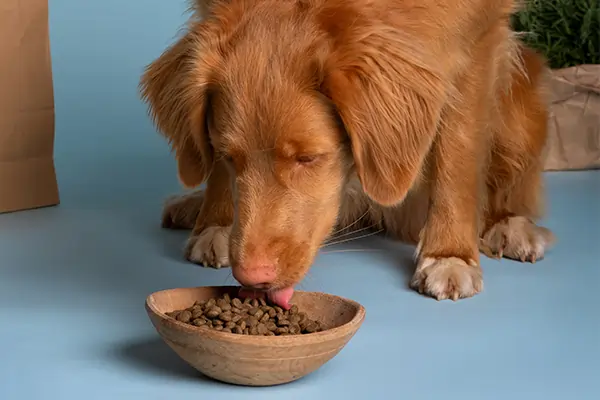
Research shows grain-free, raw, and meat-rich dog foods significantly increase carbon footprint, urging industry action.
A new study has highlighted dog foods and their environmental impact, particularly those with a large quantity of prime meat. Scientists from both the Universities of Edinburgh and Exeter studied a large group of 1,000 dog foods available to buy in the UK and determined that higher meat dog foods may create 65% more emissions compared to others.
"However, it also shows that there is a big range of the impact of dog food on the climate," said John Harvey, a vet surgeon at Edinburgh's Royal (Dick) School of Veterinary Studies, the lead author of the research. For instance, the research indicates that grain-free, wet, and raw dog foods tend to cause higher emissions compared to standard dry dog food.
In the study, food products have been classified on the basis of being dry, wet, and raw, including grain-free and plant-based categories. For dry foods, non-grain-free foods had lower environmental effects, while the utilization of prime meat had a significant impact on environmental emissions. In the raw food category, there were raw food items high in meat with carbon intensity comparable to the diet of humans with high meat consumption.
Harvey appealed to the pet food industry to adopt a more sustainable model. This must include the use of meat that is not suitable for human consumption. In addition to that, the pet food should have labeling that will help people make the right decisions. “These steps will enable us to have healthy and well-fed dogs with a smaller footprint on the environment,” he was quoted as saying.
UK Pet Food, the trade body, pointed out that this is because the vast majority of ingredients have a by-product origin related to the human food chain, which helps to reduce waste and facilitate the closing-the-loop philosophy. It was acknowledged that sustainability debates must carry on.
This study emphasizes the call for environmentally informed consumption in pet foods, encouraging both producers and pet owners to take into account the carbon footprint of their products.








































.webp)

.webp)



.webp)