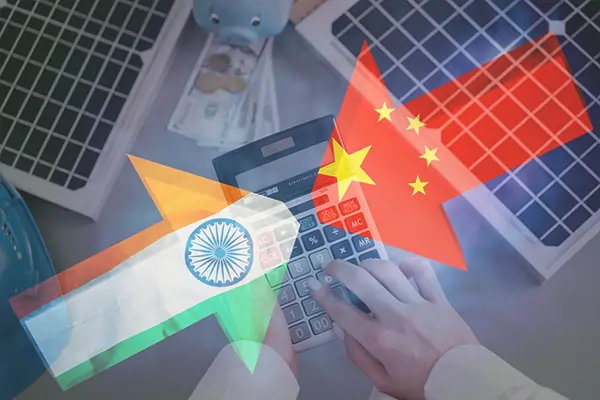
China has taken India to the WTO, disputing tariffs and subsidies on telecom and solar products, raising broader trade tensions.
China has increased its trade dispute with India at the World Trade Organization (WTO), officially challenging New Delhi's tariff and support measures impacting telecom equipment and solar production. This suggests growing trade disputes between Asia's two largest economies, as they seek opposing policies to strengthen their own domestic sectors.
Recently, China's Ministry of Commerce said that it had submitted a request for talks with India, the first step in the WTO's dispute resolution procedure. The action focuses on India's higher pricing of different telecom products, as well as financing schemes for solar panel production. Beijing claims that these programs violate several WTO regulations.
According to China, India has violated its binding tariff commitments as well as the WTO's national treatment principle, which calls for imported goods to be treated equally with its own items. China also claims that India's subsidies encourage businesses to use native products instead of imports, a technique known as import substitution, which is restricted under WTO regulations. According to Beijing, these laws favor Indian manufacturers while harming international suppliers, particularly Chinese enterprises.
"This is a further step taken by China in order to protect the rights and legitimate interests of its domestic industries," the Commerce Ministry stated. The government stated that “this action followed an earlier WTO dispute in which China challenged India's electric vehicle and battery subsidy schemes. China urged India to follow its WTO commitments and quickly correct its wrong practices." Under WTO procedures, the two parties now have up to 60 days to settle their dispute through talks. If no agreement is achieved, China may request WTO dispute settlement committee to be constituted. This might take years to resolve, especially as the WTO's appeals system remains overburdened.









































.webp)

.webp)



.webp)