.webp)
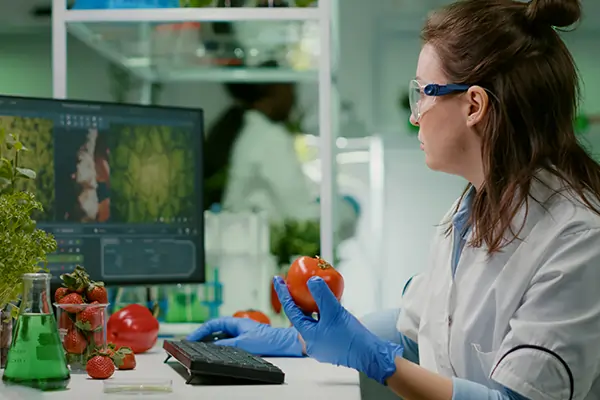
There are several questions rising about the future of the food industry, as the global population grows rapidly and technological innovation advances. Climate change, changing customer choices and reducing natural resources are the other challenges. These rising concerns have led the researchers to study and experiment to find out new solutions. Leading to an important question, what will we eat in the future?
With the rise of vertical farming and lab-grown solutions, we can see a major shift from traditional food production to a new innovative method in the food industry. Innovations like lab-grown meat, plant-based food options, AI-powered kitchens, and smart farming technologies are developed to cope with these challenges. Focusing on producing food in an effective way, while giving importance to the changing customer needs and reduced use of natural resources. In this blog post we will discuss new technological advancements or innovations in the food industry, which is redefining the traditional way of production, preparation and delivery.
Vertical Farming
Compared to the traditional way of farming, depending completely on land, soil and weather, vertical farming is a new way of growing crops inside buildings by arranging them in vertical layers under managed conditions. With the rise in population and other challenges, this method is becoming popular.
The crops grow with the help of systems like hydroponics, aeroponics, or aquaponics in a limited space, inside the buildings or a specially designed structure where plants get nutrients through water or fine mist instead of soil. As it is grown in a limited space, this results in reduced use of pesticides. In the same way, LED lights are used instead of sunlight for the crops growth. Sensors and automated systems are used to manage temperature, humidity, carbon dioxide levels, and water supply for effective food production.
Technology plays an important part in vertical farming, where tools like AI and data analysis are used to monitor plant health, estimate crop yields, and manage lighting. Real-time data is collected by Internet of Things (IoT) sensors to support farmers in identifying problems early and improving efficiency. Furthermore, automation and robots are also used for planting, harvesting, and packing in order to reduce manual effort. Along with many benefits, there are some challenges in vertical farming, which makes it expensive to set up buildings, lighting systems, and technology.
Lab-Grown Meat
Lab-grown meat, also called cultured or cell-based meat, is an alternative method of meat production where animal cells are cultured in a controlled environment. When compared to the traditional way which faces several challenges like health risk, ethical concerns and environmental damage, lab-grown meat reduces the environmental impact and no animals are harmed. It uses fewer resources like water, land and feed, which supports in reducing greenhouse gas emissions. In addition it benefits one’s health, as it reduces the unhealthy fats while increasing nutrients and lowers the chance of contamination by bacteria’s like E. coli or Salmonella.
Signicent and other businesses use Technology Scouting and Patent Landscape Solutions to monitor advances in lab-grown meat, supporting businesses to stay competitive while identifying opportunities. Lab-grown beef appears as a promising alternative for a more environmentally friendly, ethical, and healthy food future.
Plant-Based Alternatives
Plant-based alternatives are foods made from plants that are rich in fiber and lower in saturated fat, that replace animal products like meat and dairy. The items include nuggets, burgers and sausages which are made from lentils, nuts, soy, grains, seeds and peas that are a sustainable source of nutrition. The main advantage of plant-based alternatives is some products contain full protein and can be added with vitamins and minerals, but the nutritional value differs based on the product and how it is prepared.
Plant-based food can be produced with less water and land, which supports in reducing greenhouse gas emissions and the pressure on ecosystems compared to traditional meat production. Popular plant-based foods are tofu, TVP, tempeh and plant-based burgers and sausages. Resulting in reduced animal product consumption, support sustainability, and offer diverse dietary options.
AI-Powered Kitchens
AI-powered kitchens make cooking faster, healthier, and more effective by using AI and smart appliances. Recipes are recommended based on individual dietary preferences and nutrient levels are monitored automatically. This reduces manual effort and also helps prevent food waste. AI can also manage kitchen supplies by tracking items, predicting shortages, and suggesting alternatives. This is particularly successful in restaurants, huge food production places and smart homes, where it improves productivity and supports more environmentally friendly food practices. It combines automation, data analysis, and tools, in order to offer personalized, effective, and environmentally friendly food preparation.
Conclusion
The developments in technology and new innovations are transforming the future of food industry, offering new solutions for major challenges in the food industry. New innovative approaches like vertical farming, lab-grown meat and plant-based alternatives transform the traditional way of food production benefiting the consumers. Supporting healthier and efficient food systems which reduce the emission of greenhouse gases and natural resources.
Even though difficulties like high expense, and technical challenges rise, the major advancements in AI, automation, and environmentally friendly farming methods result in a stronger and more flexible food business. People are becoming interested in new food choices, because of the rising concerns about health, environmental impact, and ethical behaviors. Allowing these innovations to grow and gain acceptance. By adapting to these technologies, we can help meet the rising worldwide demand for food, reduce environmental impact. Creating a future in which food production is smarter, healthier, and more ecological for people all around the world.

















.webp)

