
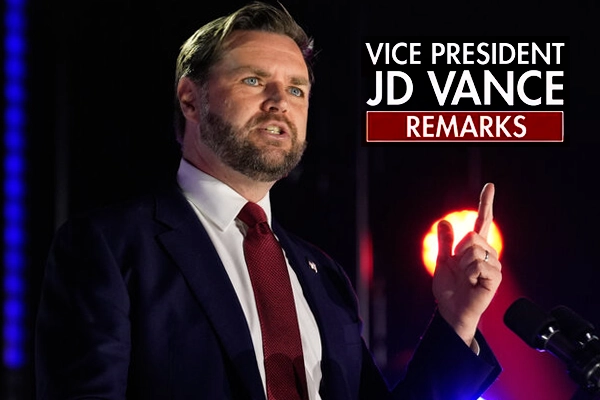
Remarks at Turning Point USA’s AmericaFest reignite debate over religion, politics, and national identity.
U.S. VP JD Vance has sparked a new national controversy after stating in remarks during the Turning Point USA AmericaFest in Phoenix that the United States "has been, and always will be, a Christian nation." The comment got roaring applause among those who attended and were mostly Republican and MAGA-aligned, but sparked an extreme wildfire of criticism throughout social media and political circles. His comments have since dominated headlines under the growing JD Vance backlash news narrative.
Speaking passionately, Vance described Christianity as the enduring moral anchor of the country, framing faith as central to American identity. Supporters praised the speech as a defense of traditional values, while critics accused him of promoting Christian nationalist rhetoric that undermines the nation's constitutional commitment to religious freedom.
The controversy escalated in light of past remarks concerning his wife, Usha Vance, who was raised in a Hindu family. Past comments also recently surfaced online that he hoped she would one day find her way to Christianity. That prompted backlash from Hindu American and other progressive groups. Vance responded that Usha has no intention of converting and denounced what he termed anti-Christian bigotry. He said an interfaith marriage like his requires mutual respect. The controversy over Vance has revived debate about Christian Vance and the intersection of faith, family, and politics.
In the same AmericaFest address, Vance went on to say that diversity, equity, and inclusion policies had been “relegated to the dustbin of history.” He said the administration would prioritize merit over race or gender, tie immigration enforcement to national security, and defend free speech on campuses.
But as the reactions keep coming in, the comments about JD Vance's Christian nation have become a flashpoint in America's ongoing culture wars, a reminder of deep divisions over the role of religion in public life and governance.















.webp)

