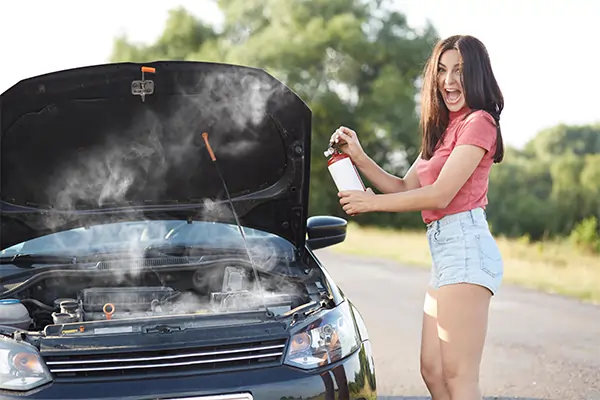
Consumers are now able to reduce or eliminate their dependency on gasoline-powered vehicles by utilizing electric vehicles (EVs). The use of EVs continues to gain popularity, however, their use raises concerns about their safety from fire hazards due to the lithium-ion battery as fires tend to be very difficult to control and extinguish. These primary reasons for battery malfunction and subsequent fire include thermal runaway, overcharging and physical damage to lithium-ion batteries.
In addition, the availability of modern EVs with advanced safety technologies has greatly improved the ability to reduce the risks associated with battery failure. This detailed report will provide a comprehensive understanding of the science behind how the battery fire occurs, contrast EV fire risks with those of gasoline-powered cars, present some of the latest safety advancements in EV technology, and provide recommendations on how to educate EV owners on how to respond in case of an emergency.
The Mechanics behind EV Battery Fires
Although effective for energy storage, lithium batteries can become dangerous when subjected to certain circumstances such as overheating or thermal runaway. A thermal runaway occurs when the temperature of a lithium battery rises sharply. This increase in temperature creates a chain reaction producing increasing amounts of heat until the battery catches fire. Similarly, a lithium-ion battery can also become overcharged when receiving an incompatible charger or due to a malfunctioning battery management system. Mechanical damage due to accidents can also create a risk of electrical shorts, an additional event that can result in a fire.
Fortunately, electric vehicles have numerous design features and safety features engineered into their construction to prevent any of these events from happening. Also, we should keep in mind that multiple studies conducted over the years have shown that lithium-ion electric vehicle fire risks associated with batteries are significantly less likely, from a statistical perspective, than that of a traditional internal combustion engine fueled vehicle which has a much higher frequency of fire incidents attributed to combustion events. Tesla included comprehensive safety strategies regarding the Lithium-ion battery technology, extensive testing including thermal runaway simulation, and a strong battery management system, monitoring battery condition and preventing overheating.
Comparison of Fire Risks: EVs vs. Gasoline Vehicles
It is essential to absolutely compare fire incidents in electric vehicles with those of vehicles that use internal combustion engines so as to assess EVs’ safety to fully appreciate how safe EVs are compared to ICEs. The analysis of fire incident data illustrates very large differences in fire occurrences. The number of fires for EVs equals approximately to 3.8 fires for every 100,000 EVs in the same time period. In contrast, ICEs have approximately 68 fires per each 100,000 ICEs during this same period. In terms of battery fire, the chance of an EV having a battery fire is equal to 0.0012%, while for an ICE it is 0.1%.
Such statistics dispel a commonly held belief that EV batteries are more susceptible to fires than those of ICEs. Due to the way that Internal Combustion Engines produce power, ICEs have a higher incidence of fire than Electric Vehicles. Consumers have been provided with information that may help alleviate their misplaced fears about EVs catching fire. The media covers EV fires extensively compared to ICE fires. Ford is an established automobile manufacturer of electric and ICE vehicles. As published by many safety organizations, Traditional Ford ICE vehicles have a much greater incidence of fire than that of their Electric counterparts, such as the Ford Mustang Mach-E, indicating the relative risk of fire in both vehicle categories.
Educating EV Owners: Responses to Battery Fires
Understanding the vehicle's emergency protocols will affect how well we can respond if an emergency occurs. One of the first things we can do to prepare for emergencies is to review the EV's Emergency Manual. We can find guidance regarding how to respond in different types of emergencies including battery fires. When a battery fire is detected the immediate action that must be taken is to evacuate the vehicle and contact emergency personnel to report the incident and inform them that an EV is involved in the fire. Emergency crews will respond to the incident differently if they are aware that an EV is involved in the fire.
Routine maintenance of the EV will be critical for preventing battery fires. Routine inspection will allow for the discovery of potential problems before they become serious and allows taking actions to eliminate risks. Education on battery fire prevention will allow an EV owner to provide a safer environment for ourselves and those around us by being informed and prepared. Detailed emergency response documents for Electric Vehicle owners such as the Bolt EV are provided by Chevrolet.
Conclusion
The perception regarding potential electric vehicle EV battery fire risks may be correct but is also backed by statistics, which show that electric vehicles EVs are safer than gasoline-powered vehicles. These new technologies in EVs' advanced safety features, such as greater thermal management capabilities, fire-resistant battery enclosures and automatic shutoff systems built into battery systems have successfully reduced the chances of having a lithium-ion battery fire. However, the statistics reveal that the occurrence of EVs experiencing fire events is much rarer than gas-powered vehicles that are prone to catch on fire because of using highly flammable petrol, as well as for having much more complicated mechanical systems.
In addition to educating emergency responders and EV owners on how to handle issues relating to EV battery fires, education will provide specialized training to assist emergency responders in better managing the possible risks. As improvements in battery technology are continuing to progress and will additionally lead to increased vehicle safety, the EV will also continue to be safer. Electric vehicle growth is contributing toward the promotion of sustainability within the transport sector for the future and coincides with the improvements in automobile technology becoming safer.
































.webp)

.webp)




.webp)