
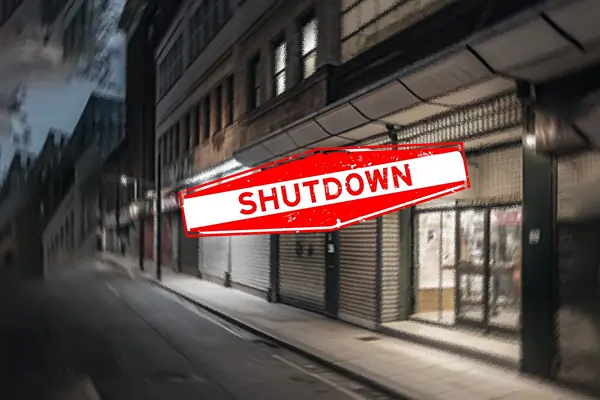
Retail is facing a crisis like never before — with more than 15,000 retail stores to close down, everybody wants to know: why are so many retail stores closing in 2025? This store closure wave is only a symptom of deep-rooted structural shifts in the business fueled by changing consumer behavior, economic conditions, and alternative investment patterns. In this blog, we’ll explore the primary reasons behind this unprecedented retail store closure trend, how it’s reshaping the industry, and what retailers can do to survive and thrive in this new landscape.
Retail Store Closures in 2025
Retailing has been the driving force of the economies of every corner of the globe, but closing shops has been a menacing phenomenon during the past few years. More than 15,000 store closures alone are projected in the U.S. and globally by 2025 — a staggering number to illustrate the enormity of the problems being confronted by conventional physical stores.
Private equity, which had represented the lion's share of retail investment, is stepping back from investing in mainstream retail chains, speeding up store closures. In a Forbes report, private equity companies once leading retail expansion are stepping back, worried about profitability and market saturation.
Primary Retail Closure Factors
The Rise of E-Commerce and Change in Consumer Patterns
One of the most powerful drivers of store closings is the ongoing flight of consumers to e-commerce. Online shopping offers convenience, lower prices, and larger product variety — everything physical stores can't match. The COVID-19 pandemic hastened the shift as millions adopted digital buying patterns. Even when physical stores open again, they discover that many customers continue to prefer online buying, reshaping retailing forever. Consumers in 2025 expect frictionless digital, fast delivery, and easy return. Physical brick-and-mortar stores that do not blend omnichannel capabilities or match online prices lose slowing foot traffic and sales, resulting in store closures.
Economic Pressures and Inflation
Economic pressures in the form of inflation, rising wages, and supply chain disruptions have raised the cost of business for retailers. Rising costs squeeze already-thin profit margins, which forces many stores to close or be pushed into downsizing. Inflation impacts both consumer buying power and store cost — a double whammy for traditional brick-and-mortar retailers. Consumers cut back on discretionary spending, and retailers face increased inventory, shipping delays, and workforce shortages. This synergy forces most retail chains, especially mid-size and smaller chains, to fight to stay afloat in current circumstances.
Private Equity Retreat
Private equity firms, long used to investing in retail chains to fuel growth and brand updates, are taking a step back in 2025. This is due to the challenges of the industry and less attractive returns. Without this injection of capital, the majority of retailers are not able to innovate, invest in technology, or compete with digitally native rivals. This pressure creates store closures and restructurings and speeds up industry consolidation.
Secondary Retail Closure Factors
Demographic changes: Newer generations focus more on experience and online engagement than in-person shopping, diminishing foot traffic in physical stores.
Real estate costs: High leasing and upkeep fees make many physical stores economically unviable.
Supply chain disruptions: Ongoing setbacks have led to inventory shortages and delays, frustrating customers and impacting sales.
Urban terrain changes: Some retail spaces and shopping malls render themselves obsolete, affecting stores therein.
Disruption by technology: The ones that are behind in adopting AI, automation, and data analysis lose to the competition that offers customized shopping and optimized operations.
What Does This Mean for Retailers?
The retail disruption is forcing companies to revamp. The old model of expanding store bases without digitizing is no longer applicable. Those who are accepting the new normal are investing in:
Omnichannel retailing: Merging e-commerce, mobile, and physical store experiences to reach shoppers wherever they shop.
Digital transformation: Using AI-powered analytics, virtual try-ons, and targeted advertising to engage shoppers.
Lean operations: Efficient supply chains, process automation, and cost control.
Experiential retail: Building in-store experiences that online cannot match.
Sustainability: Responding to growing customer desire for environmentally sustainable products and processes.
How Consumers Benefit from This Shift
-
Increased convenience and faster delivery
-
Increased product offerings
-
Reduced prices Personalized shopping
-
Faster comparison and reviews
Conclusion
Retail store closures going through the roof in 2025 is an undeniable indicator of change. Supported by e-commerce expansion, economic hardship, and a change in investment patterns, most traditional stores are closing shop. But this dislocation also offers opportunity for retailers to innovate and adapt to evolving customer needs. For retailers, survival lies in a means to implement omnichannel approaches, advanced technology, and lean operations. To consumers, it promises more convenience, choice, and customization. The future of retail will be characterized by how well it can adapt to the new age of being digital-first — a challenge and an opportunity both.
References:















.webp)

